Odoo TimeOff turns employee absences from scattered requests and spreadsheets into a centralized, fully traceable system that HR managers and team leads can actually rely on. Instead of manually tracking vacations, sick days, or personal leave, Odoo TimeOff consolidates all time-off data into a single workflow. This allows companies to monitor availability, prevent scheduling conflicts, and ensure compliance with internal leave policies in real time. With Odoo TimeOff, every request, approval, and balance update is instantly visible across the organization.
Beyond basic leave requests, Odoo leave management provides a structured framework for defining how time off is earned, approved, and deducted. Companies can configure different Odoo leave types, approval flows, and validation rules, ensuring that absence policies are applied consistently across departments. Because Odoo TimeOff is tightly connected to employee records and calendars, approved leave immediately reflects actual availability, helping managers plan workloads without relying on manual follow-ups or external tracking tools.
One of the key advantages of Odoo TimeOff is its ability to automate entitlement logic through Odoo accrual plans. Using flexible allocation and accrual plans Odoo, organizations can define how leave is granted based on tenure, contract conditions, or local labor regulations. When combined with accurate working time configuration in Odoo, the system calculates leave balances according to real working schedules rather than fixed assumptions. This ensures that Odoo leave management delivers a reliable, up-to-date view of remaining time off, supporting fair policy enforcement and data-driven workforce planning within the broader HR ecosystem of Odoo.
Odoo TimeOff as a Control Layer for Leave Policies and Workforce Capacity
In modern organizations, time-off management is no longer an isolated HR task. In Odoo TimeOff, leave data becomes a control layer that directly affects workforce capacity, compliance, and operational continuity. Instead of treating absences as individual requests, Odoo TimeOff consolidates leave activity into a structured system that reflects real employee availability across teams. By centralizing time-off data in Odoo TimeOff, companies move from reactive absence handling to proactive capacity control. Odoo leave management transforms leave requests, balances, and schedules into consistent operational data used for workload planning, project timelines, and resource allocation, similar to how structured financial data supports daily business decisions.
Enforcing Consistent Leave Policies with Odoo Leave Management
A core use case of Odoo leave management is enforcing uniform leave rules across the organization. Using Odoo TimeOff, companies define standardized Odoo leave types, approval flows, and eligibility criteria that apply consistently across departments, eliminating policy fragmentation and informal exceptions. Because Odoo TimeOff validates requests against defined rules, employees can only request leave they are entitled to, while managers approve within clear boundaries. As a result, time off Odoo becomes a governed process rather than an informal agreement, reducing disputes and compliance risks.
Managing Accrual-Based Entitlements in Odoo TimeOff
Many organizations rely on accrual-based leave instead of fixed annual limits. Odoo TimeOff supports this through flexible accrual plans Odoo, allowing time off to accumulate based on tenure, contract terms, or local requirements. With structured allocation and accrual plans Odoo, leave balances update automatically over time. This ensures that Odoo leave balances reflect earned entitlements rather than estimates. By automating accrual logic, Odoo leave management removes manual recalculations and supports predictable, transparent workforce planning.
Calculating Time Off in Odoo Based on Real Working Schedules
Accurate leave calculation depends on correct scheduling rules. Odoo TimeOff calculates absences according to real working patterns, including part-time schedules, shifts, and flexible hours. By aligning working time configuration in Odoo with time off Odoo, companies ensure consistent calculations across HR, payroll, and planning. This consistency strengthens Odoo leave management as a reliable operational system rather than a source of discrepancies.
Improving Leave Transparency and Reducing HR Administrative Work
Beyond policy control and accurate calculations, Odoo TimeOff improves transparency around employee absences. Using Odoo TimeOff, employees can clearly see their available leave balances, upcoming time off, and accrual progress without contacting HR for clarifications. Because Odoo TimeOff provides real-time visibility into balances and approvals, HR teams spend less time answering routine questions or manually validating entitlements. This transparency reduces misunderstandings, increases trust in Odoo leave management, and allows HR teams to focus on higher-value activities within organizations using Odoo 19.
The
Role of Proper Configuration in Accurate Leave Tracking in Odoo TimeOff
Accurate leave tracking in Odoo TimeOff depends on a well-defined foundation. Without consistent Odoo leave management, Odoo time data becomes fragmented, making time off Odoo balances unreliable. Core elements such as Odoo leave types, approval rules, accrual plans Odoo, and working time configuration in Odoo must be aligned to ensure that leave calculations reflect real employee entitlements rather than estimates. By structuring allocation and accrual plans Odoo together with correct schedules, companies ensure that Odoo TimeOff produces predictable, transparent leave balances. This foundation reduces manual corrections, prevents policy disputes, and provides reliable visibility into employee availability across teams using Odoo 19.
-
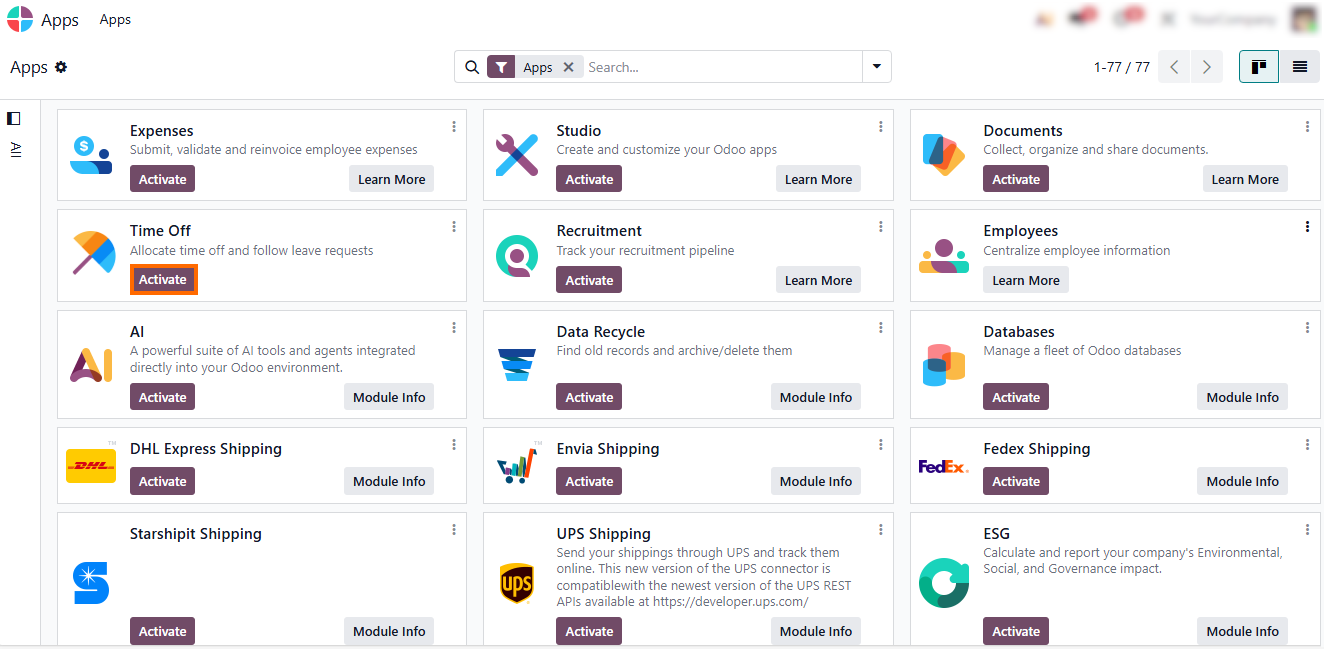
Activation of the Odoo
TimeOff module enables the full leave management framework, including
leave types, approval workflows, accrual plans
Odoo, and time-based calculations used for balance tracking.
-
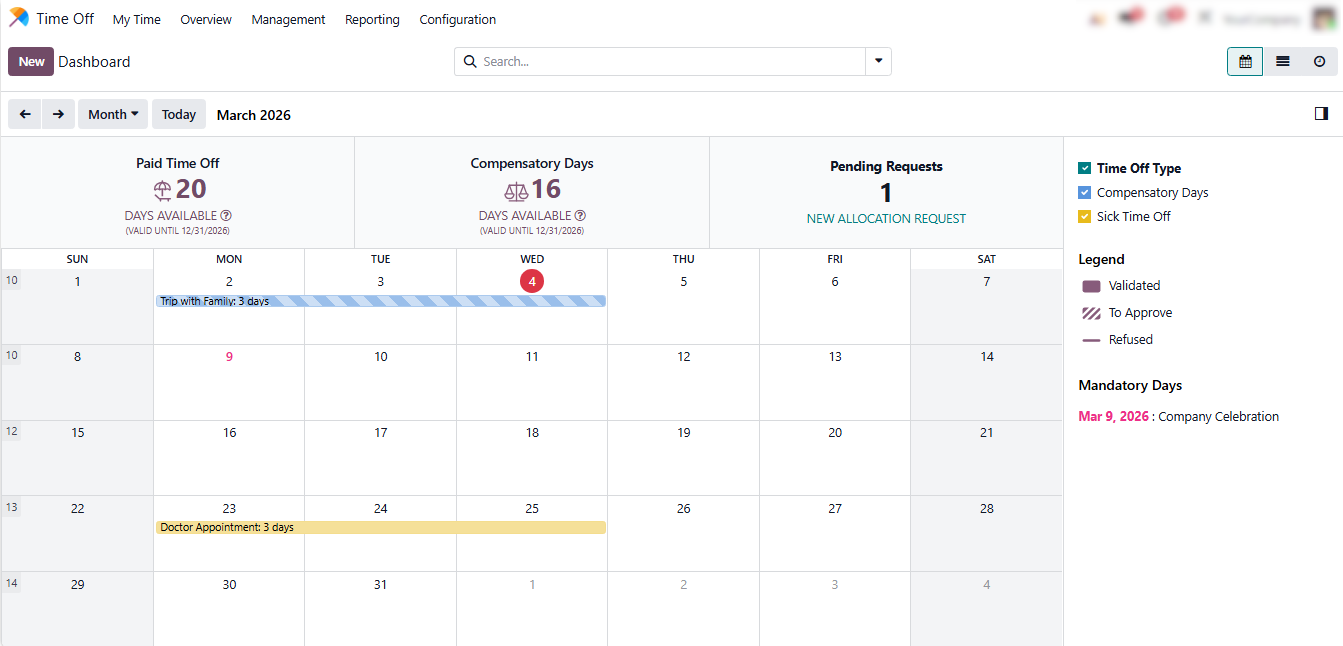
The Odoo TimeOff
dashboard provides an immediate overview of available Odoo leave types, employee time
off Odoo balances, and upcoming absences, giving both
employees and managers instant visibility into leave status.
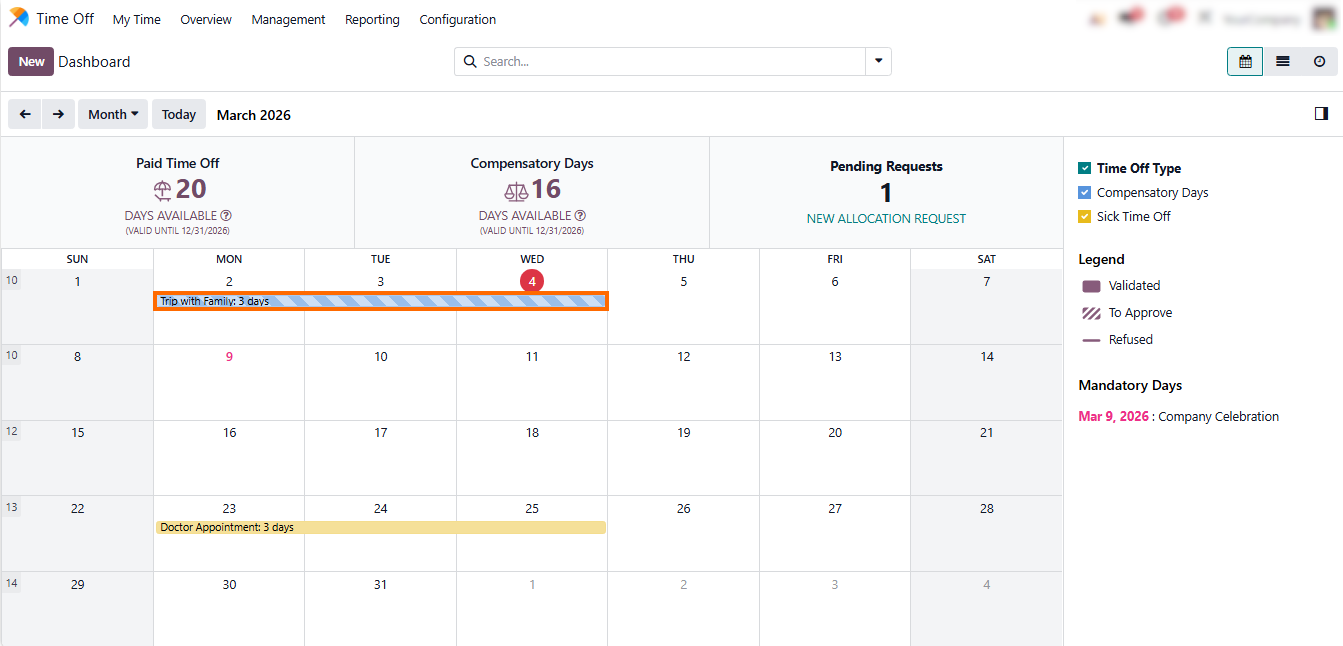
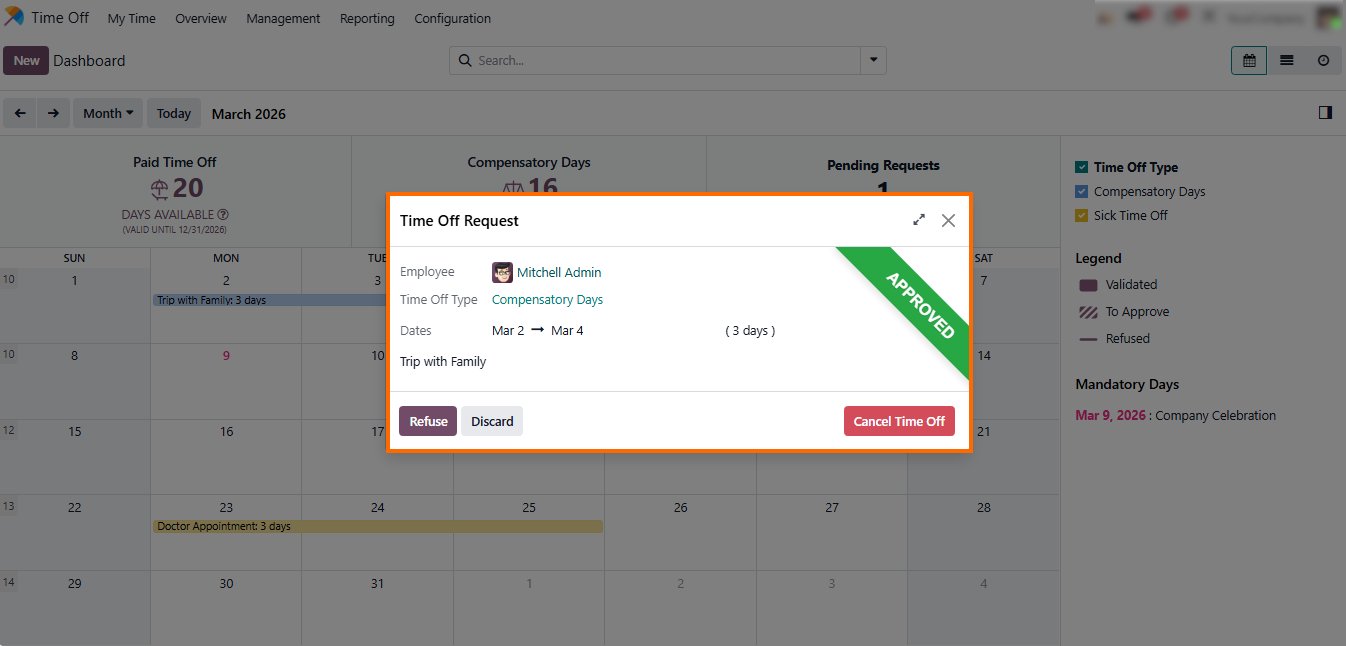
Managers use this interface to review time off Odoo requests and balance consumption, while employees rely on it to submit leave requests and monitor remaining Odoo time within a single workflow.
Approval of a leave request finalizes the record in Odoo leave management. The approved absence is immediately included in leave balances and availability calculations.
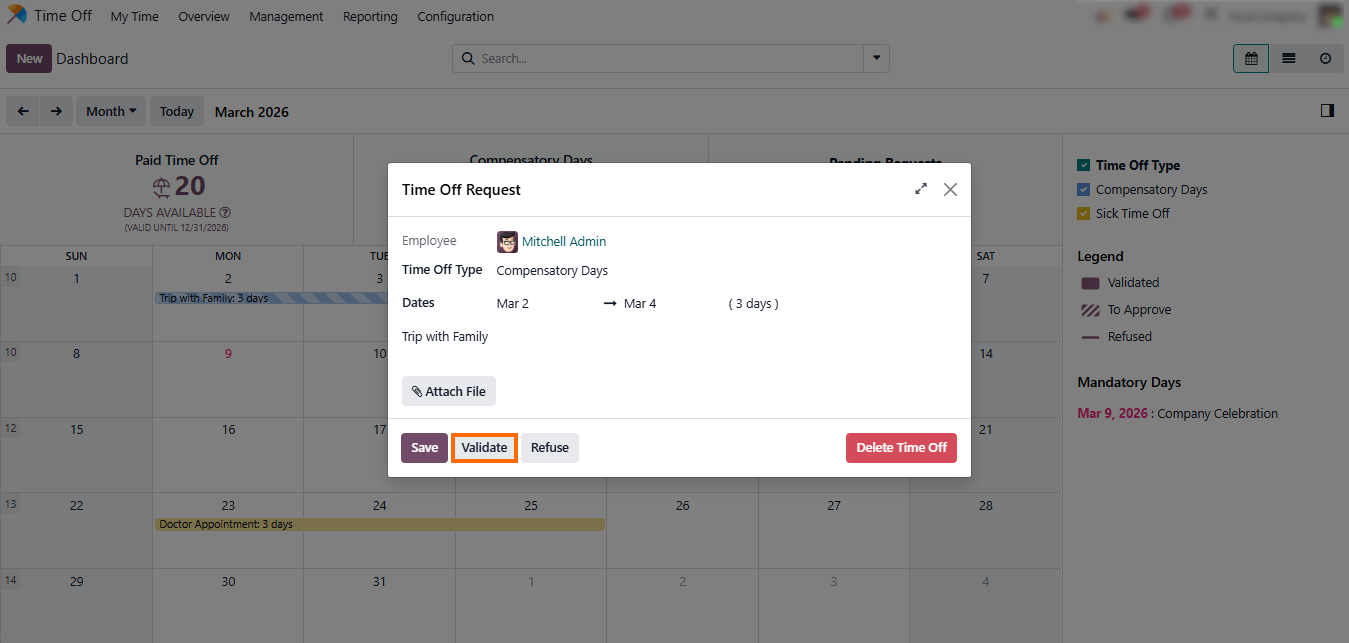
After validation, the leave request is marked as approved and becomes part of employee calendars and planning views, ensuring that availability data remains consistent across teams.
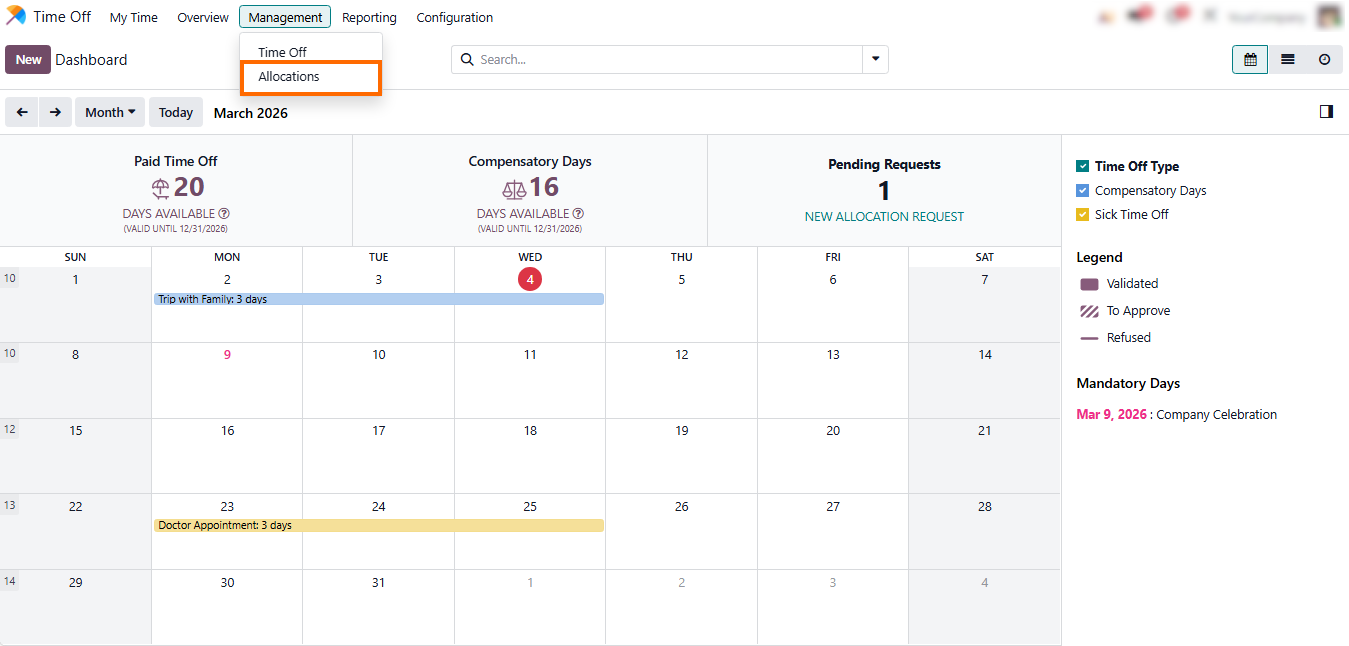
My
Allocations as a Central View of Leave Entitlements in Odoo TimeOff
The My Allocations view in Odoo TimeOff allows employees and managers to see granted leave, accrued entitlements, and future balances in a structured, transparent way. This view consolidates allocation and accrual data, giving both staff and HR teams clarity on available time off and preventing misunderstandings. By integrating time off Odoo requests with Odoo leave management, the system ensures that every absence is reflected in real-time balances and aligned with organizational policies. Employees can quickly check their remaining leave balance in Odoo, plan vacations or personal leave, and anticipate accrual changes based on allocation and accrual plans Odoo. For managers, My Allocations provides a complete overview of team availability, enabling proactive workload planning, avoiding scheduling conflicts, and enforcing consistent leave policies across departments.
- The Allocations view centralizes granted and accrued leave
per employee, including upcoming absences, allowing managers to assess
availability and prevent scheduling conflicts.
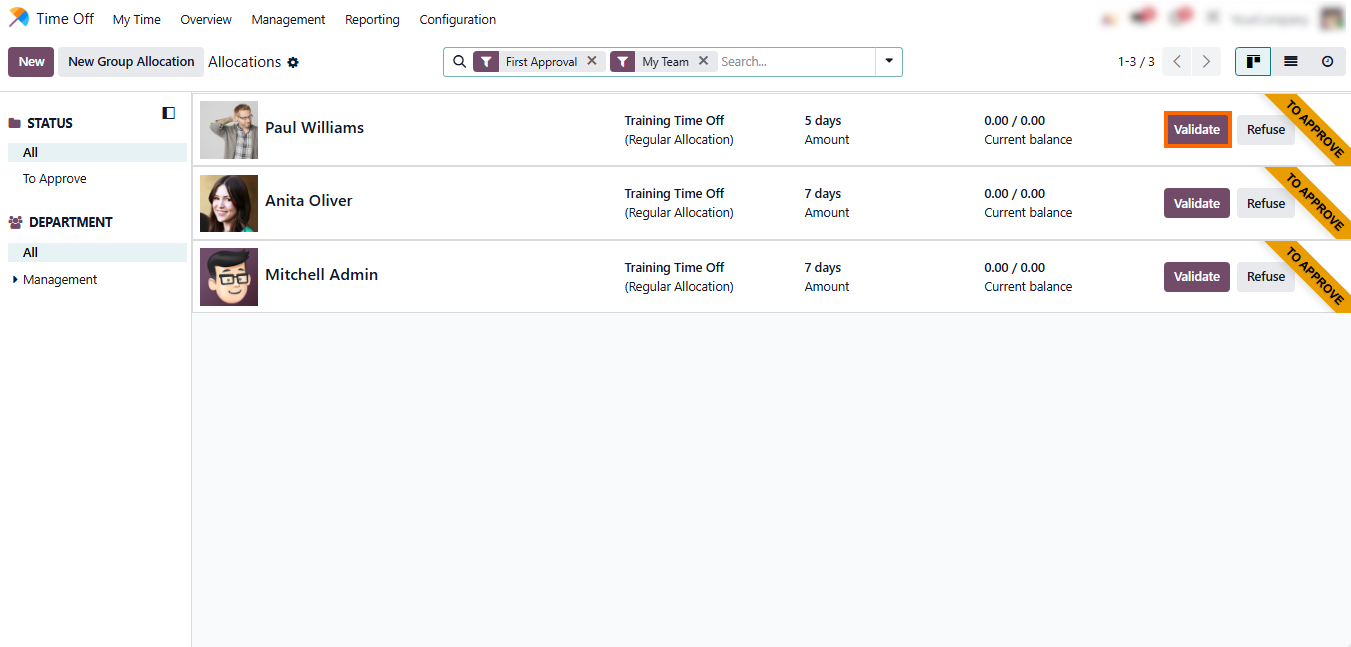
Validation finalizes leave allocations in Odoo leave management. Approved allocations immediately update Odoo time balances and availability calendars, while refused requests remain excluded from planning data.
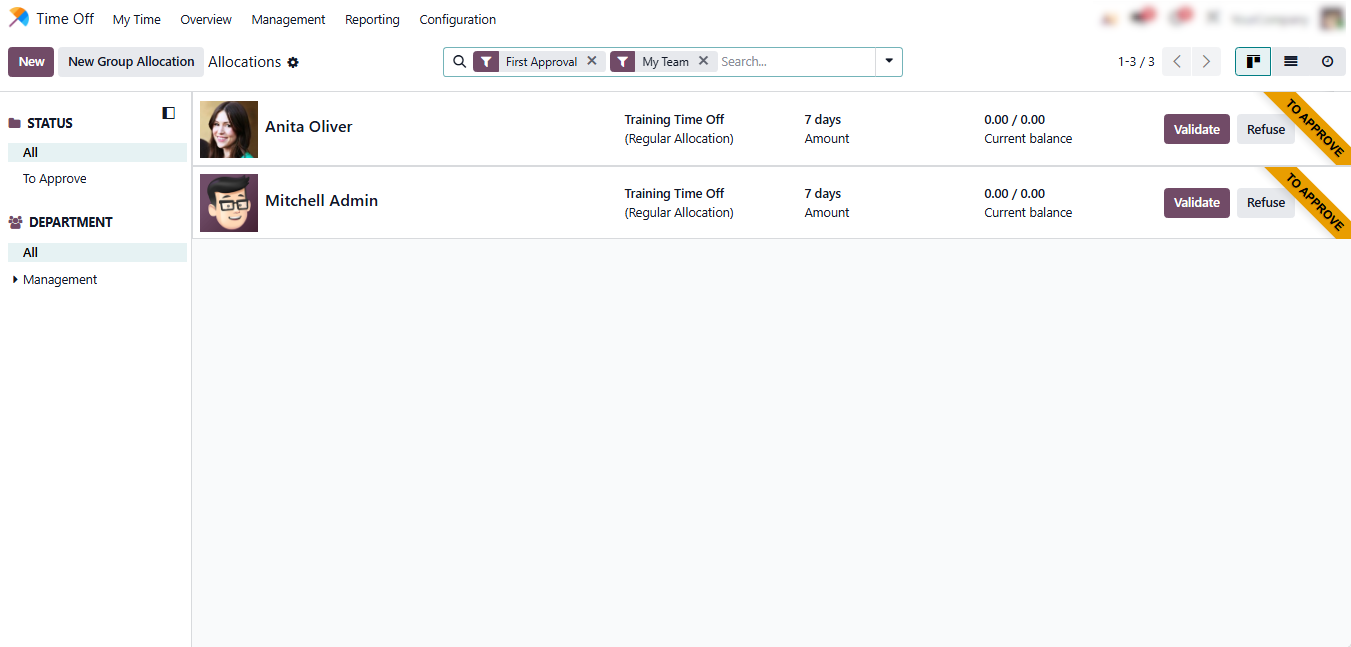
- Once approved, the request is removed from the pending list. The allocation is reflected in employee balances and calendars, reducing manual tracking and ensuring transparency for both HR and managers.
The Overview provides a summarized view of recently approved leave per employee, ensuring managers and HR always operate on up-to-date availability data.
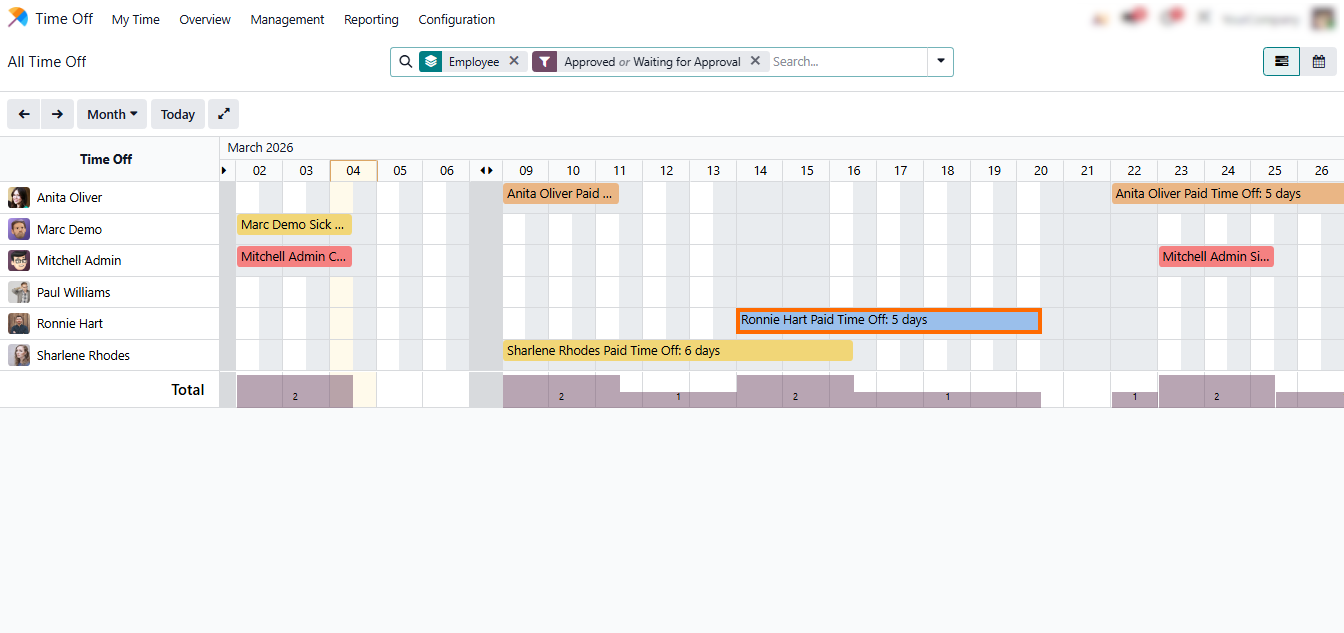
From
Operational Views to Strategic Insight with Reporting in Odoo TimeOff
For growing organizations, the operational visibility provided by My Allocations quickly becomes insufficient. HR managers and team leads need a broader perspective that highlights trends, capacity risks, and future availability across teams. As organizations grow, Odoo time data must evolve from basic tracking into structured reporting. While standard screens in time off Odoo are effective for validating requests and checking balances, they do not support strategic analysis. HR teams often need to understand how Odoo leave is distributed across departments, how accrual-based entitlements affect future capacity, or where absence risks may impact operations. Without reporting tools, this insight remains buried in transactional data, limiting the strategic value of Odoo leave management.
- Click
“Reporting” and select “My Employee” to generate a detailed Time Off by
Employee report. This gives a comprehensive view of granted leave, accrued
entitlements, and remaining balances across your team.
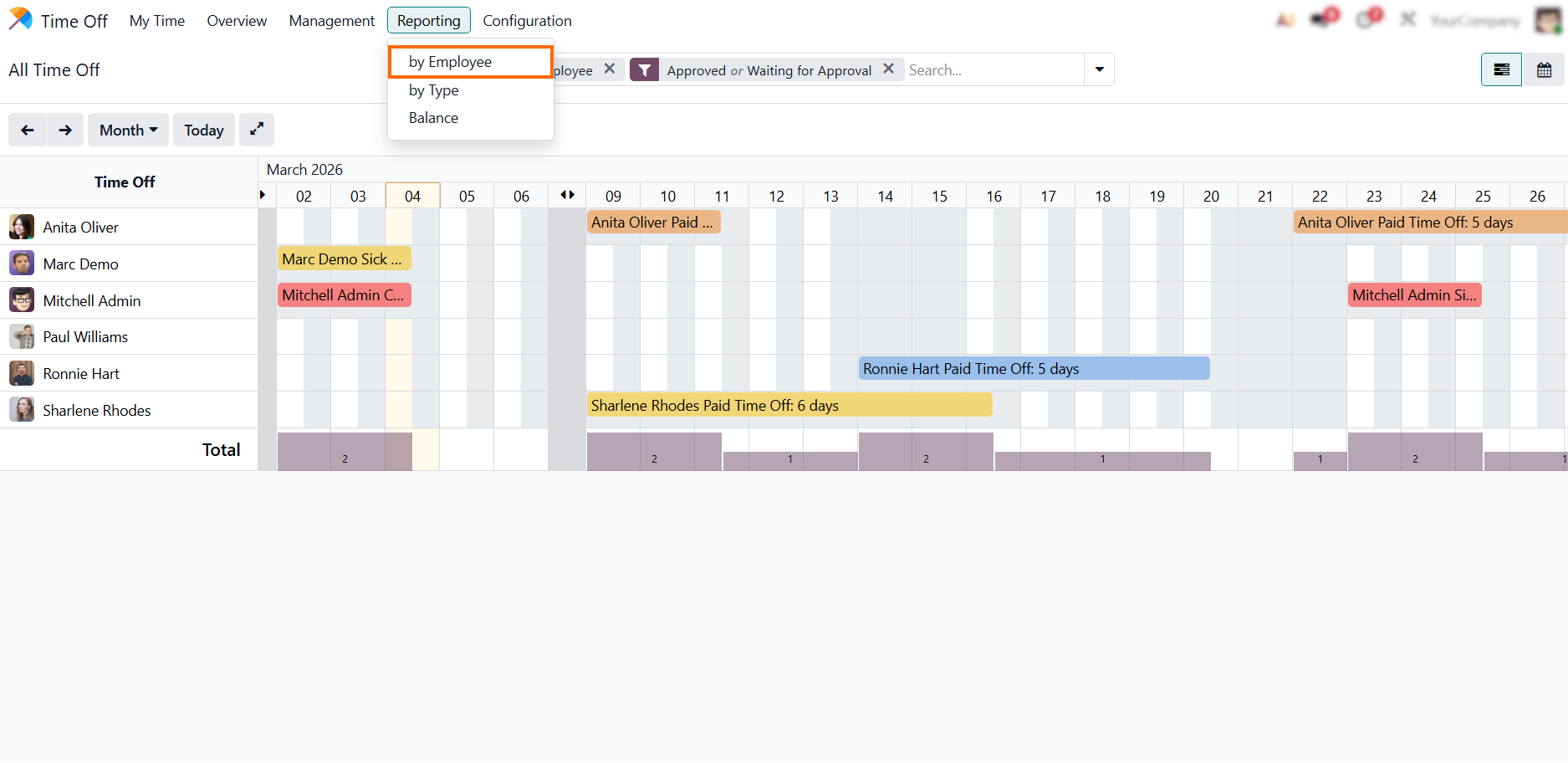
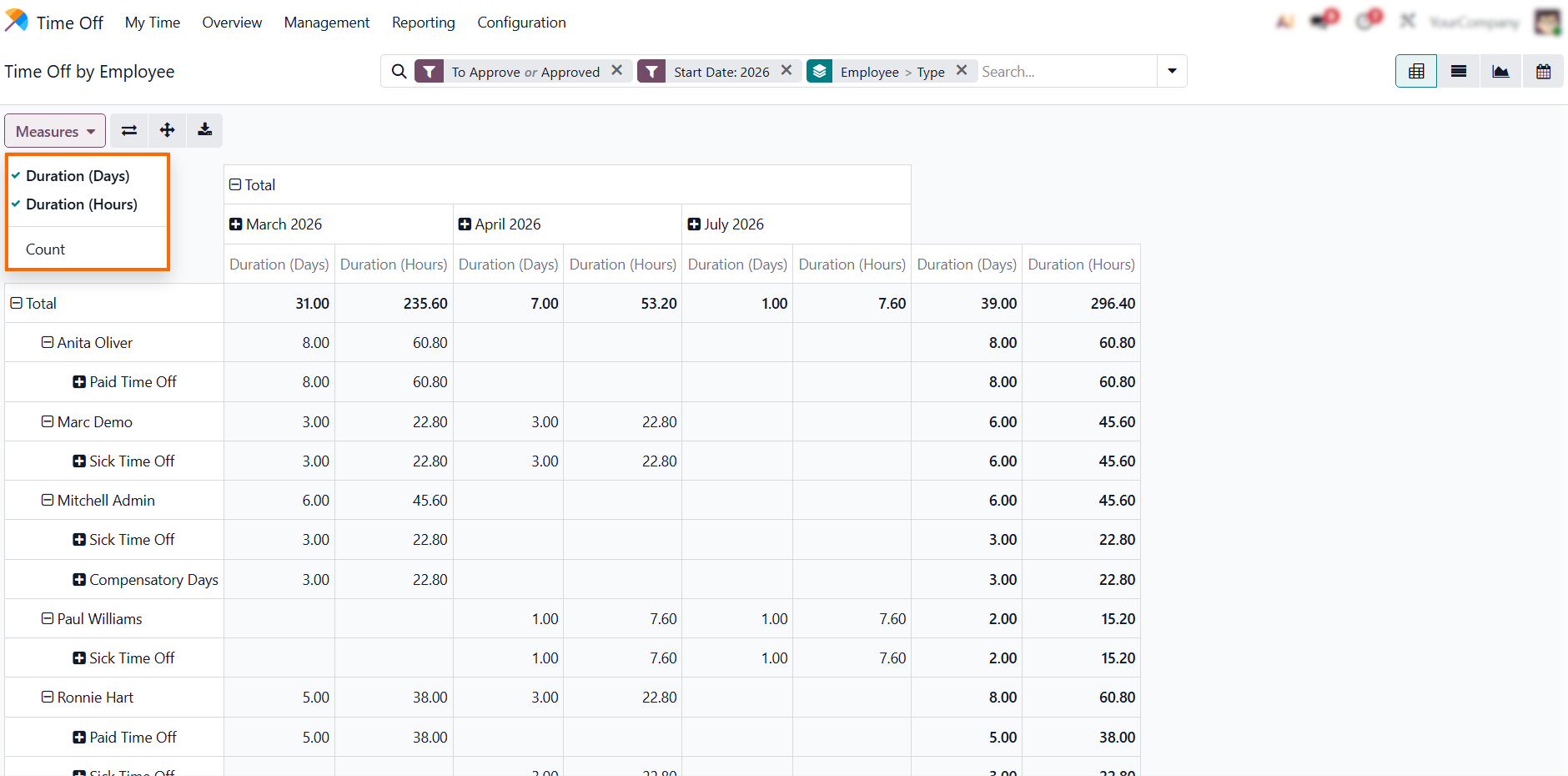
- Configure the report to show results in days, or switch to hours for a more detailed view of time off usage. This allows you to match reporting to your operational needs.
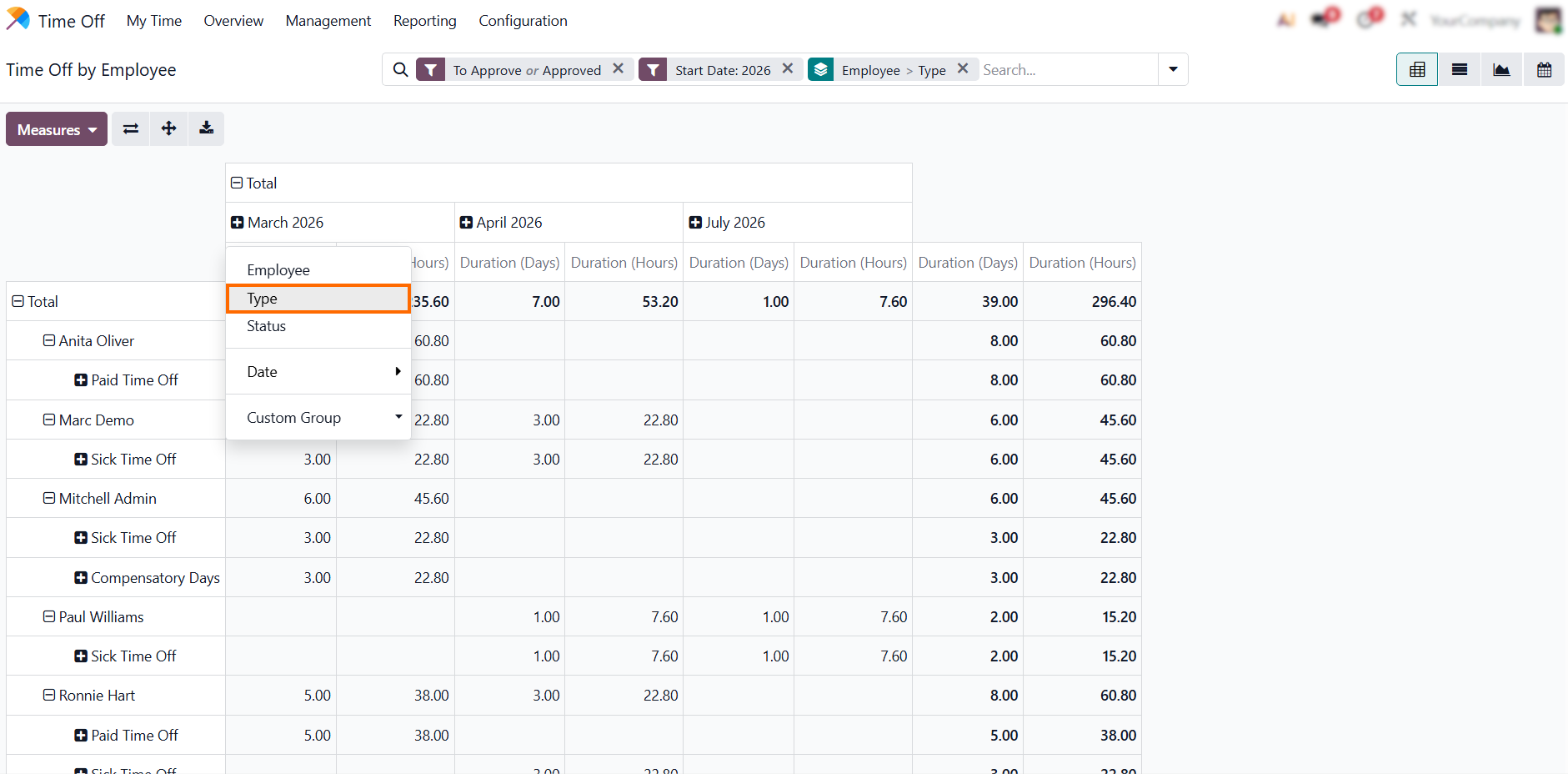
Choose the period and apply filters, such as department, leave type, or employee, to focus on the most relevant Odoo leave data and quickly spot trends or patterns.
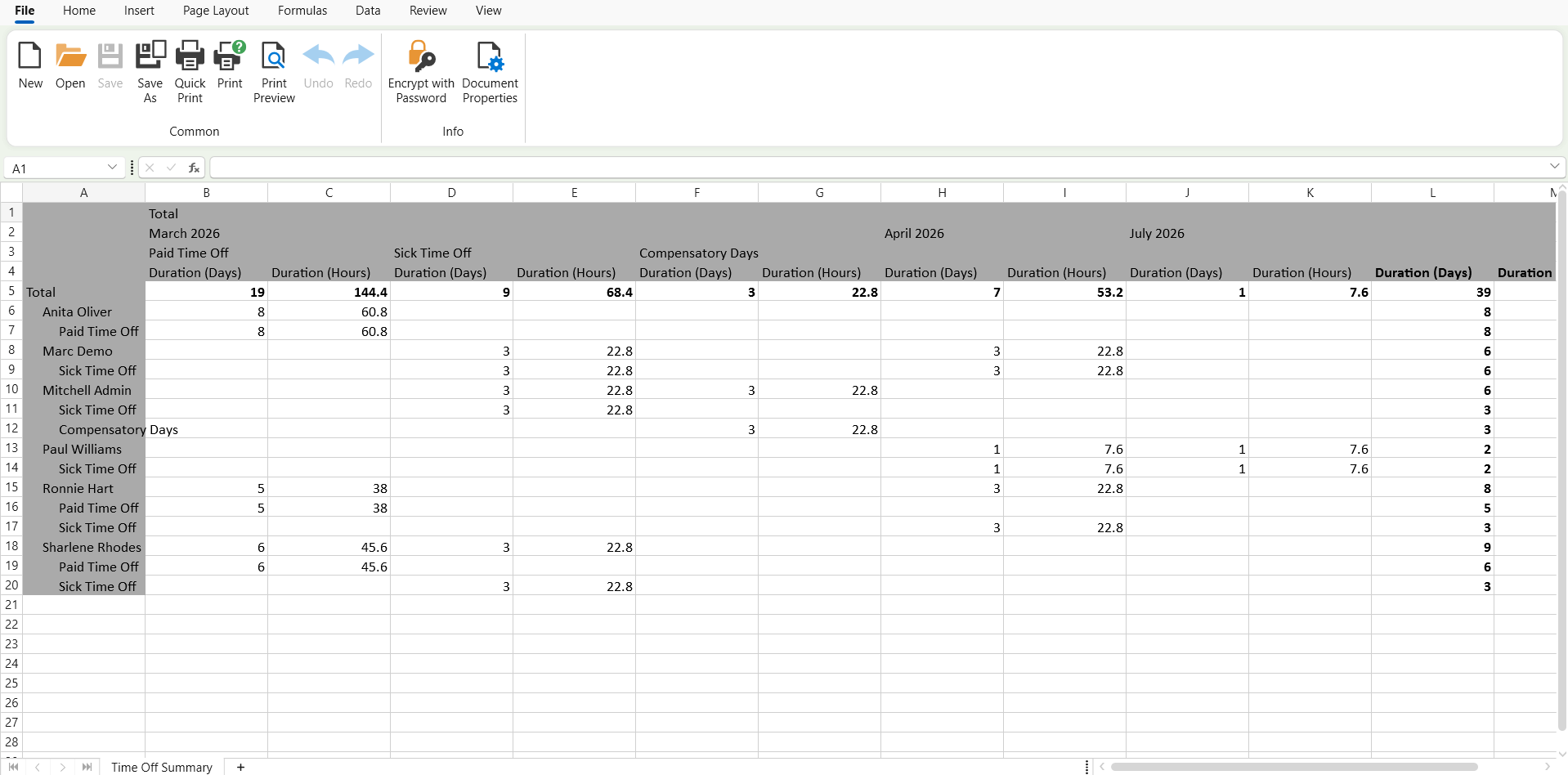
- Click the export icon, highlighted in orange below, to download the report for offline review or sharing with HR and leadership, as shown in the screenshot.
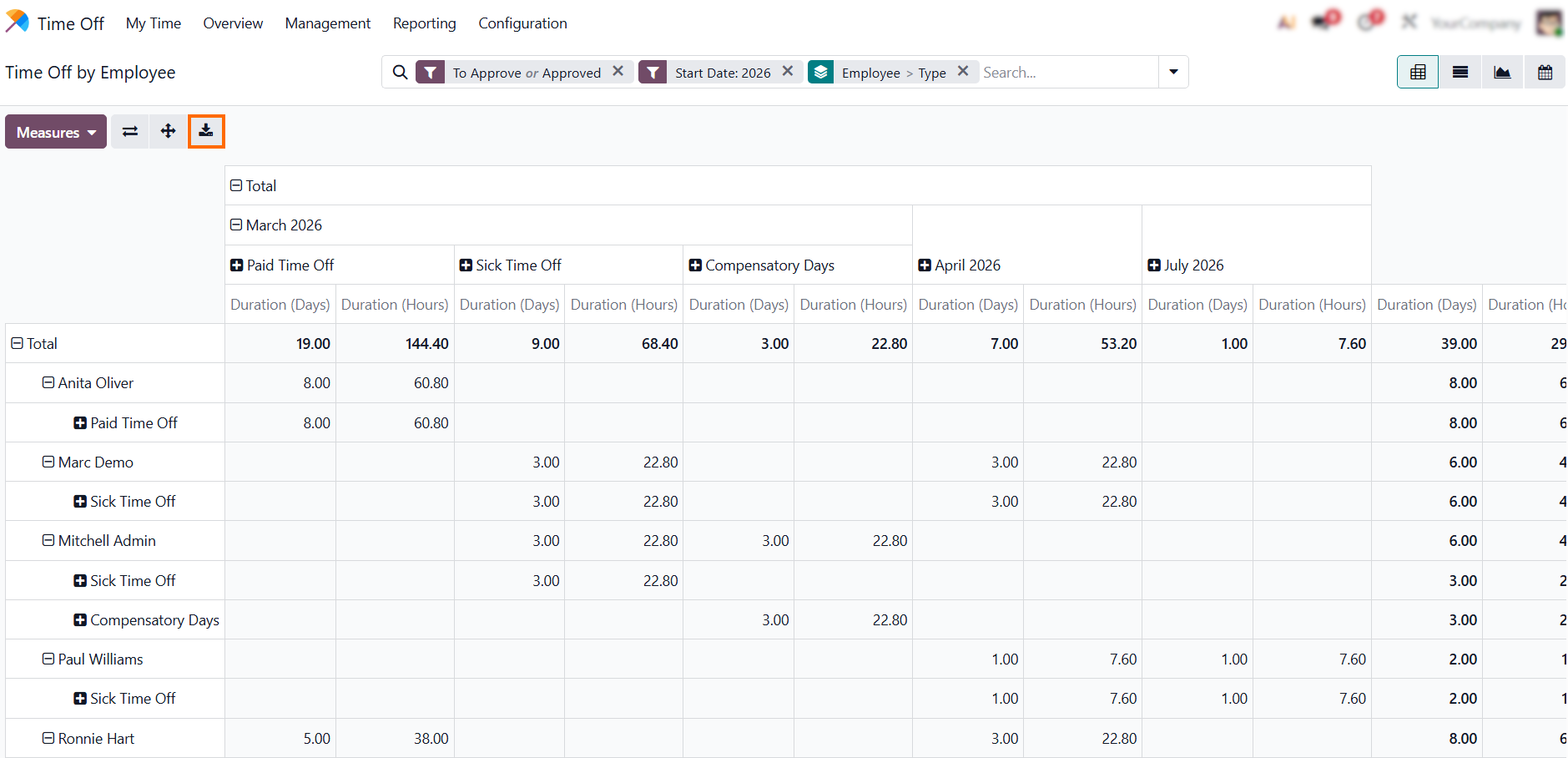
Use this report to analyze Odoo leave, track time off Odoo patterns, and monitor allocation and accrual plans Odoo, helping ensure workforce capacity aligns with organizational needs and working time configuration in Odoo.
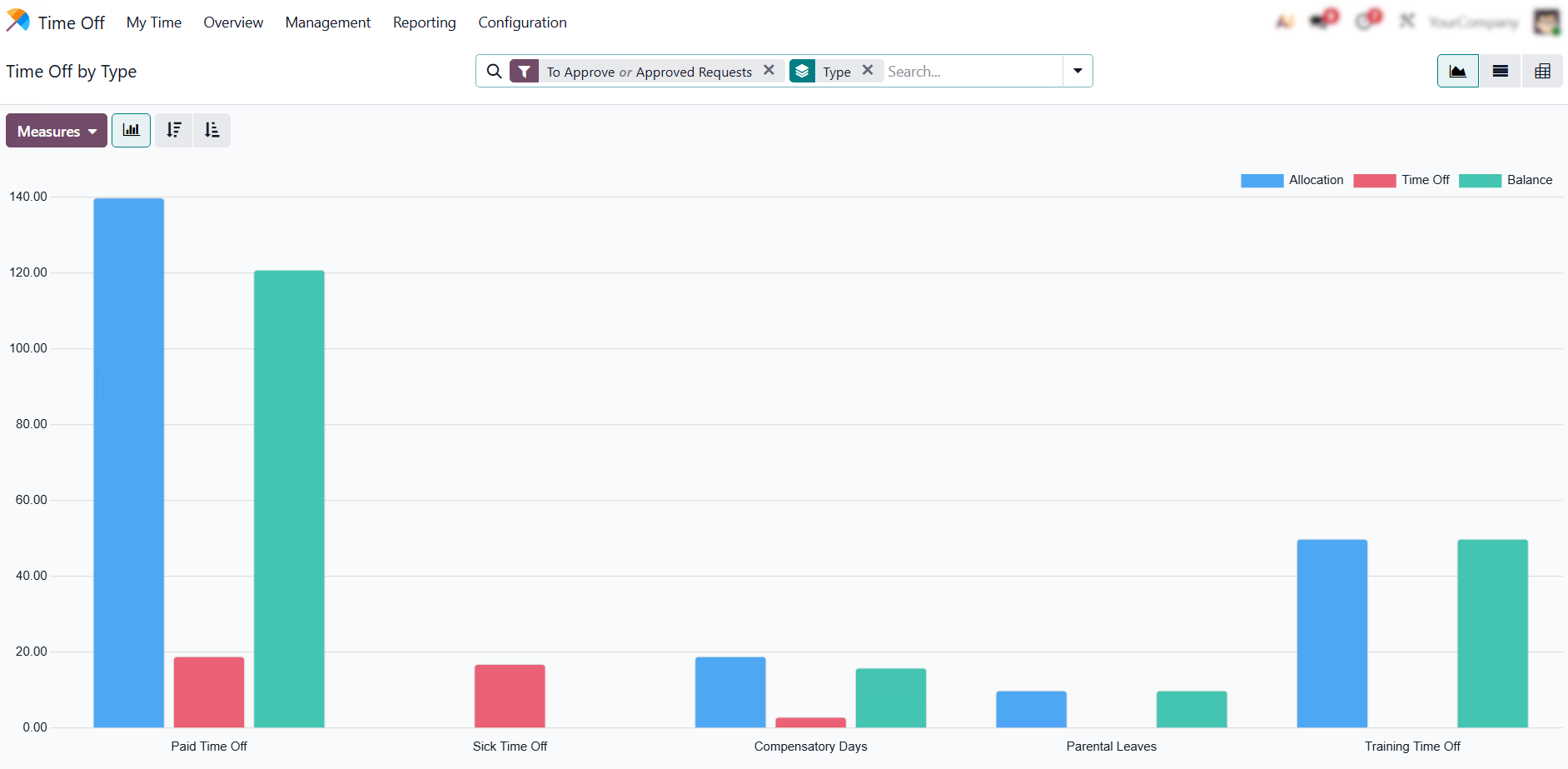
Finally, the Odoo TimeOff by Type functionality complements My Employee analysis, giving managers and HR a broader, visual understanding of leave trends across the organization.
Configuring
Odoo TimeOff: Leave Types, Accrual
Plans, Public Holidays, and Mandatory Days
Accurate leave management starts with proper configuration in Odoo TimeOff. Without a solid setup, Odoo time data can become inconsistent, leading to errors in time off Odoo balances, misaligned workforce planning, and compliance risks. By correctly defining Odoo leave types, setting up accrual plans Odoo, and managing public holidays and mandatory days, organizations ensure that time off Odoo is consistently calculated and reflected in Odoo leave management. Aligning allocation and accrual plans Odoo with working time configuration in Odoo provides employees and managers with a reliable view of remaining leave and supports transparent, data-driven HR decisions.
- Navigate to “Configuration” and select “Time Off Types” to manage existing leave categories or create new ones. Configure allocation rules, approval workflows, and visibility settings to ensure consistent Odoo leave management.
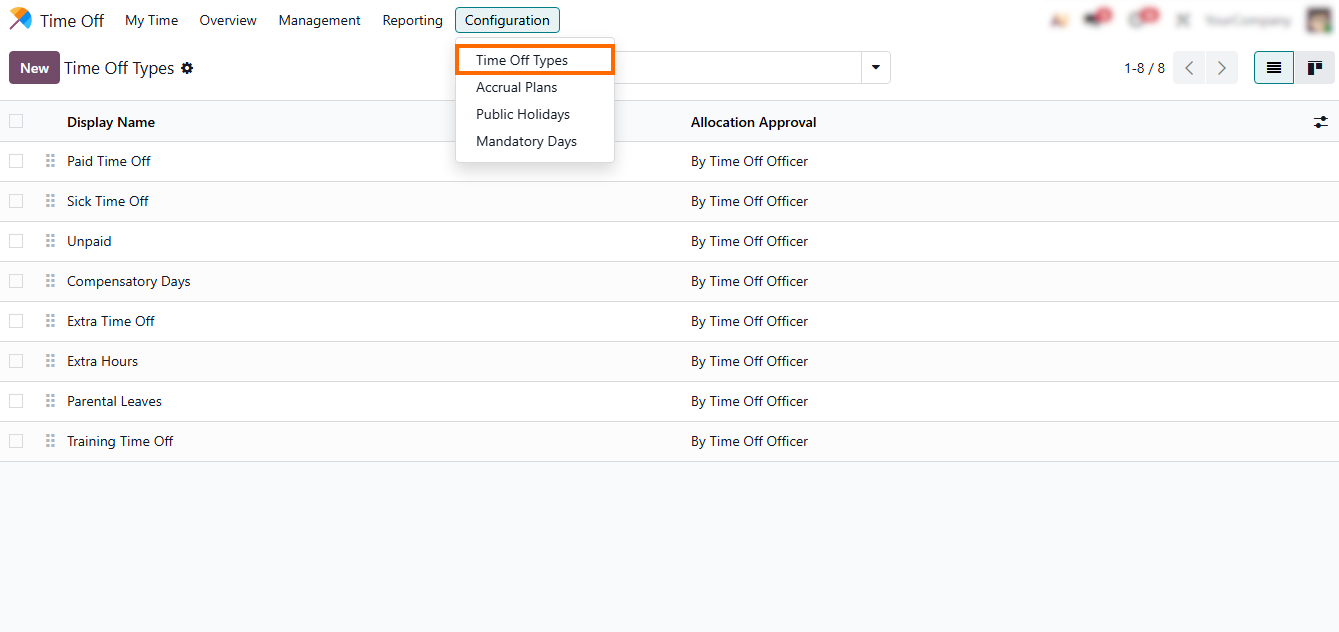
- You can edit existing Odoo TimeOff types or create a new one if needed, as shown in the screenshot below. This allows HR teams to adjust time off Odoo categories such as vacation, sick leave, or other absence types.
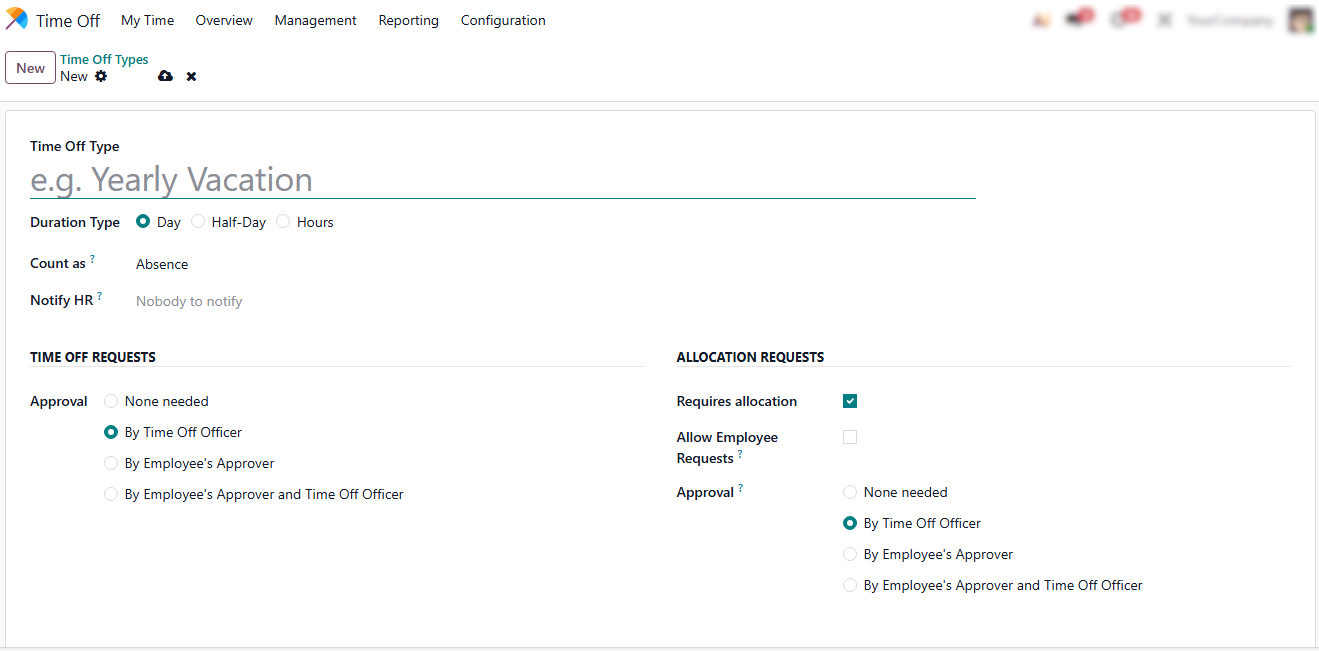
After entering the name of the new time off Odoo type, configure the remaining settings and select a color and icon for easier identification in the interface, as shown in the screenshot.
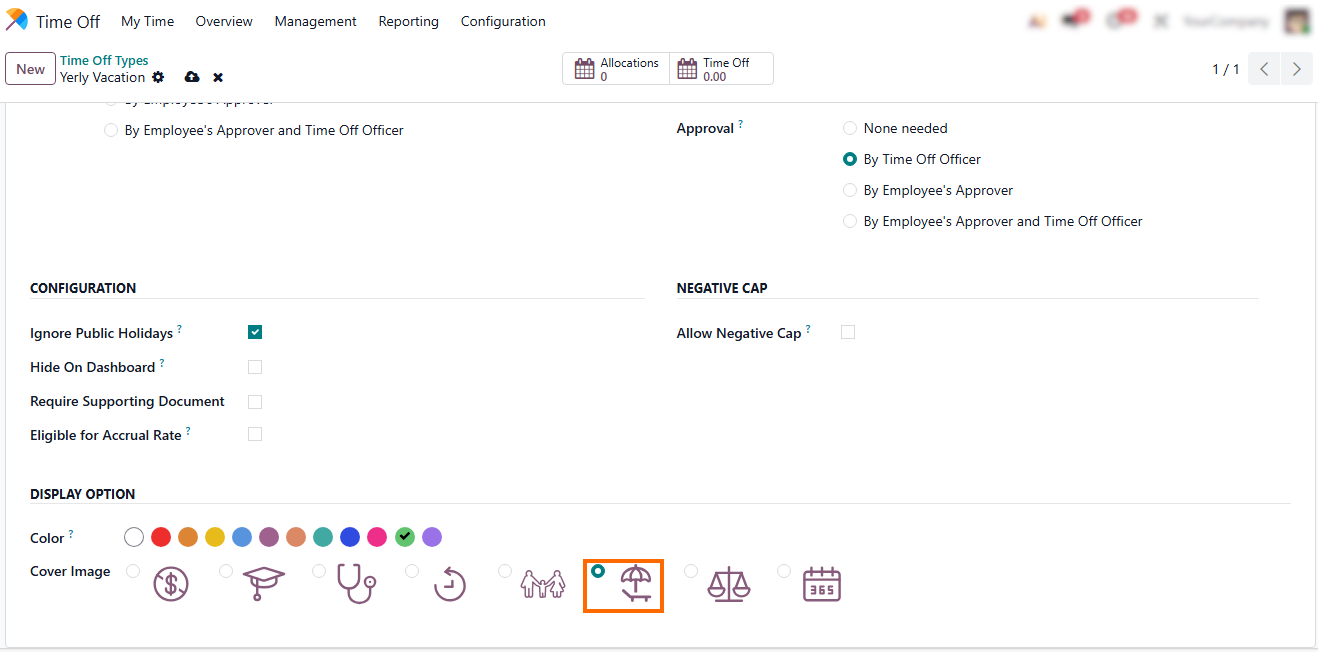
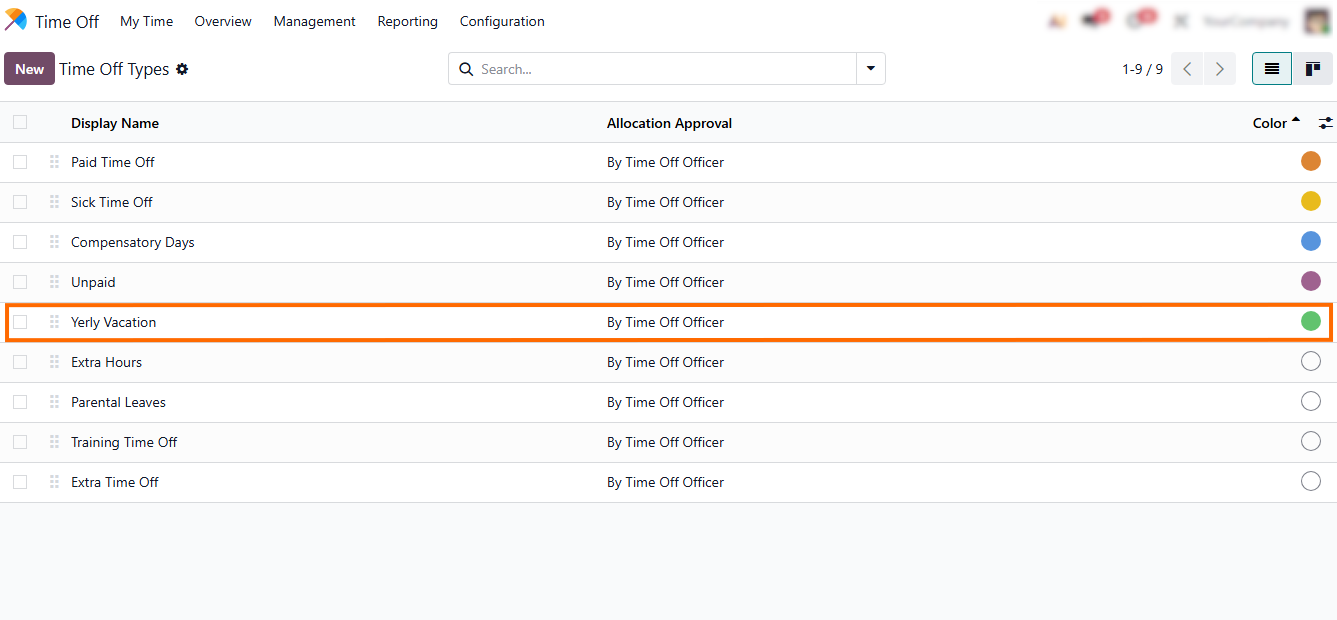
This allows organizations to tailor Odoo TimeOff types to their internal leave policies, keeping time off Odoo categories clear for employees and consistent within Odoo leave management.
Common Mistakes in Odoo TimeOff Reporting and How to Avoid Them
Even with a well-configured Odoo TimeOff system, reporting issues often arise from inconsistent setup or misuse rather than missing features. Many organizations rely on time off Odoo data for daily control and strategic planning but overlook foundational rules that directly affect accuracy. Because Odoo leave management generates reports from posted Odoo time and accrual plans Odoo, any misconfiguration can immediately impact leave balances and operational planning. Understanding these common pitfalls helps maintain reliable Odoo leave management while ensuring alignment with allocation and accrual plans Odoo and working time configuration in Odoo.
Misconfigured Leave Type and Time Off Odoo Setup
A frequent mistake is setting up Odoo leave types incorrectly. Misconfigured leave categories or accrual plans Odoo lead to inaccurate time off Odoo balances, affecting Odoo TimeOff dashboards and workforce planning. Proper configuration of Odoo leave types and allocation and accrual plans Odoo ensures that time off Odoo is calculated correctly and consistently across the organization.
Mixing Operational and Strategic Views in Time Off Odoo
Using operational time off Odoo reports for strategic planning, or strategic reports for operational control, creates confusion. Daily Odoo TimeOff dashboards track short-term allocations, while long-term planning requires analysis of accrual plans Odoo and overall Odoo leave management. Separating operational and strategic reporting ensures accurate workforce capacity planning and prevents errors in time off Odoo balances.
Over-Reliance on Exports Instead of Live Odoo TimeOff Data
Relying solely on exported time off Odoo reports can quickly become outdated. Live Odoo TimeOff dashboards allow HR teams to monitor leave balances in real time, ensuring allocation and accrual plans Odoo stay up-to-date and aligned with working time configuration in Odoo. Exported files should serve only as snapshots for offline review or sharing.
Retaining Legacy Logic Without Reviewing Odoo TimeOff
Organizations upgrading from older systems may retain outdated configurations. Legacy setups often fail to leverage modern Odoo TimeOff features, including accrual plans Odoo and advanced leave management. Periodic review of Odoo leave types, time off Odoo categories, allocation and accrual plans Odoo, and working time configuration in Odoo ensures full utilization of the system and reliable leave tracking.
Conclusion
Odoo TimeOff turns traditional leave tracking into a structured and transparent system that supports both daily HR operations and long-term workforce planning. By centralizing time off Odoo requests, approvals, and balances, organizations gain a consistent framework for managing employee availability and enforcing internal leave policies. Instead of relying on spreadsheets or disconnected tools, Odoo leave management consolidates absence data into a single system that HR teams and managers can trust.
When Odoo leave types, allocation and accrual plans Odoo, and working time configuration in Odoo are properly aligned, the system ensures that leave balances accurately reflect real employee entitlements. This allows companies to plan workloads more effectively, monitor team capacity, and maintain clear oversight of employee availability. With accurate accrual plans Odoo and structured reporting, Odoo TimeOff becomes a reliable operational layer for managing time off across growing organizations.
For companies using Odoo 19, implementing a well-configured Odoo TimeOff environment helps transform leave management from a routine administrative task into a data-driven HR process. By combining time off Odoo tracking, automated accrual logic, and transparent reporting, organizations can maintain consistent leave policies while ensuring workforce capacity remains predictable and well controlled.