Production planning in spreadsheet-based manufacturing operations is largely manual and reactive. Plans are created first and adjusted later, often without a clear understanding of how changes affect capacity, materials, or ongoing work. In contrast, production planning in Odoo Manufacturing is a connected process where demand, resources, and execution remain continuously aligned. Planning decisions are made with real operational context instead of static assumptions, shifting production planning from constant correction to controlled execution based on live data.
- Odoo Manufacturing centralizes production orders, bills of
materials, work centers, and inventory in a single system, eliminating version
conflicts and ensuring all teams operate on the same up-to-date planning data
rather than parallel
spreadsheet files.
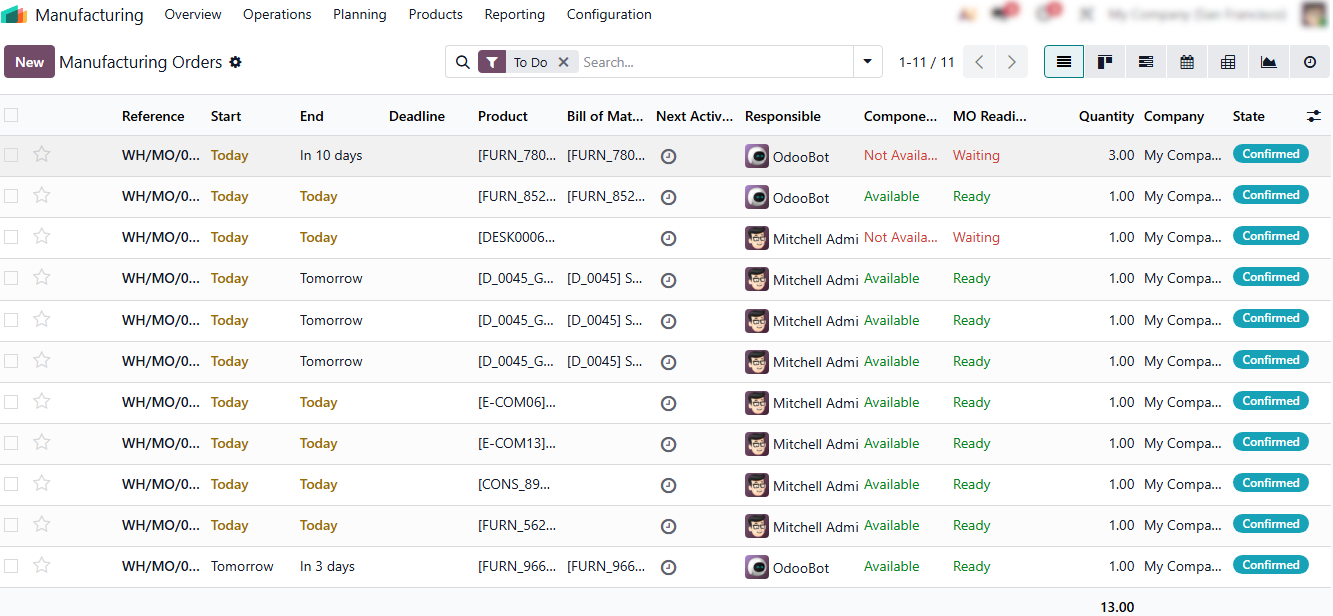
- Material availability is directly linked to production planning, so stock changes, shortages, and replenishments are reflected immediately without manual recalculation or replanning.
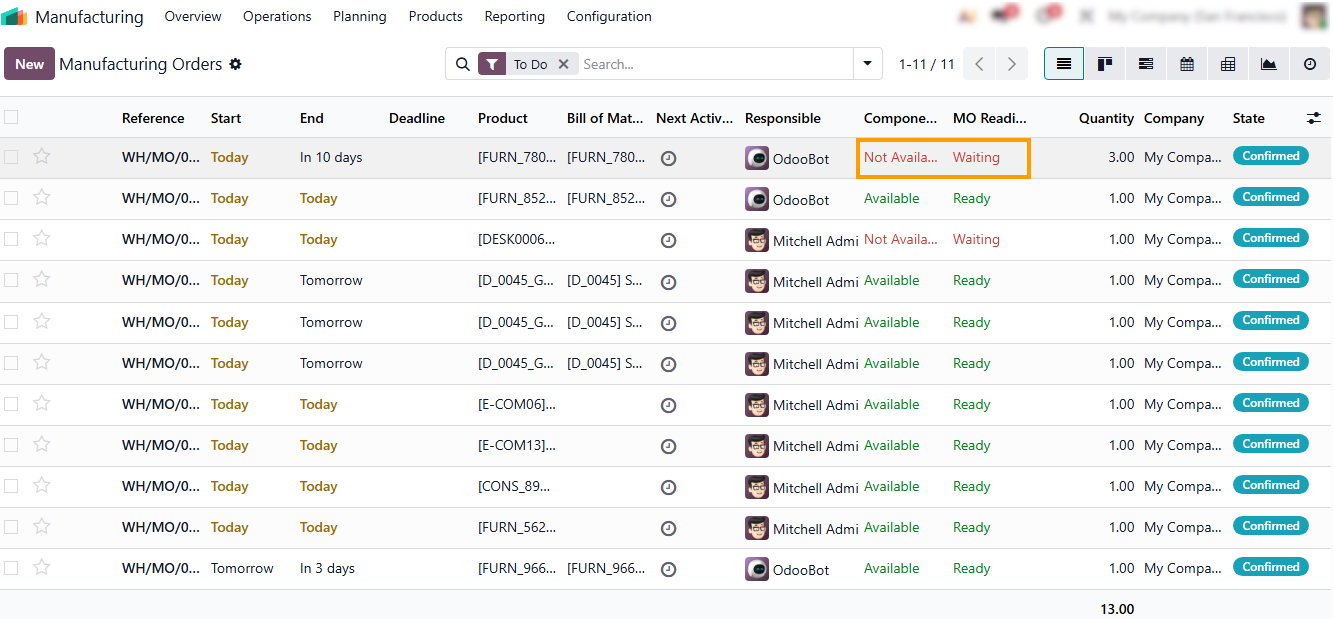
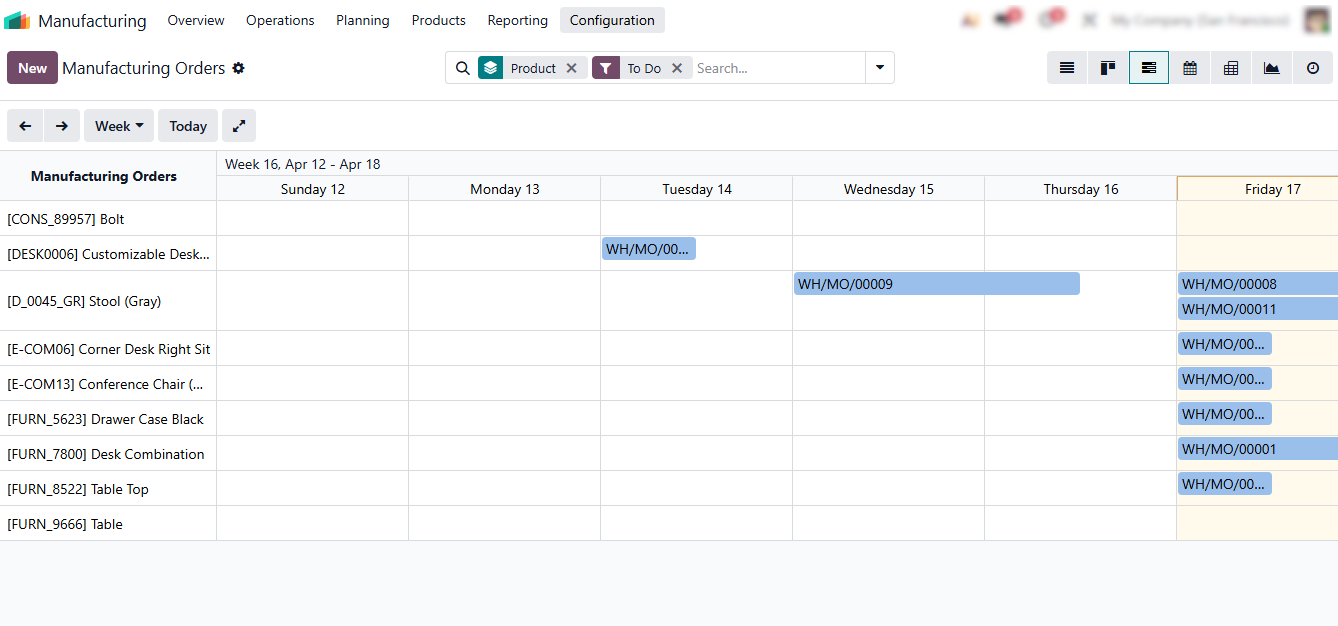
- Production schedules respect real capacity limits, while list, kanban, gantt, and planning views adapt operational planning to actual shop-floor workflows.
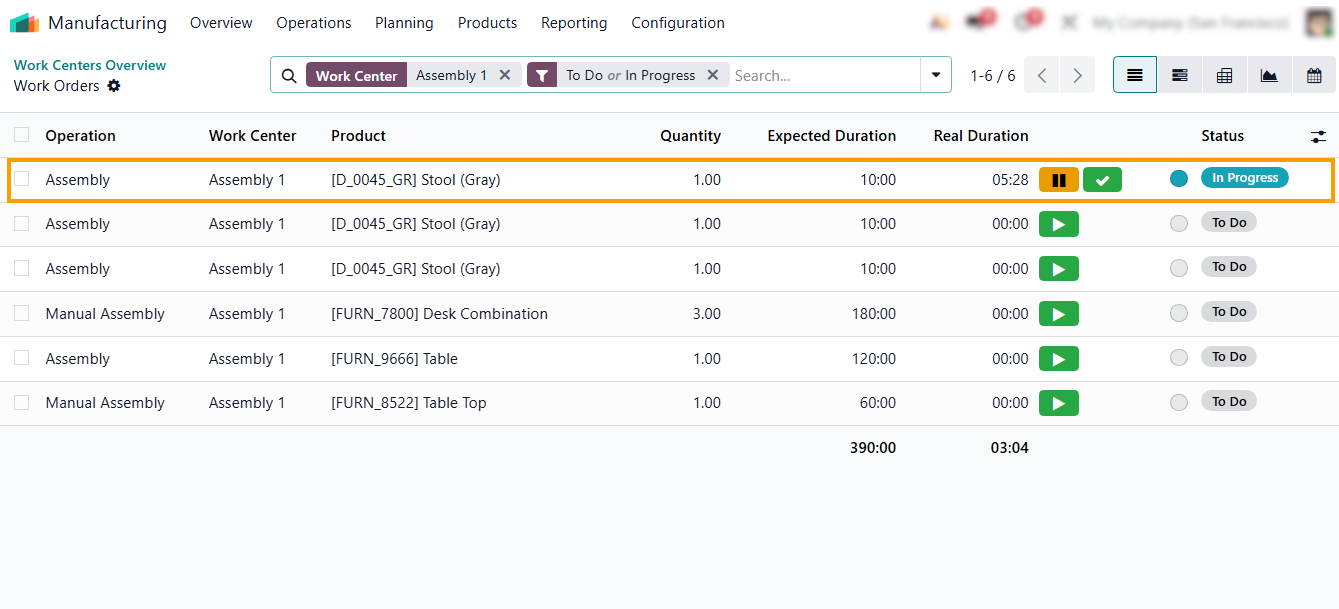
- Work order execution in the Shop Floor view provides real-time visibility into manufacturing progress, including active time tracking and live production updates.
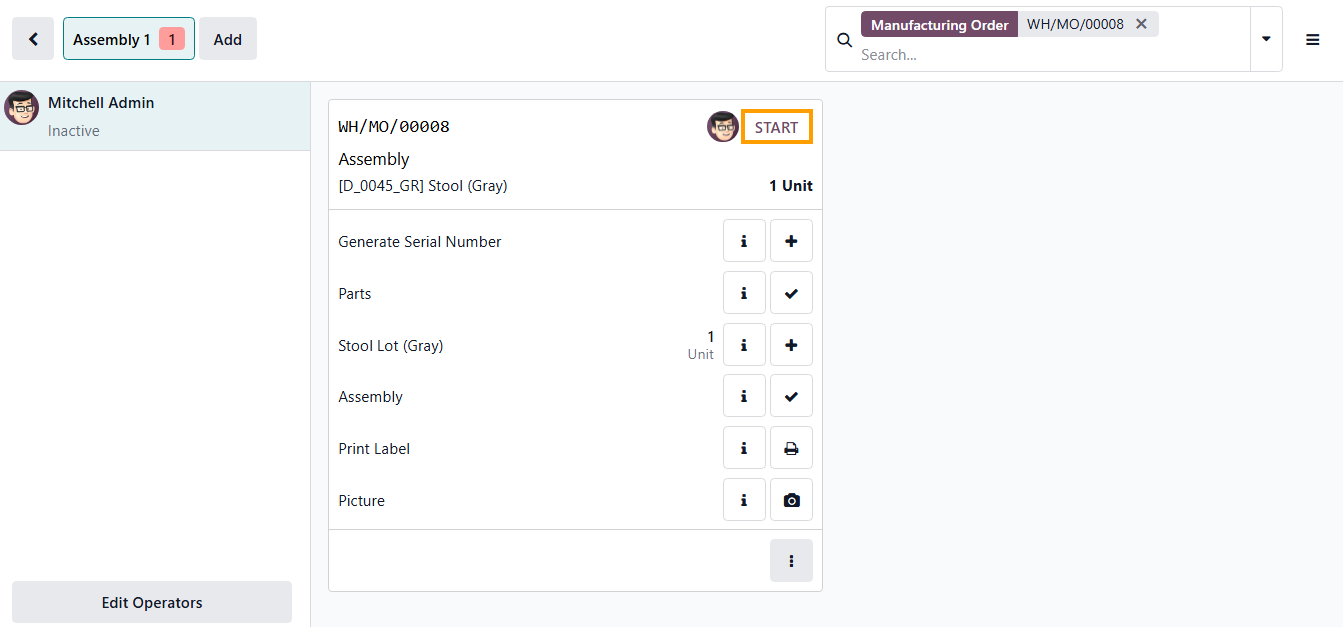
A real-time timer in Odoo tracks operation duration and execution progress, providing immediate visibility into production activity.
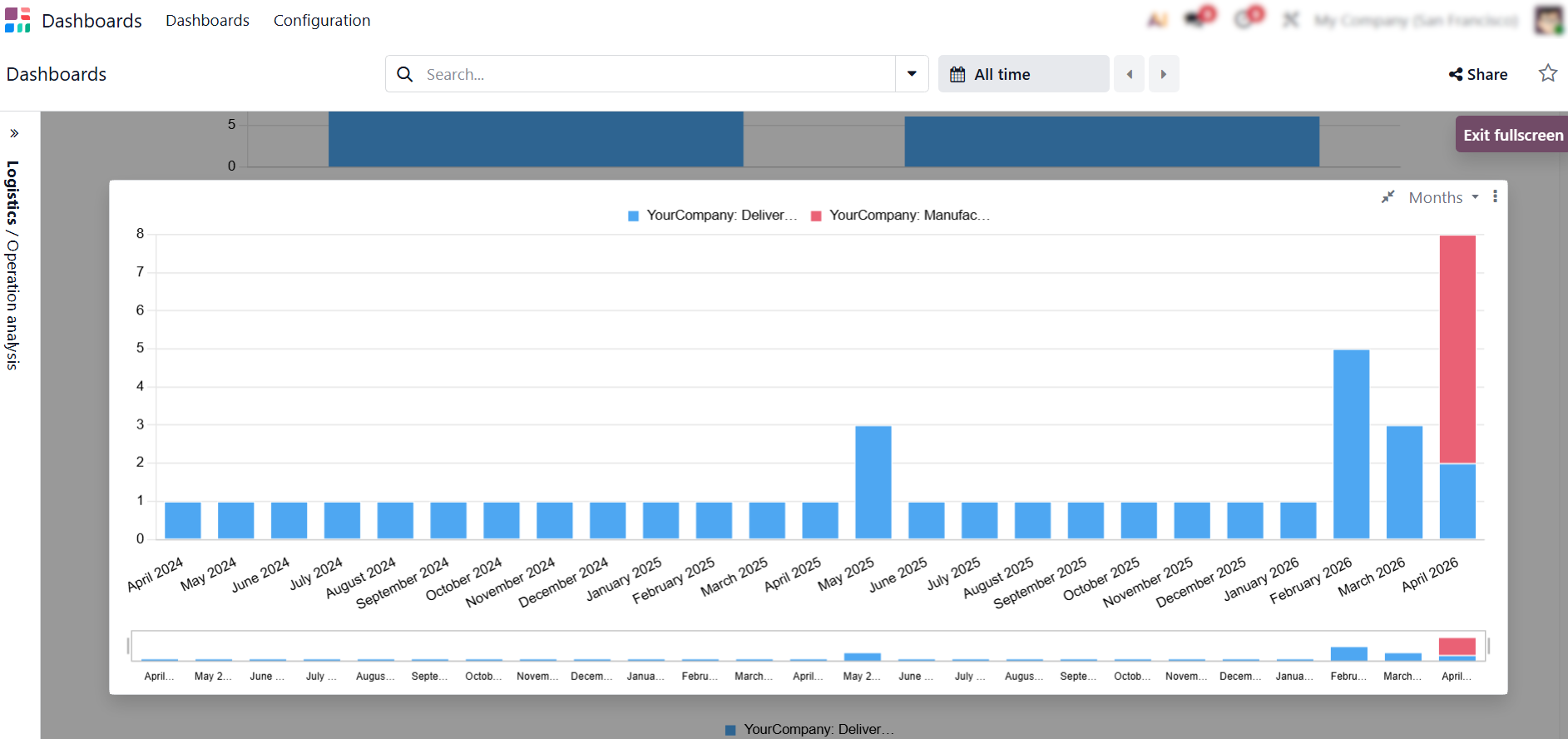
Making Planning Errors Visible Through Manufacturing Analytics
In spreadsheet-based manufacturing operations, the real impact of planning errors is difficult to quantify. Delays, inefficiencies, and capacity losses are distributed across disconnected files and resolved through manual interpretation. In Odoo Manufacturing, execution data is captured automatically and transformed into structured analytics. This visibility turns planning performance into measurable outcomes, reduces production planning chaos, and shifts decisions from assumptions to real operational data.
- Production planning assumptions are continuously compared with real execution, making
deviations visible and exposing inefficiencies hidden in spreadsheet-based
manufacturing operations.
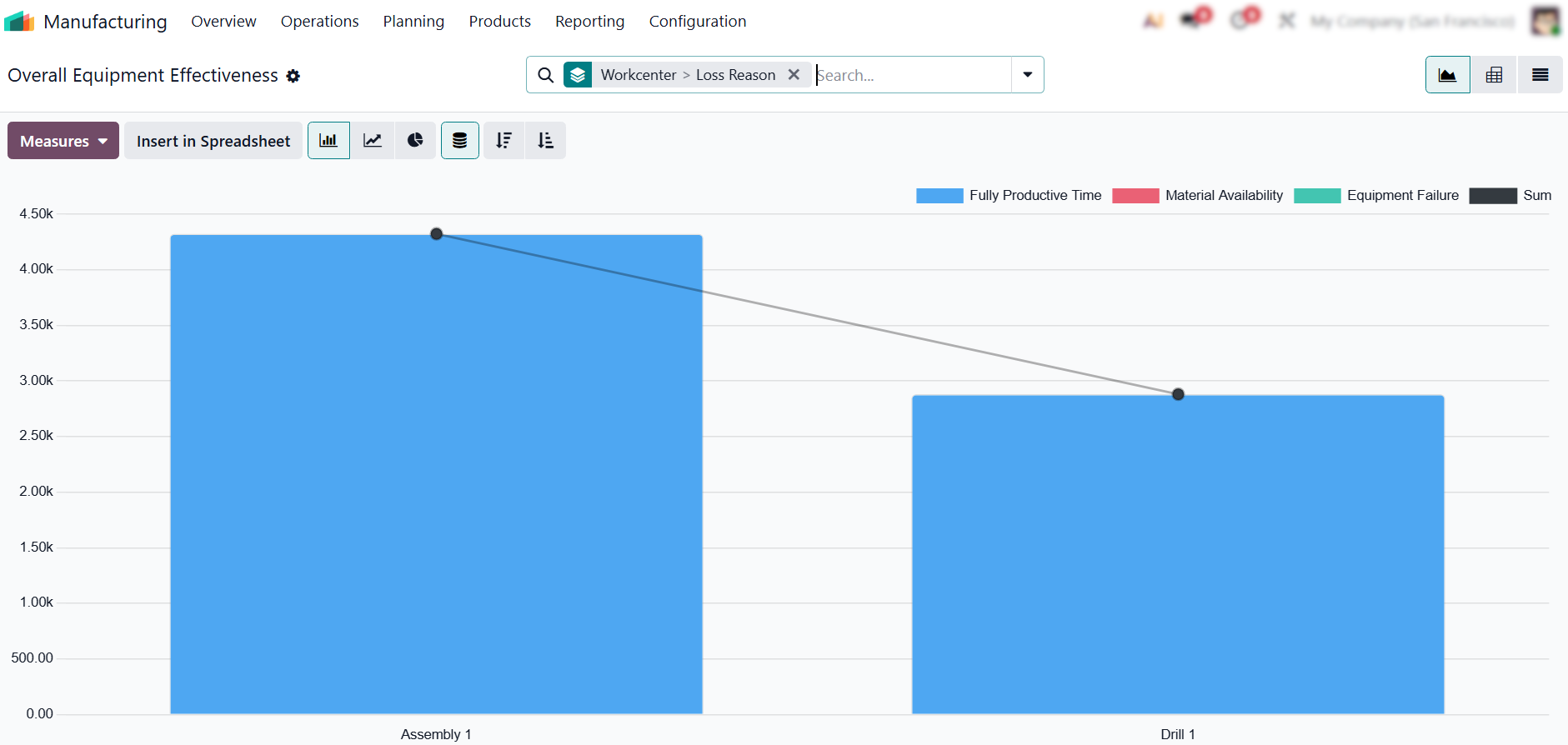
- Capacity in manufacturing operations
is measured through actual utilization rather than manual estimates, revealing real constraints instead of spreadsheet assumptions.
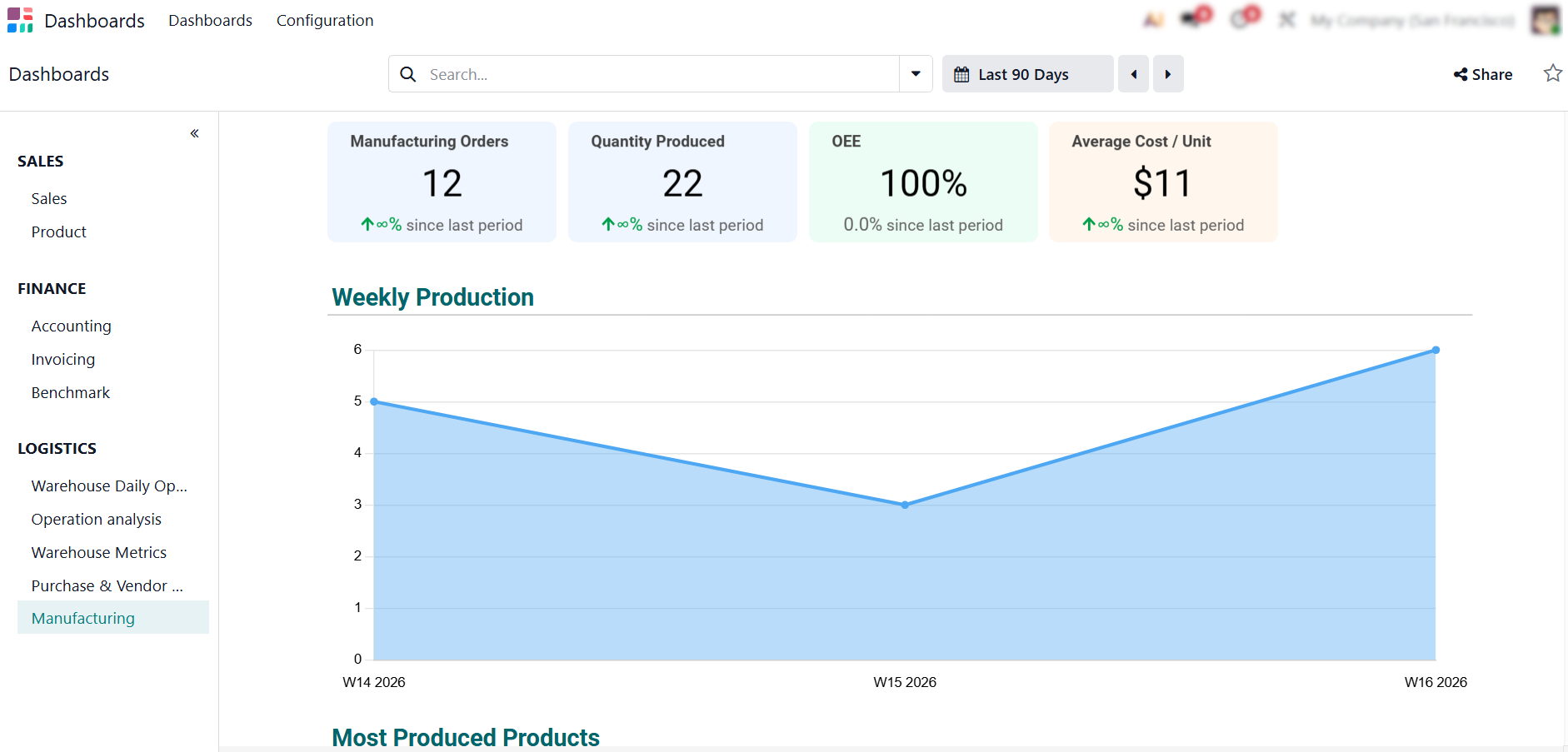
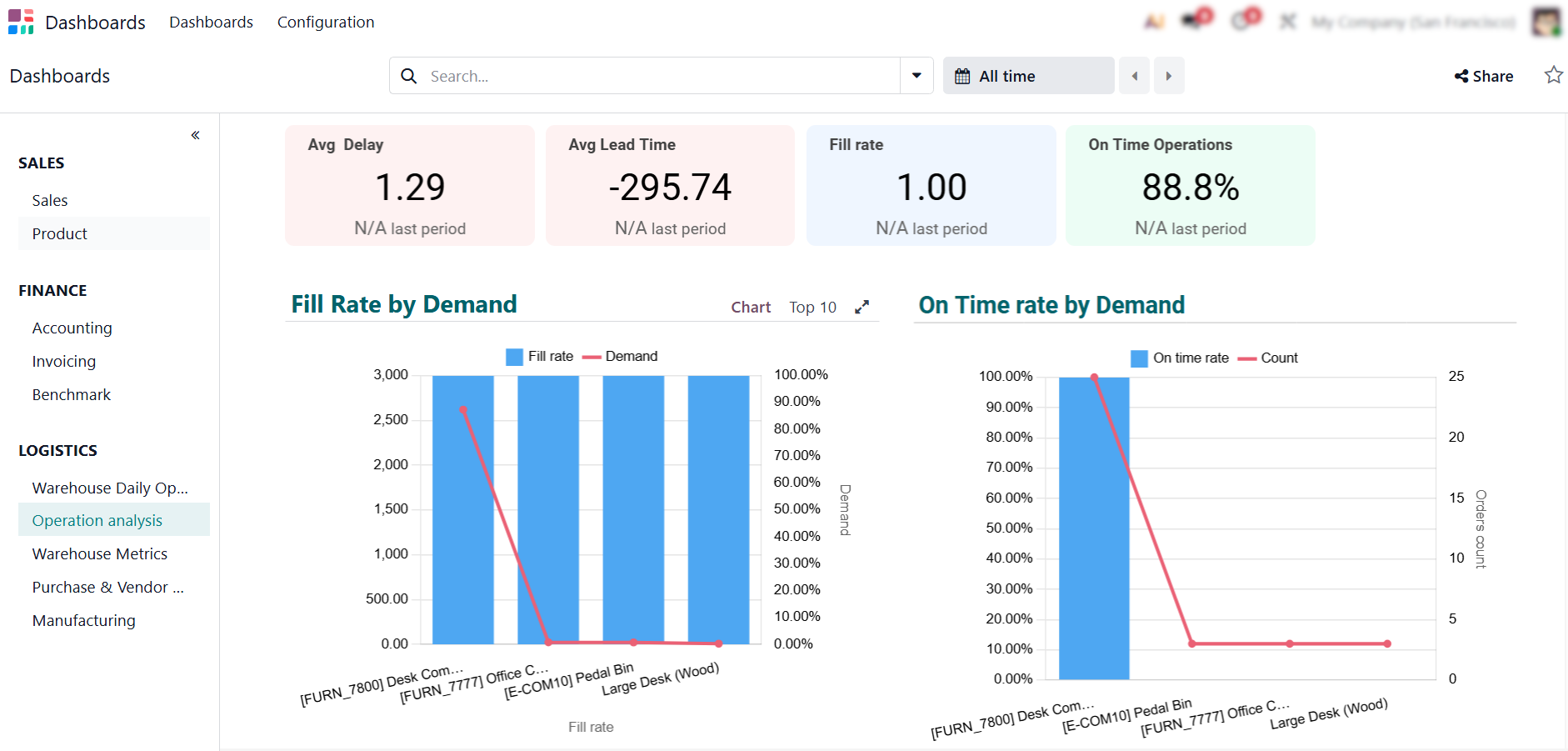
- Production performance is evaluated against customer demand, with fill rate and on-time delivery exposing gaps in production planning accuracy at scale.
- Weekly stock moves by operation provide full material traceability across manufacturing operations, ensuring end-to-end visibility of production flow that cannot be achieved with offline spreadsheet systems.
Conclusion
Typically, manufacturing operations are forced to operate on fragmented and incomplete information. Capacity is estimated manually, material availability is tracked in separate files, and execution status is reconstructed after the fact. Without a unified system, no single source of truth exists for production planning. As a result, planning decisions across manufacturing operations are continuously made under uncertainty, based on outdated or partial data. This results in measurable losses in time, production efficiency, and operational cost as teams spend more effort maintaining spreadsheets than optimizing manufacturing operations.
Odoo removes this structural limitation by connecting production planning, inventory, and execution within a single real-time system. Work centers, materials, and shop floor operations remain continuously synchronized, ensuring that planning decisions reflect actual capacity and constraints. This integration shifts production planning from a reactive spreadsheet-based process to a controlled operational workflow, reducing production planning chaos and restoring predictability, visibility, and consistency across manufacturing operations. For teams still relying on spreadsheets, this shift is not just an improvement but a necessary step toward scalable and reliable manufacturing operations in Odoo 19.