Manufacturing companies depend on the ability to source the right materials at the right time. Even a single missing component can delay an entire manufacturing order, disrupt production schedules, and increase operational costs. While Odoo Manufacturing already provides comprehensive tools for managing Bills of Materials (BoMs), inventory, and supplier information, procurement teams often face a different challenge: deciding which supplier can deliver the required components the fastest.
This decision becomes increasingly complex as products grow more sophisticated. A single Bill of Materials may contain dozens of components, each available from several vendors with different delivery lead times, pricing structures, and purchasing conditions. Reviewing every supplier manually is both repetitive and time-consuming, especially production needs to begin immediately.
Artificial Intelligence introduces a smarter approach to this process. Instead of requiring procurement managers to navigate through every product record and compare supplier information individually, AI can instantly evaluate available vendor data, identify missing components, and recommend suppliers with the shortest delivery times.
In this article, we'll explore how AI-powered supplier recommendations enhance procurement workflows in Odoo Manufacturing, helping businesses reduce delays, improve purchasing decisions, and keep production moving without unnecessary interruptions.

Why Choosing the Right Supplier Takes More Time Than Expected
Selecting suppliers is rarely as simple as choosing the lowest price. Manufacturing companies must balance delivery speed, inventory availability, supplier reliability, and production deadlines simultaneously. Although Odoo centralizes supplier information within each product, procurement teams still need to analyze multiple records before making purchasing decisions.
Manual comparisons become increasingly inefficient as manufacturing operations scale. What may take only a few minutes for one manufacturing order can quickly consume hours when dozens of products and hundreds of components are involved.
Multiple Vendors for Every Component
Many manufacturing components are purchased from multiple approved suppliers providing flexibility and creatinges additional decision-making responsibilities.
For example, a wooden tabletop might be supplied by three different vendors:
- Supplier A delivers within one day.
- Supplier B delivers within two days.
- Supplier C delivers within four days.
The same situation may exist for every other component within the Bill of Materials. Procurement teams must compare each vendor's delivery lead time individually before deciding which purchase orders should be created.
While this information already exists in Odoo, accessing it manually for every product quickly becomes repetitive and increases the likelihood of overlooking the fastest available supplier.
Manual Comparison Slows Procurement
Traditional procurement often follows the same repetitive workflow:
Open the Manufacturing Order.
↓
Review missing components.
↓
Open the first product.
↓
Navigate to the Purchase tab.
↓
Compare supplier lead times.
↓
Return to the Manufacturing Order.
↓
Repeat the process for every remaining component
Although none of these steps are particularly
difficult, they consume valuable time,—especially
when production depends on immediate purchasing decisions. During busy
production periods, these delays can postpone manufacturing even when suitable
suppliers are already available.
"The greatest procurement challenge isn't finding suppliers—it's identifying the fastest supplier for every missing component before production loses valuable time."
How AI Simplifies Supplier Selection in Odoo
Manufacturing
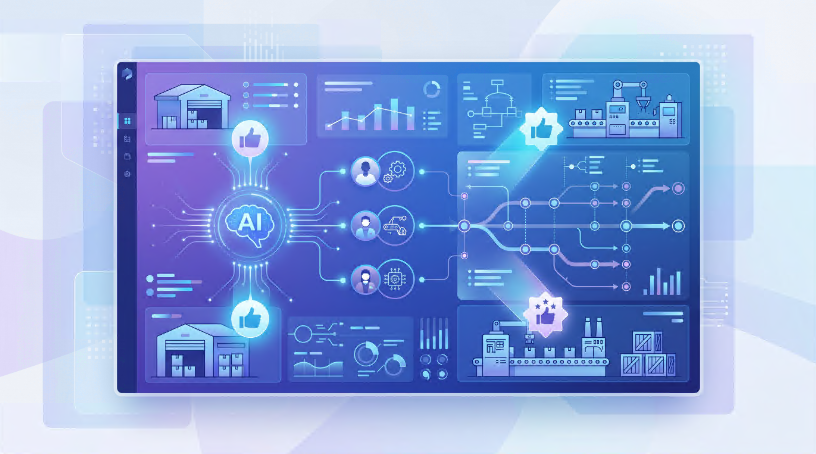
Artificial Intelligence transforms this manual comparison process into a centralized decision-support system. Rather than replacing procurement professionals, AI gathers existing supplier information, analyzes it instantly, and presents actionable recommendations directly within the Manufacturing Order.
This allows purchasing teams to focus on making informed decisions instead of collecting data from multiple product records.
Automatically Identifying Missing Components
As soon as a Manufacturing Order is created, AI can evaluate every component listed in the Bill of Materials.
Instead of requiring users to inspect inventory manually, the assistant immediately identifies:
- Components currently available in stock.
- Components requiring replenishment.
- Materials that may delay production.
- Items needing procurement before manufacturing can begin.
This immediate visibility allows production managers to understand the overall readiness of a manufacturing order within seconds.
Finding the Fastest Available Vendor
One of AI's most valuable capabilities is evaluating supplier delivery lead times automatically.
For every component requiring replenishment, AI reviews the supplier information already stored inside Odoo and recommends the vendor capable of delivering the material in the shortest amount of time.
Instead of opening several product records, procurement teams receive a consolidated overview that may include:
- Required component.
- Recommended supplier.
- Expected delivery lead time.
- Procurement priority.
This dramatically simplifies purchasing decisions while reducing manual research across multiple supplier records.
Faster Procurement Means Faster Manufacturing
Every hour spent waiting for procurement decisions can affect production schedules. Machines remain idle, employees wait for materials, and customer delivery commitments become more difficult to achieve.
By reducing the time required to identify the best supplier, AI contributes directly to faster manufacturing operations.
Reducing Production Delays
Manufacturing delays rarely begin on the factory floor.
More often, they originate during procurement when critical materials have not yet been ordered or supplier comparisons take longer than expected.
AI helps minimize these delays by providing immediate recommendations, allowing procurement teams to place purchase orders sooner and helping manufacturing begin without unnecessary waiting periods.
For organizations producing customized or low-volume products, where components are ordered specifically for each Manufacturing Order, this advantage becomes even more significant.
Helping Procurement Teams Make Better Decisions
AI
recommendations should not be viewed as automatic purchasing decisions.
Instead, they provide procurement specialists with immediate access to the most relevant supplier information, enabling faster evaluation of available options.
Experienced buyers can still consider additional factors such as:
- Supplier relationships.
- Pricing agreements.
- Minimum order quantities.
- Quality history.
- Contractual commitments.
Rather than replacing professional judgment, AI enhances it by removing repetitive administrative work.
"AI doesn't replace procurement expertise — It gives procurement professionals the information they need before manual research slows production."
Best Practices for Using AI Supplier Recommendations
Like any intelligent system, AI recommendations are only as reliable as the data they analyze. Organizations should treat supplier information as a strategic asset and ensure it remains accurate, complete, and regularly maintained.
When supported by high-quality purchasing data, AI becomes an increasingly valuable assistant throughout the manufacturing process.
Keep Vendor Information Up to Date
Supplier records should include accurate:
- Delivery lead times.
- Vendor availability.
- Purchase prices.
- Supplier priorities.
- Product-specific purchasing conditions.
Maintaining current supplier information allows AI to generate recommendations that reflect real purchasing conditions rather than outdated assumptions.
Combine AI Recommendations with Procurement Experience
Artificial Intelligence excels at processing information quickly, but experienced procurement professionals understand the broader business context behind every purchasing decision.
The strongest procurement strategy combines both capabilities.
AI identifies the fastest available supplier within seconds, while procurement specialists evaluate commercial risks, negotiate purchasing conditions, and ensure supplier relationships continue supporting long-term business objectives.
Together, this creates a more efficient procurement process without sacrificing strategic decision-making.
Conclusion
Artificial Intelligence is redefining how procurement supports manufacturing operations. Instead of spending valuable time navigating multiple product records and comparing supplier lead times manually, procurement teams can rely on AI to surface the most relevant information exactly when it's needed.
Within Odoo Manufacturing, AI-powered supplier recommendations provide a practical way to identify missing components, evaluate available vendors, and recommend the fastest delivery options without disrupting existing workflows. This enables manufacturing managers to respond more quickly to inventory shortages while helping procurement teams reduce repetitive administrative tasks.
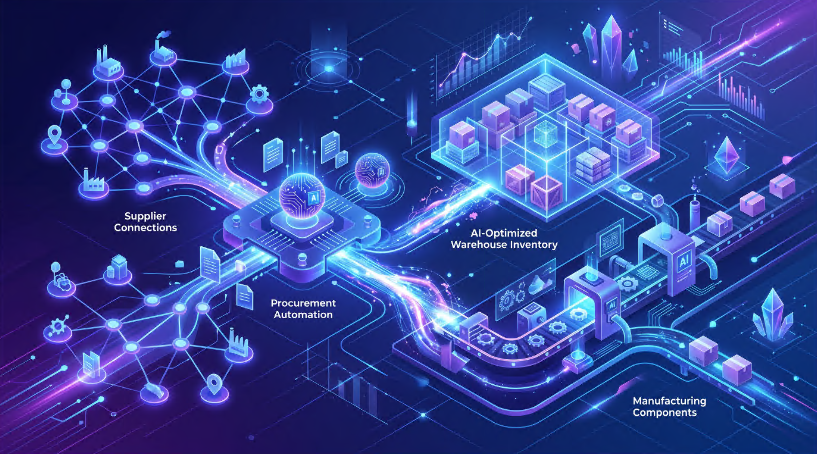
The result is a more connected manufacturing process where procurement, inventory, and production work together with greater efficiency. As manufacturing organizations continue to embrace intelligent automation, AI-driven supplier selection represents a meaningful step toward reducing delays, improving operational visibility, and delivering finished products to customers more consistently and on time.