Companies managing recurring purchases often expect a purchase agreement in Odoo 19 to be just a formal template or a one-off setup. In reality, an Odoo purchase agreement transforms procurement planning. It establishes predefined terms for products, quantities, and timelines while allowing multiple Odoo purchase orders to be generated within those limits. Understanding Odoo purchase management requires shifting focus from individual purchase orders to the strategic framework that governs repeated transactions and maintains control over supply and cost.
A purchase agreement in Odoo replaces ad-hoc ordering with a structured process that ties all Odoo purchase orders back to a single agreement. Each order is linked and monitored, ensuring that quantities, prices, and schedules are consistent with the original terms, while providing full traceability across Odoo procurement and Odoo order management workflows. This approach not only prevents over-ordering or accidental breaches of agreements but also creates an auditable trail for financial and operational review, reflecting the transparency principles embedded in Odoo purchase documentation.
Beyond operational convenience, Odoo purchase agreements establish a reliable framework for companies using multiple Odoo licenses. This enables scalable Odoo purchase features without compromising compliance or control. By standardizing repeated purchase Odoo activities within a single Odoo agreement, organizations improve forecasting, streamline approvals, and integrate seamlessly with broader Odoo purchase management and Odoo purchase order processes.
Making
Odoo Purchase Management Smarter with
Real-World Purchase Agreements
Many teams treat purchase agreements as optional paperwork. In practice, Odoo uses them as control layers that influence ordering logic, reporting accuracy, and long-term procurement visibility. A purchase agreement Odoo provides a structured framework that defines products, quantities, pricing, and timelines, enabling organizations to plan and control repeated purchase orders back to a single Odoo agreement, ensuring traceability, transparency, and consistency across Odoo procurement and Odoo purchase management processes. Leveraging this structured approach helps companies reduce errors, improve forecasting, and streamline approvals while making full use of scalable Odoo purchase features.
Why Purchase Agreements and Purchase Orders Serve Different Purposes in Odoo 19
One of the fundamental distinctions is that a purchase agreement Odoo serves as a planning and control framework, while a purchase order Odoo represents an actual procurement commitment. All Odoo purchase orders generated from an Odoo agreement are linked to that master agreement, ensuring alignment with agreed terms. This linkage allows companies to monitor consumption, maintain compliance, and track performance across Odoo procurement and Odoo purchase management, rather than treating each order as an isolated transaction. Pro-tip: Always link all purchase orders to their originating agreement to maintain compliance and traceability.
When to Use a Purchase Agreement Instead of a Standard Purchase Order
A purchase agreement Odoo is ideal for situations where purchases recur over time or require fixed terms with suppliers. Instead of creating separate Odoo purchase orders for each transaction, companies can establish a single Odoo agreement covering the entire period, quantities, and pricing. This approach is particularly useful for organizations managing multiple Odoo licenses and numerous purchase Odoo transactions, as it provides a clear framework for Odoo order management and prevents ad-hoc or inconsistent ordering.
How Odoo Purchase Agreements Enforce Limits and Maintain Control
Purchase agreements Odoo define clear limits on quantities, dates, and pricing. Each purchase order Odoo created under the agreement is automatically constrained by these limits, preventing over-ordering or out-of-contract purchases. Organizations can track remaining quantities, schedule deliveries, and maintain full transparency for financial and operational review. These controls integrate directly with Odoo purchase documentation, Odoo order management, and other Odoo purchase features, ensuring the agreement functions as an enforceable compliance mechanism rather than a passive template.
How Odoo Purchase Agreements Enhance Procurement Oversight
By standardizing recurring purchase Odoo activities within an Odoo agreement, companies gain better oversight of Odoo procurement workflows, approvals, and delivery schedules. All Odoo purchase orders are connected, providing a clear audit trail and enabling management to monitor progress against agreed terms. The structured framework strengthens Odoo purchase management, enhances efficiency, and ensures consistent application of scalable Odoo purchase features, making purchase agreements Odoo a strategic instrument rather than a simple operational convenience. Pro-tip: Schedule regular review sessions for active agreements to ensure delivery dates and quantities align with operational needs.
Types of Odoo Purchase Agreements and How They Affect Purchase Orders
The agreement type defines how a purchase agreement Odoo is used and how Odoo purchase orders should be generated. It determines whether the agreement supports recurring purchase under fixed terms or supplier selection before placing an order. In Odoo 19, Blanket Order is the most common option for repeated quantities and commitments within a single Odoo agreement. Other types, such as Call for Tender, are used when offers must be compared before confirming procurement, making the agreement type a structural control element in Odoo procurement and Odoo order management. Pro-tip: Choose the correct agreement type based on procurement strategy to enforce the right control logic.
How
Purchase Agreements Are Activated and Controlled in Odoo 19
Working with a purchase agreement Odoo begins with enabling the core purchasing components rather than configuring the agreement itself. Users exploring Odoo purchase agreements sometimes expect them to appear by default, but in practice they depend on the activation of the Odoo Purchase module and its related settings. This initial setup defines how Odoo purchase orders are created, validated, and linked within the broader Odoo procurement and Odoo order management framework, setting the foundation for agreement-based purchasing logic. Once the Purchase module is installed, key options within Odoo purchase management become available, including Odoo purchase features related to agreement-based ordering.
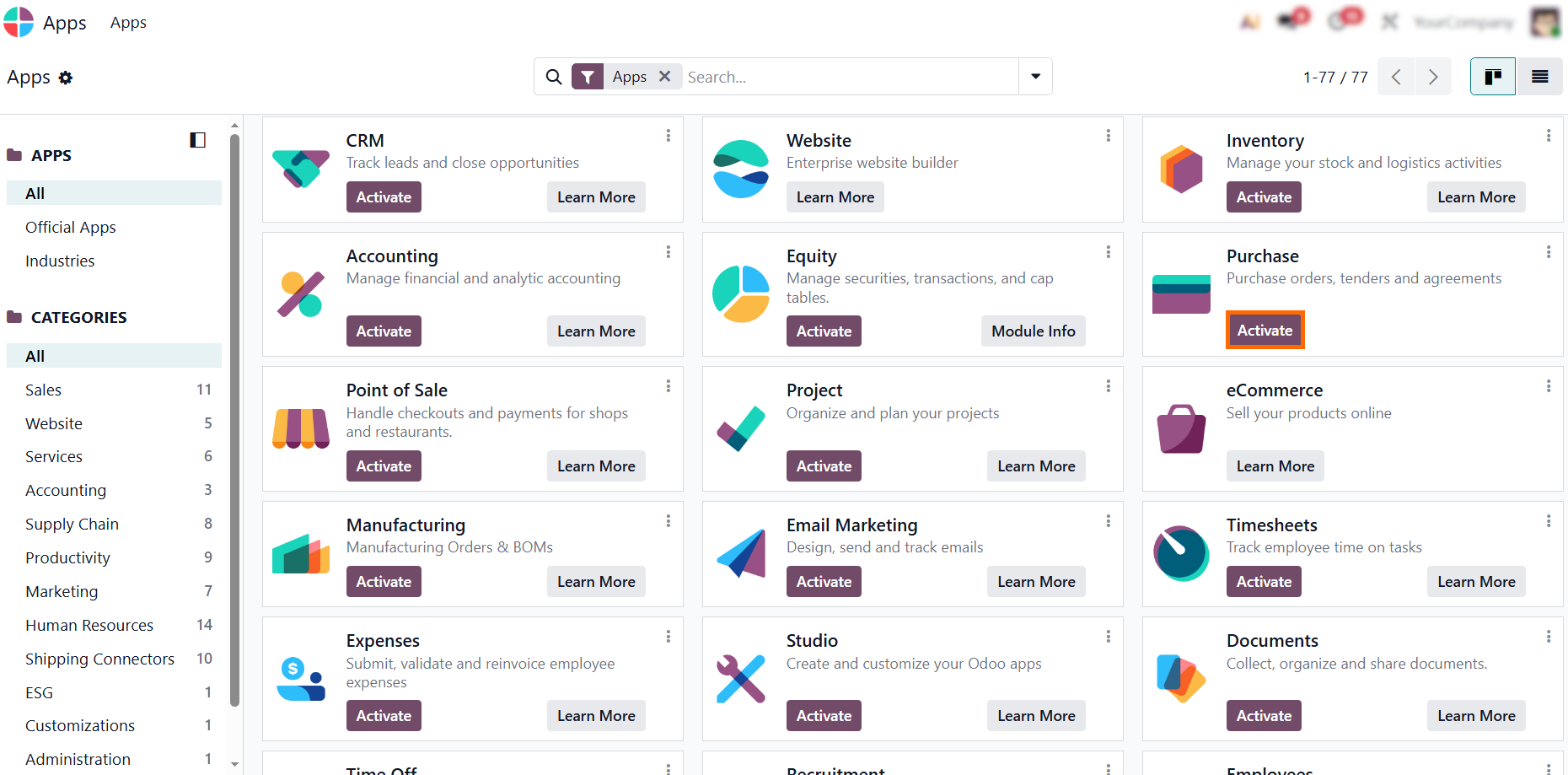
- From the apps menu, select Purchase and click “Activate”. This step enables the module and grants access to the initial configuration settings required to proceed with purchase agreement-related functionality.
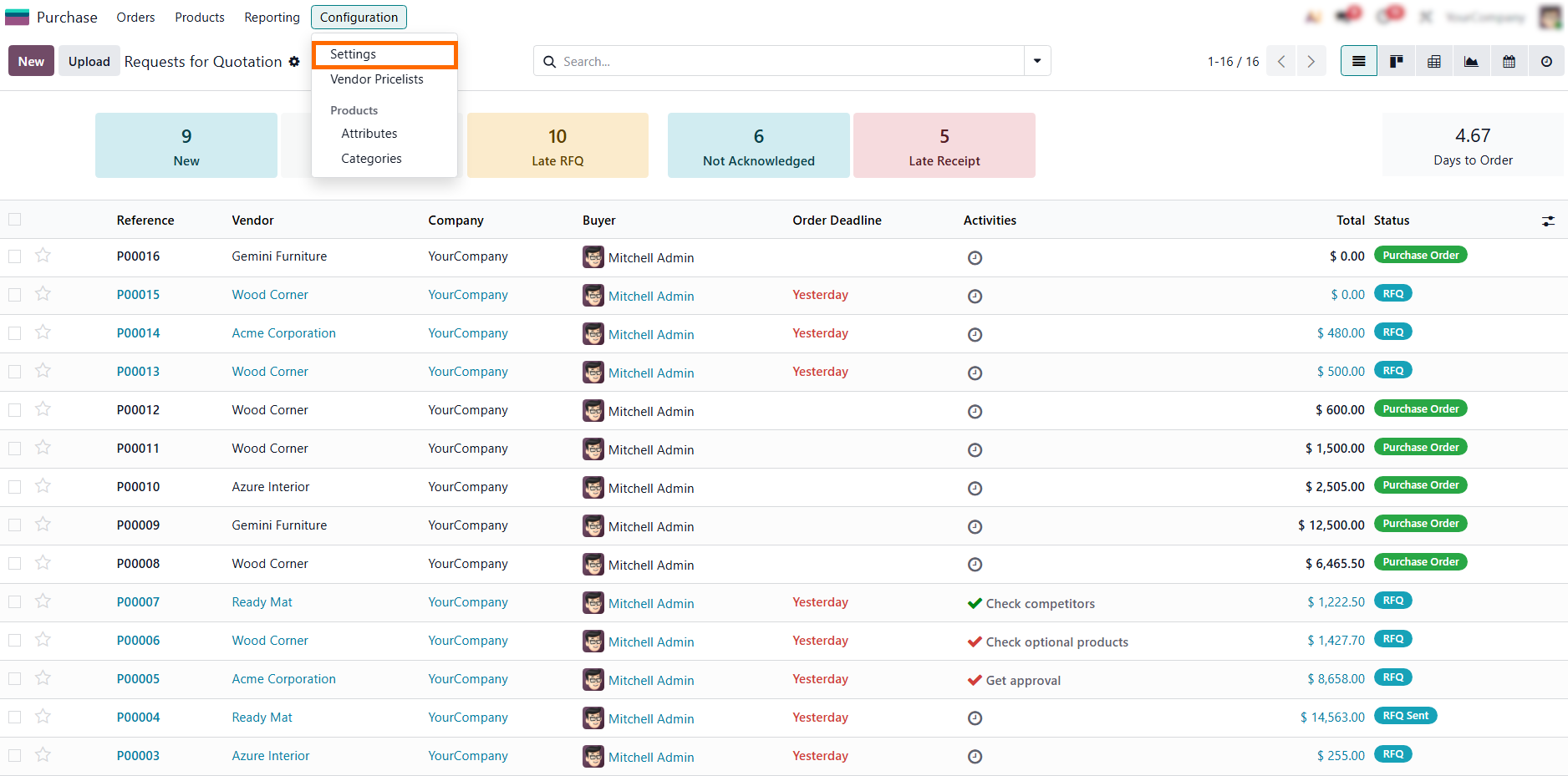
- After activation, open the Purchase app, navigate to “Configuration”, and select “Settings”, as shown in the screenshot below, to access the options that control purchase workflows and agreement-based ordering behavior.
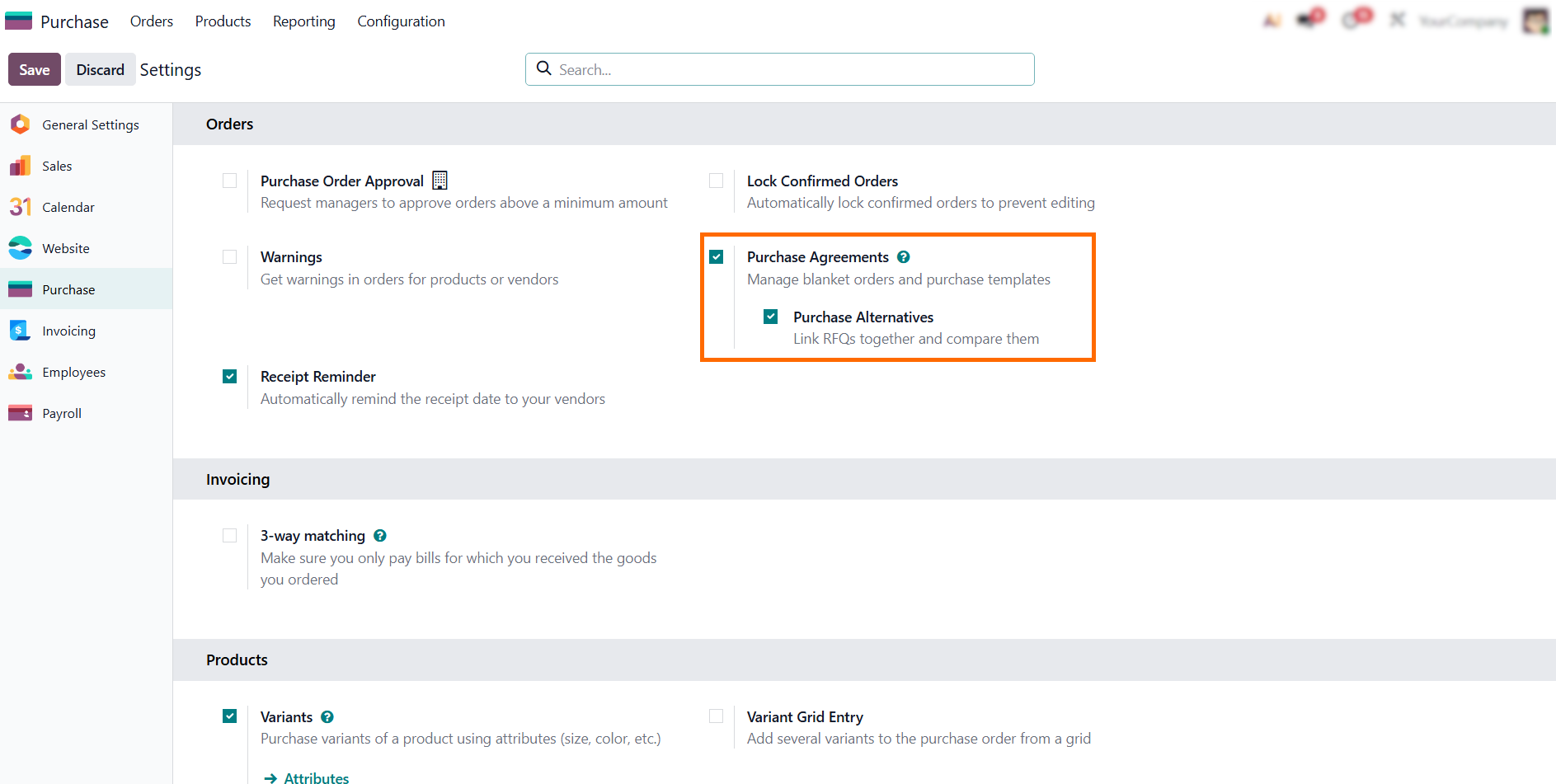
- In the Settings panel, enable the “Purchase Agreements” feature. At this stage, it is also recommended to activate “Purchase Alternatives”, allowing Odoo 19 to suggest alternative products or suppliers when creating agreement-based purchase orders.
From
Configuration to Execution: Purchase Agreements in Odoo 19
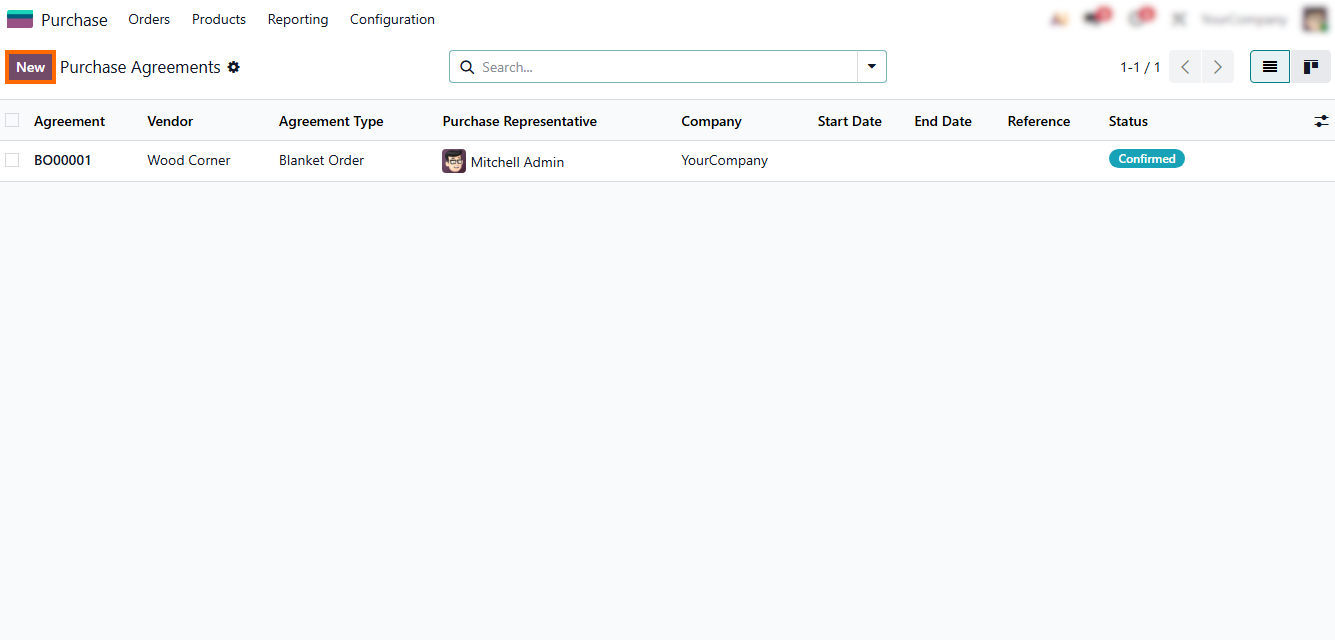
The Purchase Agreements screen is the starting point for working with agreement-based procurement in Odoo 19. This view displays all existing purchase agreements in one place and allows users to create new ones before generating any purchase order. Instead of beginning procurement with individual purchase orders, Odoo introduces an agreement-first approach that defines the commercial framework upfront. From the Purchase Agreements window, procurement teams can review vendors, agreement types, validity periods, and remaining quantities at a glance. This makes it easier to understand the current state of each Odoo agreement before creating related purchase orders. By separating the agreement layer from operational purchasing, the system improves visibility across Odoo procurement and Odoo order management while ensuring that every purchase order follows predefined and documented terms.
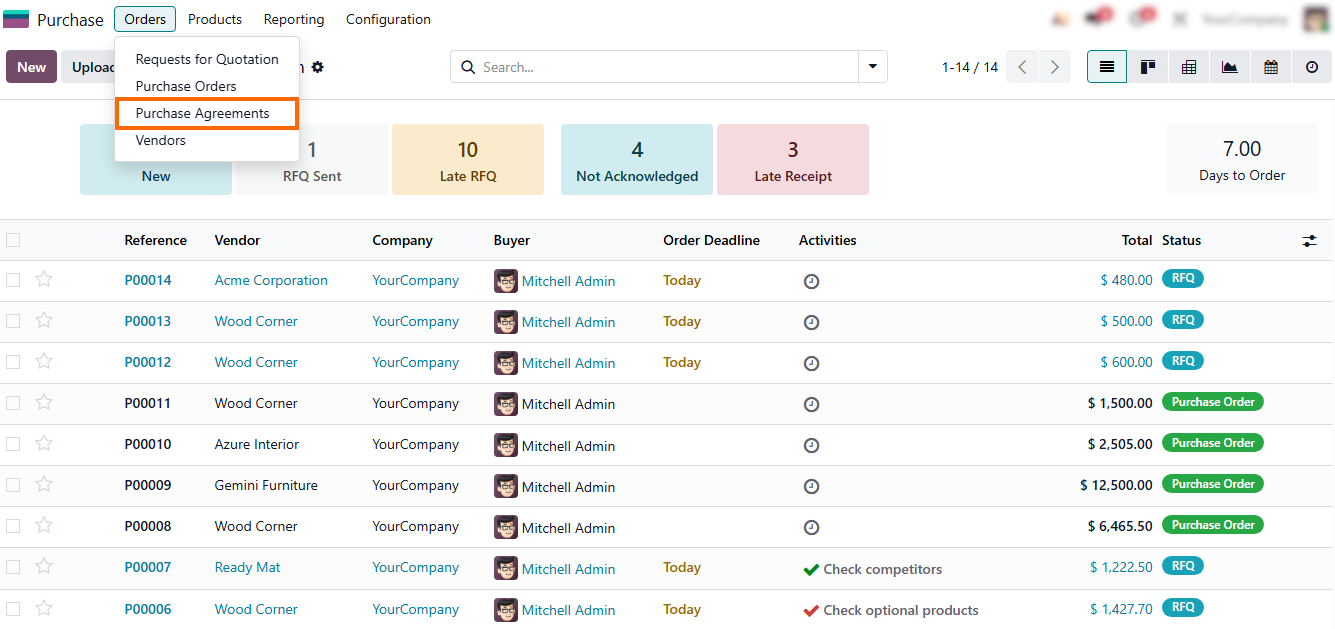
- Next, click “Orders” and select “Purchase Agreements” to view existing agreements or create new ones. This screen provides a clear overview of all active and draft agreements.
- Now, with existing Odoo agreements visible, you can edit them or create new ones, set validity periods, and manage linked purchase orders, as shown in the screenshot below.
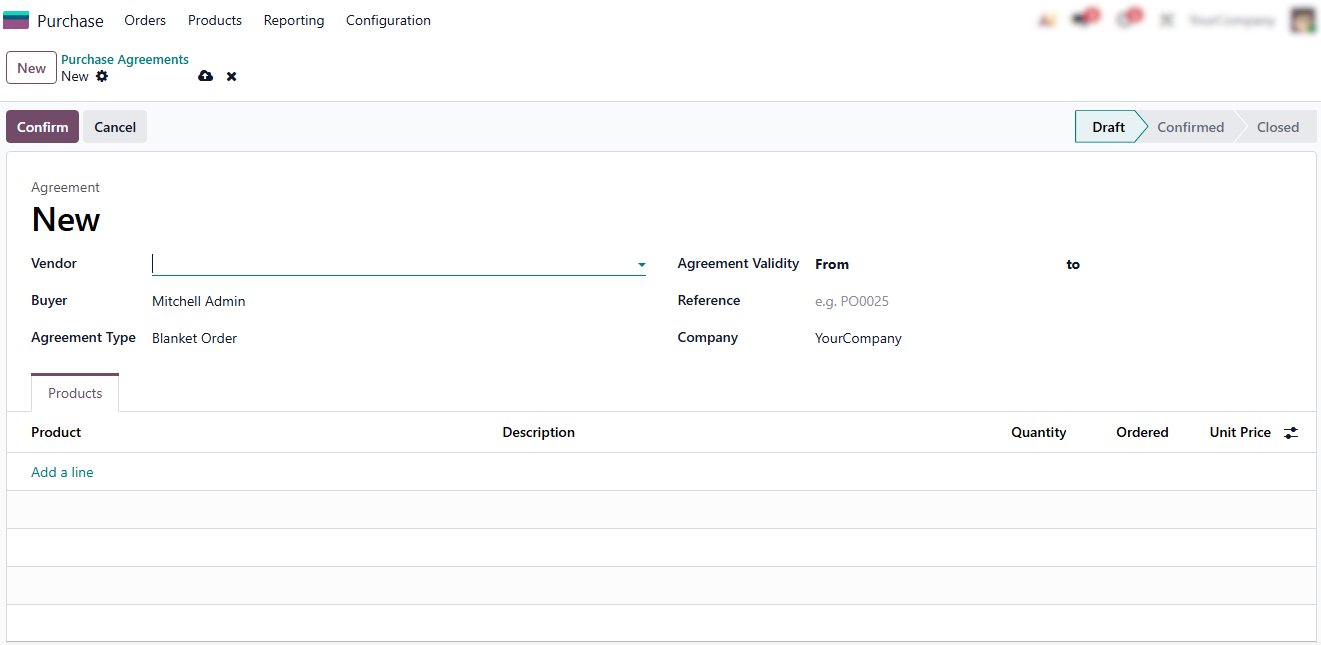
- In the agreement form, select the vendor, agreement type, and define the validity and ordering dates to set the commercial and operational scope of the Odoo agreement.
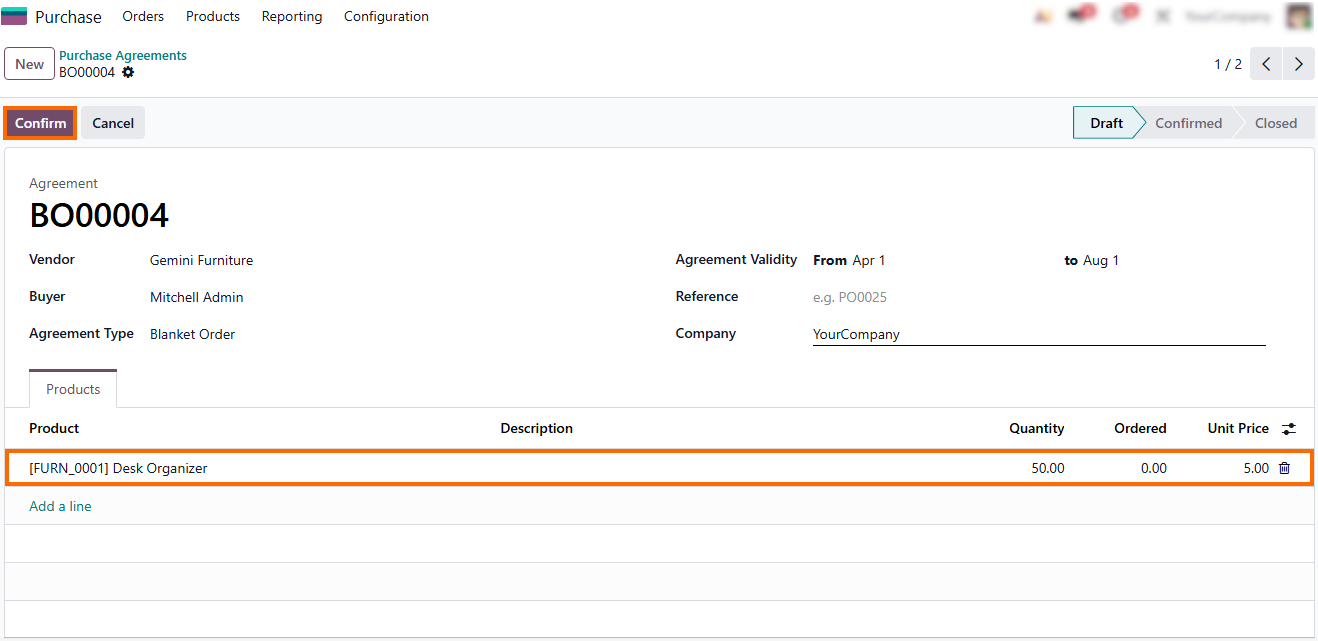
- Next, add product lines by selecting the Product, entering a Description if needed, defining the Quantity, and setting the Unit Price according to the agreed terms, then click “Confirm”.
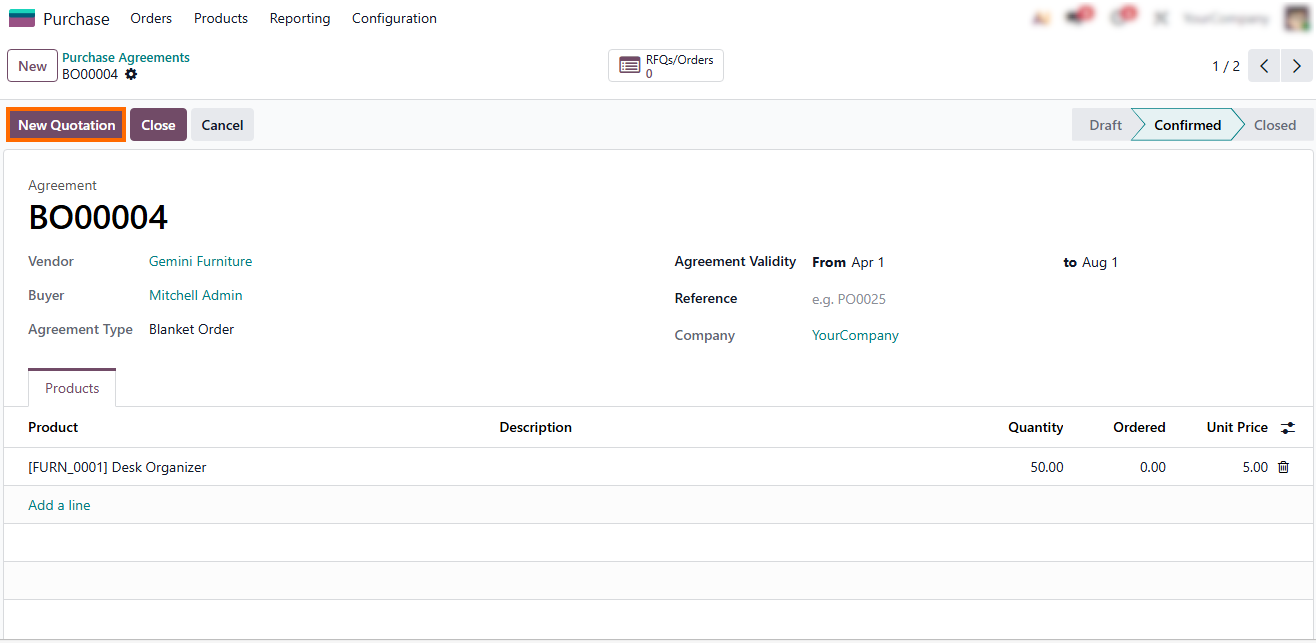
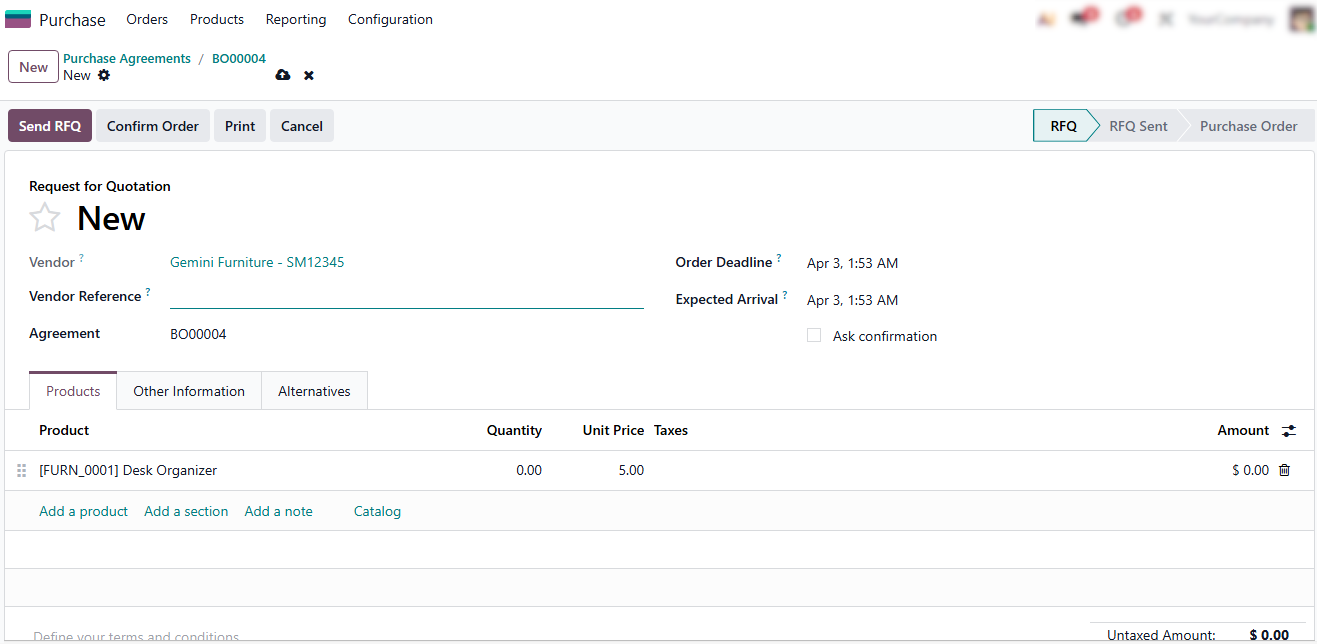
- After confirmation, Odoo 19 activates the contextual action panel, allowing you to immediately create a New Quotation (purchase order) directly from the purchase agreement.
- From this quotation, users can send the RFQ to the vendor, confirm the order, print the purchase document, or cancel it using the standard purchase workflow actions, with all actions logged for auditability and procurement transparency.
Turning
Purchase Agreements into RFQs and Orders in Odoo 19
Once a purchase agreement Odoo is confirmed, it becomes the operational bridge between planning and execution in Odoo 19. Instead of creating purchase orders independently, Odoo purchase management follows an agreement-driven flow where RFQs and confirmed purchase orders are generated directly from the Odoo agreement. This approach ensures that every purchase Odoo transaction complies with predefined commercial terms while remaining fully traceable across Odoo procurement and Odoo order management. For companies managing multiple Odoo licenses and high volumes of purchasing activity, this structure reduces manual errors, enforces consistency, and centralizes Odoo purchase documentation.
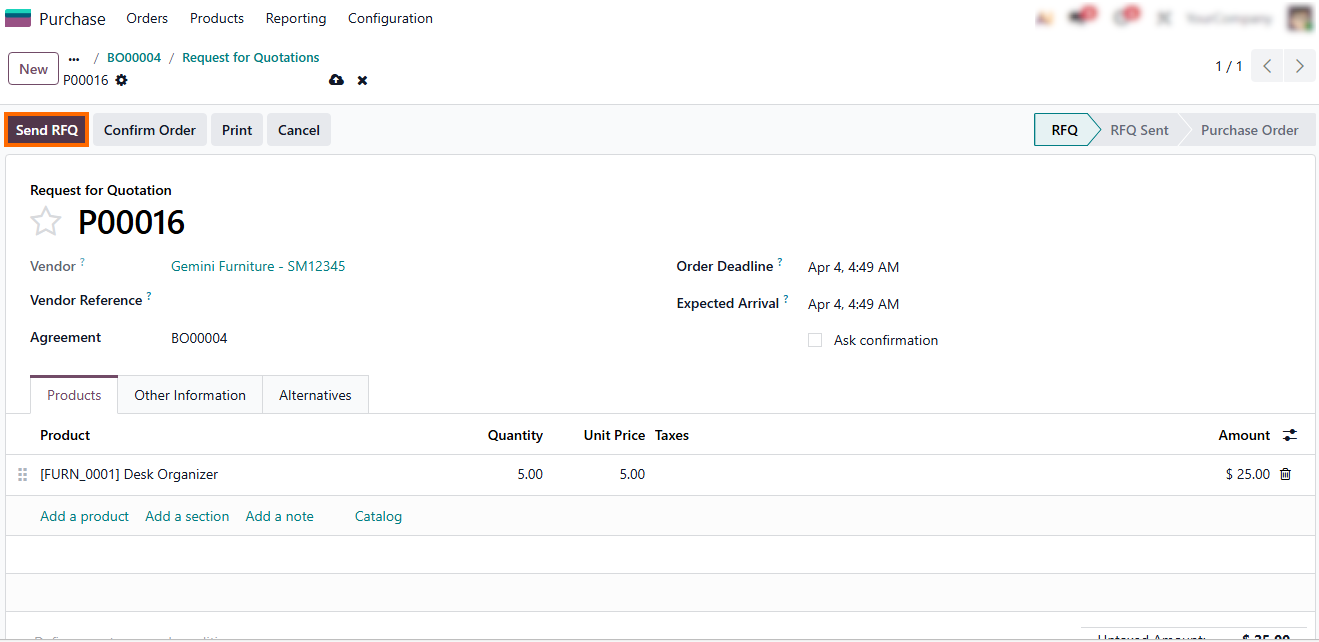
- Review the RFQ details and adjust delivery dates or quantities if needed, within the limits of the Odoo agreement, then click “Send RFQ”, as shown in the screenshot.
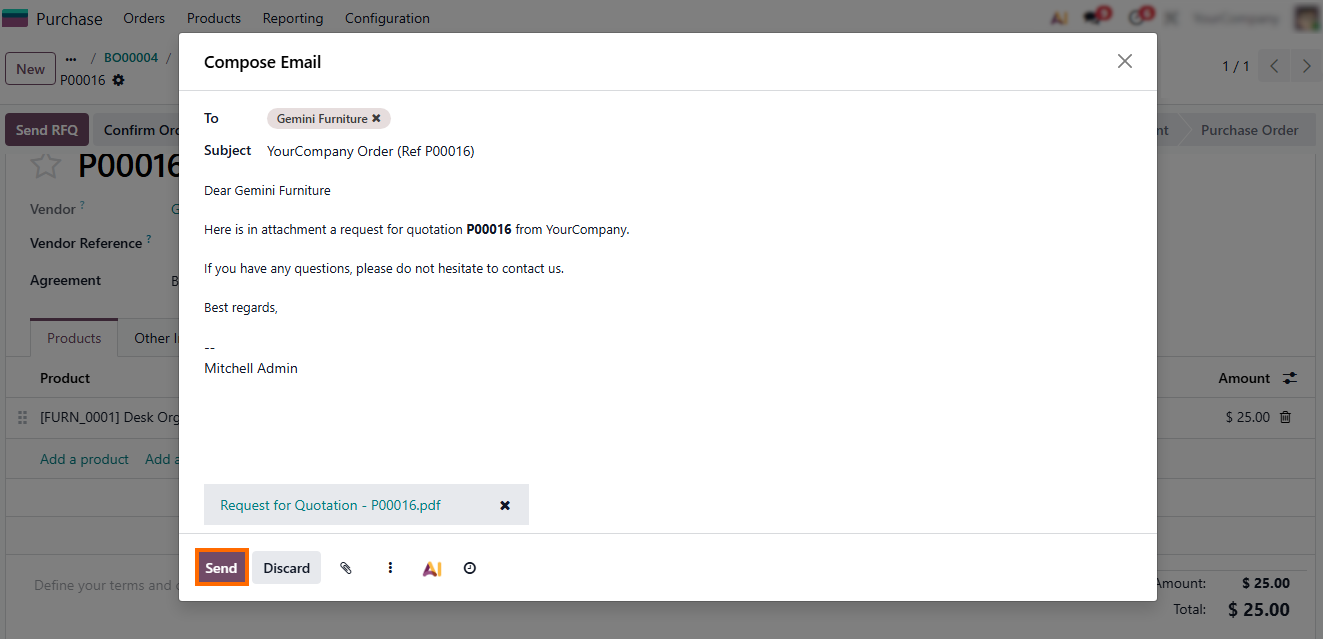
- Click “Send” to send the RFQ to the vendor directly from Odoo, keeping all communication and documentation linked to the original Odoo agreement for full traceability.
- Once the vendor accepts the RFQ terms, click “Confirm Order” to convert the RFQ into a purchase order. This formally locks the transaction under the agreement terms and enables downstream tracking for delivery, invoicing, and reporting.
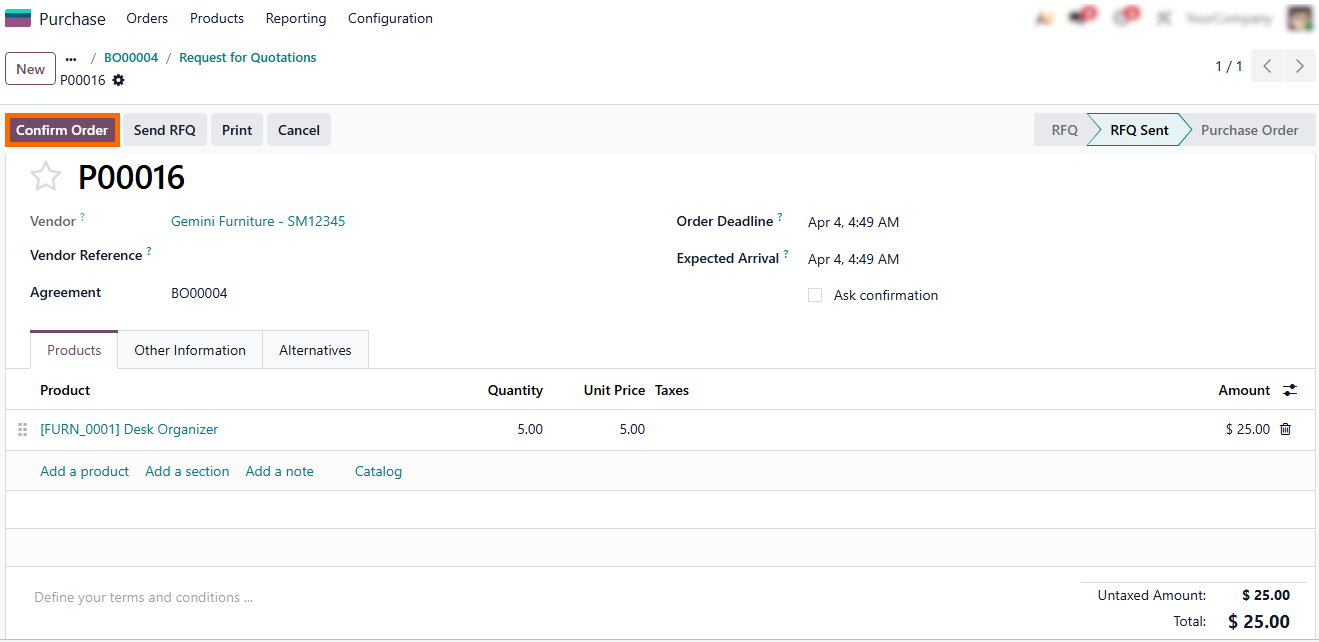
- From this point, the purchase order Odoo follows the standard workflow, including confirmation and billing, while staying linked to the original agreement for traceability and control.
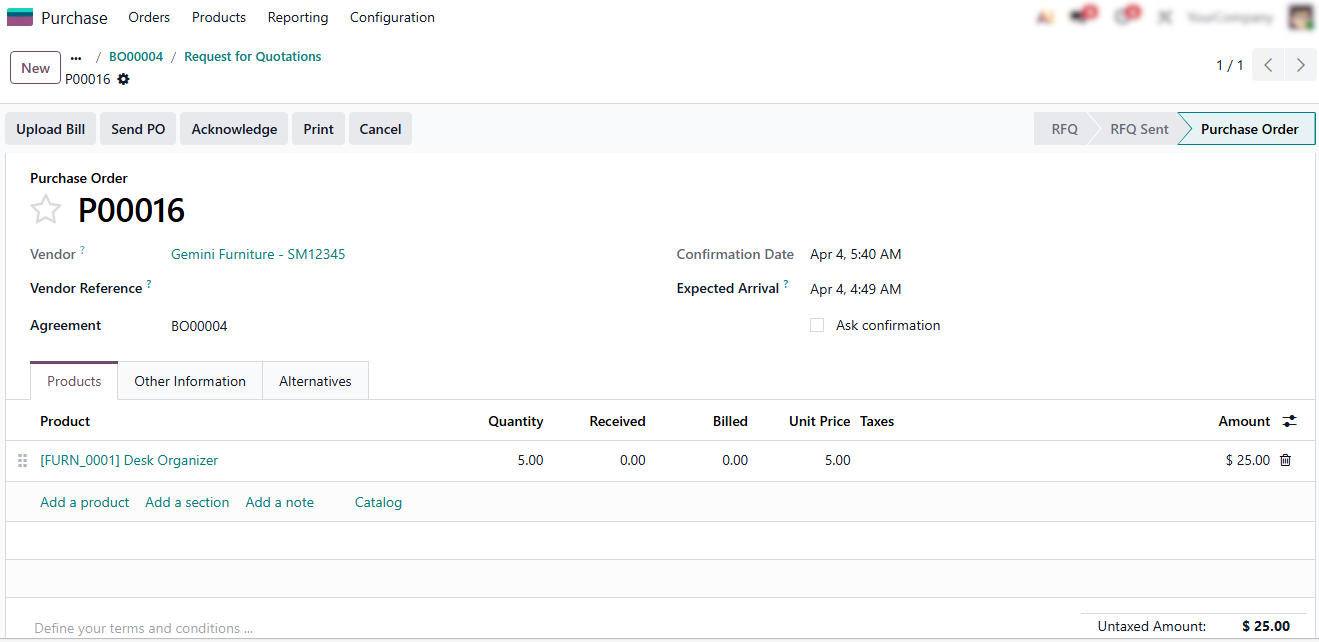
Monitoring and Managing Active Odoo Purchase Agreements
Effective Odoo purchase management does not end with creating a purchase agreement Odoo. It extends into continuous monitoring and control of all active agreements. Companies managing multiple Odoo licenses or handling high volumes of purchase Odoo transactions originating from an Odoo agreement require structured oversight. Proper oversight improves operational efficiency, prevents over-ordering, and maintains transparency across Odoo procurement, Odoo order management, and Odoo purchase documentation. Active Odoo agreements allow procurement teams to track consumption, monitor remaining quantities, and validate delivery schedules while maintaining compliance with contractual terms. This ongoing visibility turns purchase agreements into living control instruments rather than static planning documents.
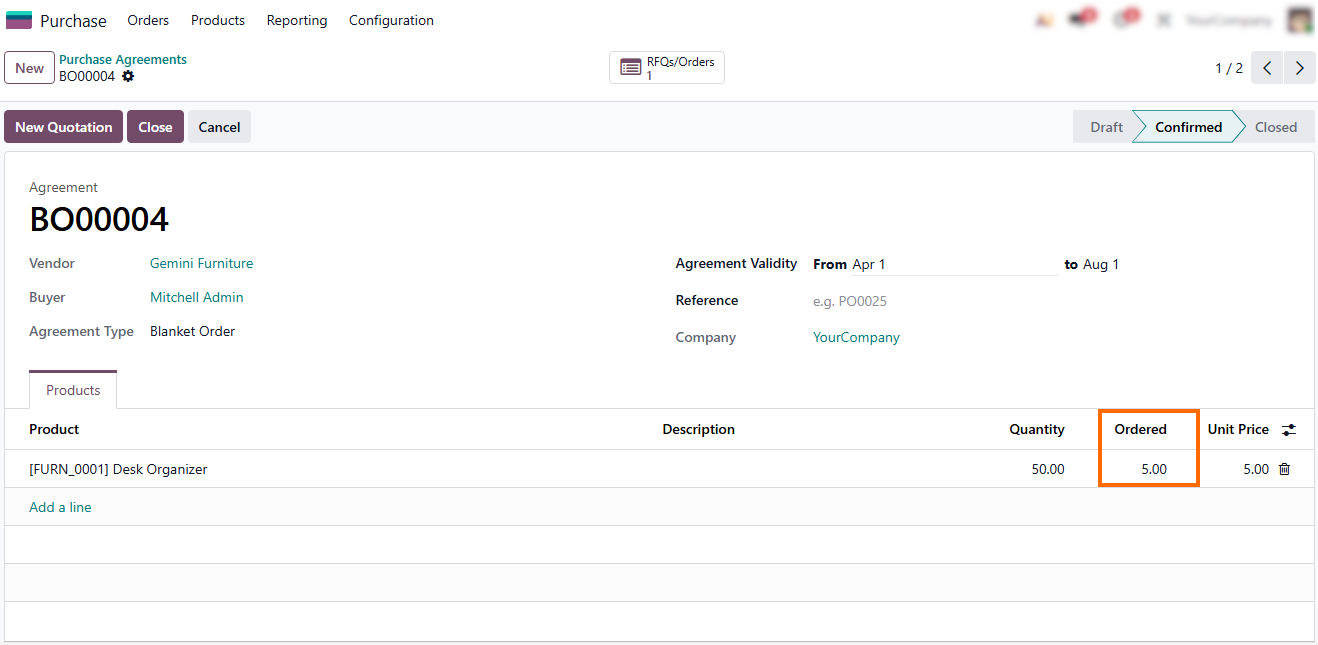
- Review product lines in the purchase agreement Odoo to track ordered, received, and remaining quantities. This visibility shows how each purchase order Odoo consumes agreement limits and helps prevent over-ordering.
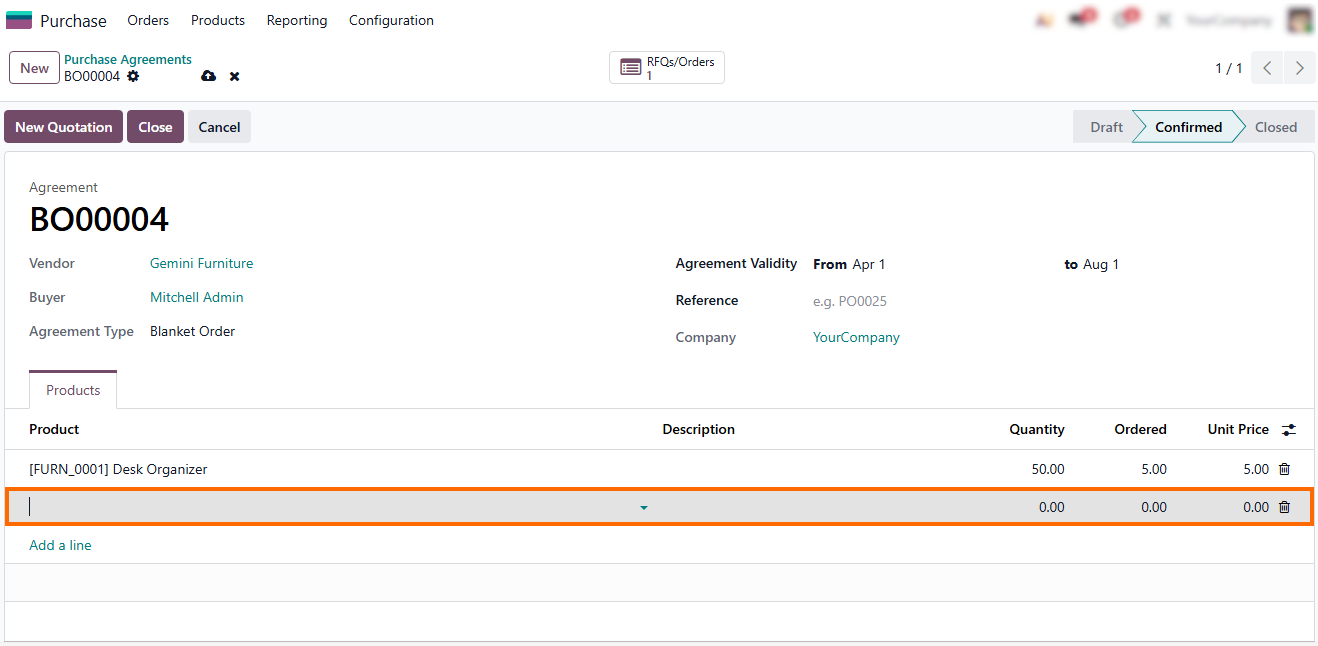
- Update quantities, dates, or product lines directly in the purchase agreement form. Any changes are automatically reflected in linked purchase orders Odoo, ensuring continuous alignment with the Odoo agreement.
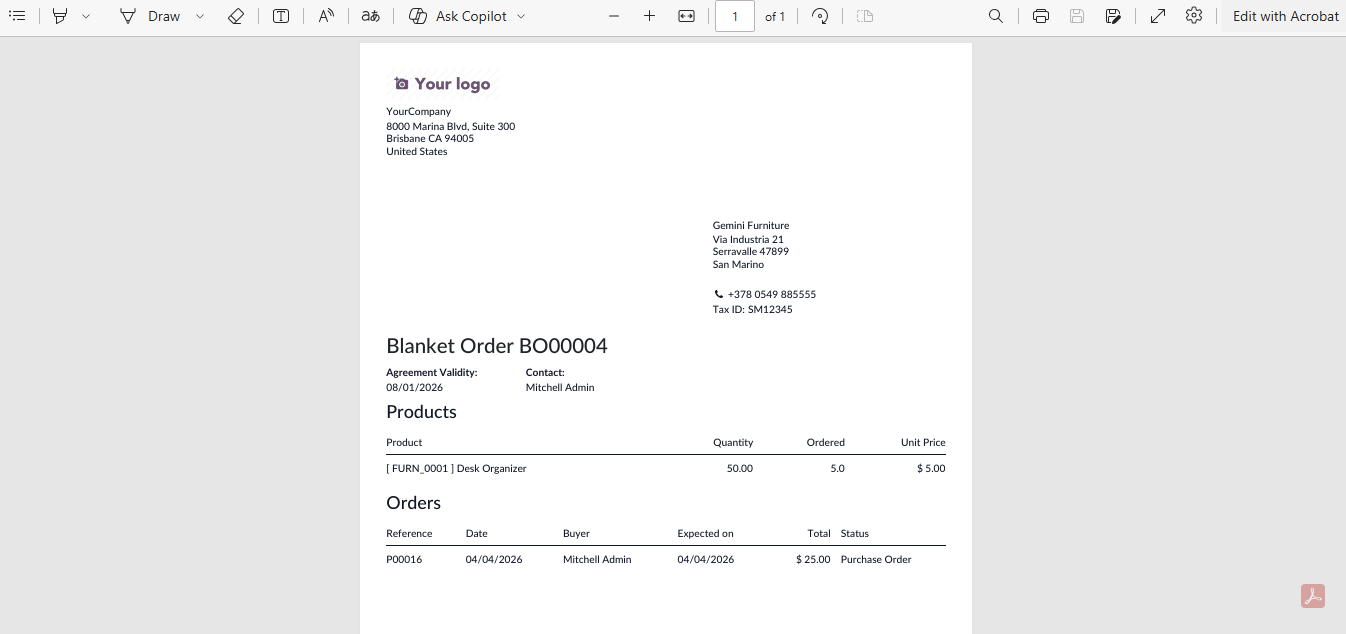
- Print the “Purchase Agreement” when needed to obtain a formal document showing key details such as order references, order dates, buyers, expected delivery dates, amounts, and current order status.
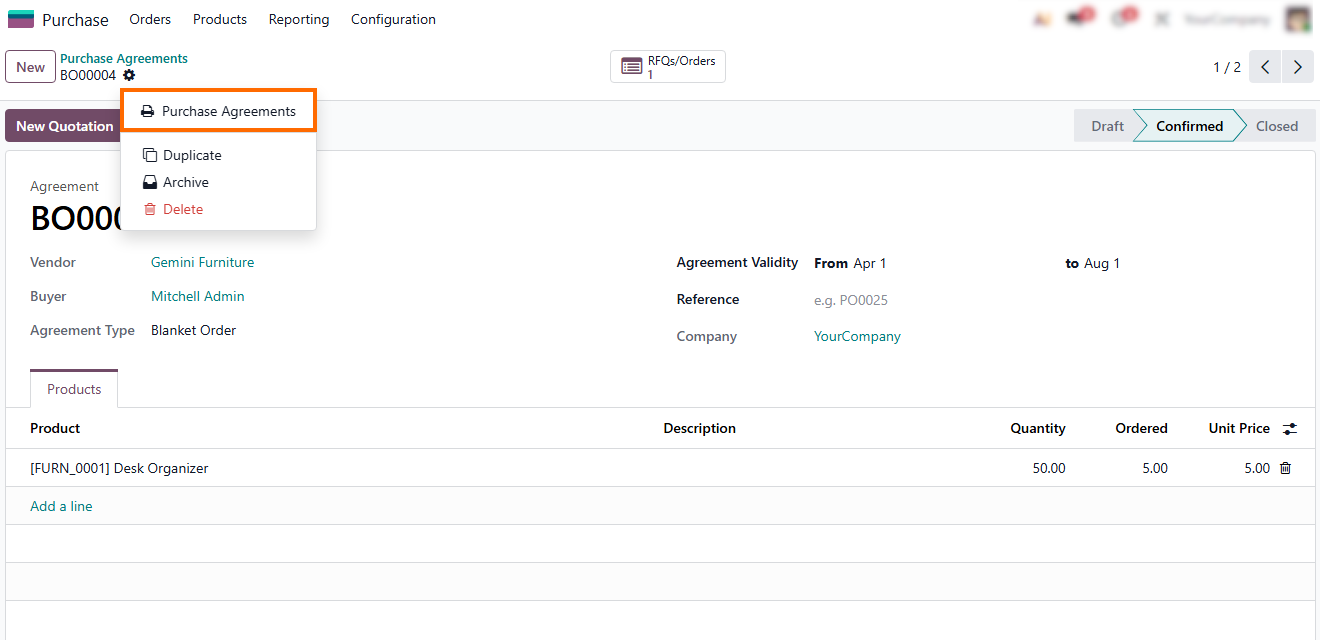
- This printed view supports audits, internal reviews, and external communication by providing a clear, time-stamped record of commitments, deliveries, and financial values, reinforcing control and accountability within Odoo purchase documentation.
Best Practices for Maximizing Odoo Purchase Agreements in Real-World Procurement
Effective Odoo purchase management relies on strategically leveraging purchase agreements Odoo, especially for organizations operating with multiple Odoo licenses or managing large volumes of purchase Odoo transactions. By following proven best practices, companies can optimize recurring procurement, enforce control over quantities and costs, and maintain full traceability across Odoo procurement, Odoo order management, and Odoo purchase documentation. Implementing these practices ensures consistent application of Odoo purchase features while reducing errors and improving operational efficiency.
Align Odoo Agreements with Strategic Procurement Plans
Pro-tip: Ensure each purchase agreement Odoo reflects the company’s procurement strategy, including preferred suppliers, budget constraints, and expected timelines. Proper alignment allows organizations to generate multiple purchase orders Odoo under a single Odoo agreement while maintaining control over pricing, quantities, and delivery schedules. Integrating agreements with Odoo purchase management workflows enhances traceability and simplifies reporting in Odoo purchase documentation.
Monitor Consumption and Remaining Quantities in Odoo Purchase Orders
Regularly track remaining quantities and consumption against each purchase agreement Odoo. Purchase management provides real-time visibility into committed and delivered quantities, enabling proactive adjustments and avoiding over-ordering. Maintaining accurate monitoring strengthens Odoo order management and provides a reliable audit trail in Odoo purchase documentation.
Use Odoo Purchase Features to Automate Approvals and Workflows
Leverage built-in Odoo purchase features, such as automatic RFQ generation, approval routing, and supplier selection, to streamline procurement. Automation keeps all purchase orders Odoo linked to the originating Odoo agreement, ensures consistent compliance, improves efficiency, and fully utilizes the capabilities of Odoo purchase management.
Choose the Right Agreement Type for Your Procurement Strategy
Pro-tip: Select the Odoo agreement type based on operational requirements. Blanket Orders are ideal for recurring quantities within predefined limits, while Call for Tender agreements allow supplier comparison before finalizing purchase Odoo commitments. The correct choice ensures that Odoo purchase orders generated under the agreement follow the intended control and planning logic, enhancing both traceability and operational oversight.
Regularly Review and Update Odoo Purchase Agreements
Periodically audit active purchase agreements Odoo to adjust quantities, timelines, or pricing in response to business changes. Regular review keeps Odoo purchase orders aligned with evolving operational needs, ensures compliance with internal policies, and maintains accurate records in Odoo purchase documentation. Proactive updates prevent bottlenecks and support scalable Odoo purchase management as organizational demands grow.
Conclusion
Odoo purchase agreements turn recurring procurement into a structured and transparent system that supports both day-to-day Odoo purchase management and long-term supply chain planning. By centralizing purchase Odoo terms, quantities, timelines, and approvals, organizations gain a consistent framework for managing multiple Odoo licenses and enforcing internal procurement policies. Instead of relying on ad-hoc orders or disconnected spreadsheets, Odoo purchase management consolidates all Odoo purchase orders under a single Odoo agreement, ensuring traceability and compliance across Odoo procurement, Odoo order management, and Odoo purchase documentation.
When the details of Odoo purchase orders, including product lines and delivery schedules, are properly aligned within an Odoo purchase agreement, teams can monitor remaining quantities, track consumption, and maintain full oversight of commitments. This structured approach enables companies to prevent over-ordering, enforce agreed pricing, and maintain a reliable audit trail across all Odoo purchase features.
For organizations aiming to standardize recurring procurement in Odoo 19, well-structured purchase agreements provide a practical foundation for scalable and auditable purchasing workflows. When aligned with internal policies and operational goals, they become a key instrument for maintaining control as procurement volumes grow.