As companies scale their sales operations, the quality of CRM data becomes just as important as the volume of incoming leads. Even the most powerful Odoo CRM software cannot deliver accurate forecasting, segmentation, or prioritization when Odoo leads arrive incomplete or poorly structured. This challenge has existed since early OpenERP CRM and Odoo CRM implementations and remains highly relevant in modern Odoo CRM solutions, especially in B2B environments.
Lead enrichment in Odoo 19 addresses this gap by automatically enhancing raw leads Odoo receives from multiple sources. Instead of working with only an email address or contact name, sales teams gain additional company context that supports Odoo lead management, improves Odoo lead scoring, and helps sales managers generate opportunities in Odoo 19 more effectively. When combined with Odoo lead generation tools, enrichment transforms basic lead Odoo records into structured, actionable Odoo CRM leads ready for qualification.
In this guide, we provide a practical overview of Odoo lead enrichment, explaining how it fits into modern Odoo lead management, how it interacts with scoring and opportunity creation, and how companies can use enrichment responsibly within Odoo CRM software to improve data quality without unnecessary automation risks. By following these best practices, businesses can turn raw leads into actionable insights, streamline sales workflows, and make data-driven decisions that boost conversion and revenue.
How Odoo Lead Enrichment Works: From Raw Leads to Actionable Data
Modern sales teams rely not only on the volume of incoming leads but also on the quality and completeness of CRM data. Even advanced Odoo CRM software cannot ensure consistent CRM data structures without well-defined processes. Lead enrichment in Odoo CRM addresses this limitation by enhancing raw lead Odoo records with additional company and contact data, turning basic entries into actionable Odoo CRM leads. By embedding enrichment directly into Odoo lead management, businesses improve qualification accuracy, streamline prioritization, and support smarter opportunity creation across the entire CRM Odoo Module.
Lead Enrichment Embedded in the Odoo CRM Overview
Lead enrichment in Odoo 19 is not a separate application, but an integrated capability within the CRM module Odoo. Enrichment data appears directly within lead records across pipelines. This tight integration allows Odoo CRM software to maintain data continuity from initial lead generation through qualification and opportunity management, reducing manual correction and improving overall CRM reliability.
Enriching Odoo Leads with Company and Contact Context
Instead of relying on a single email address or contact name, lead enrichment enhances Odoo leads with essential business context such as company details, industry, location, and segmentation attributes. These enriched lead Odoo records provide sales teams with clearer insight into who they are engaging with, enabling more accurate targeting and better-informed conversations. As a result, leads Odoo users manage become easier to classify, filter, and qualify within Odoo CRM.
How Lead Enrichment Supports Odoo Lead Scoring
Accurate Odoo lead scoring depends on reliable data. Lead enrichment improves scoring logic by supplying consistent attributes that scoring rules can evaluate objectively. With enrichment Odoo CRM leads, sales teams can prioritize high-value prospects more effectively and reduce bias caused by incomplete information. This data-driven approach strengthens Odoo lead management by aligning scoring outcomes with real business potential rather than guesswork.
From Enriched Leads to Opportunities in CRM
When leads are enriched early in the pipeline, sales teams can generate opportunities in Odoo 19 more efficiently. Structured, enriched data allows Odoo CRM solutions to support smoother lead-to-opportunity conversions, reducing delays caused by missing information. Combined with Odoo lead generation tools, enrichment ensures that qualified leads transition into opportunities with minimal friction and greater consistency across sales workflows.
Odoo Lead Enrichment in Modern CRM vs Legacy OpenERP CRM
Earlier OpenERP CRM and Odoo 9 CRM implementations relied heavily on manual data entry and limited contextual insights. Modern Odoo CRM solutions improve this model by embedding lead enrichment directly into the lead lifecycle. This evolution reflects a broader shift in the role of Odoo CRM — from basic contact tracking to intelligent data-driven lead management that supports scalable sales operations without excessive manual intervention.
Configuring
Odoo Lead Enrichment: From Setup to
Optimized CRM Workflows
Lead enrichment in Odoo CRM starts with the initial configuration of the CRM module and lead management settings. Before enrichment can enhance Odoo leads with additional context, the system must define how leads received in Odoo are created, structured, and processed across pipelines. These foundational settings ensure that enriched data is consistently applied to lead Odoo records, supports accurate Odoo lead scoring, and aligns with broader Odoo CRM software workflows. By establishing a structured setup at the beginning, companies create a stable environment where lead enrichment improves data quality without introducing inconsistencies or unnecessary automation risks.
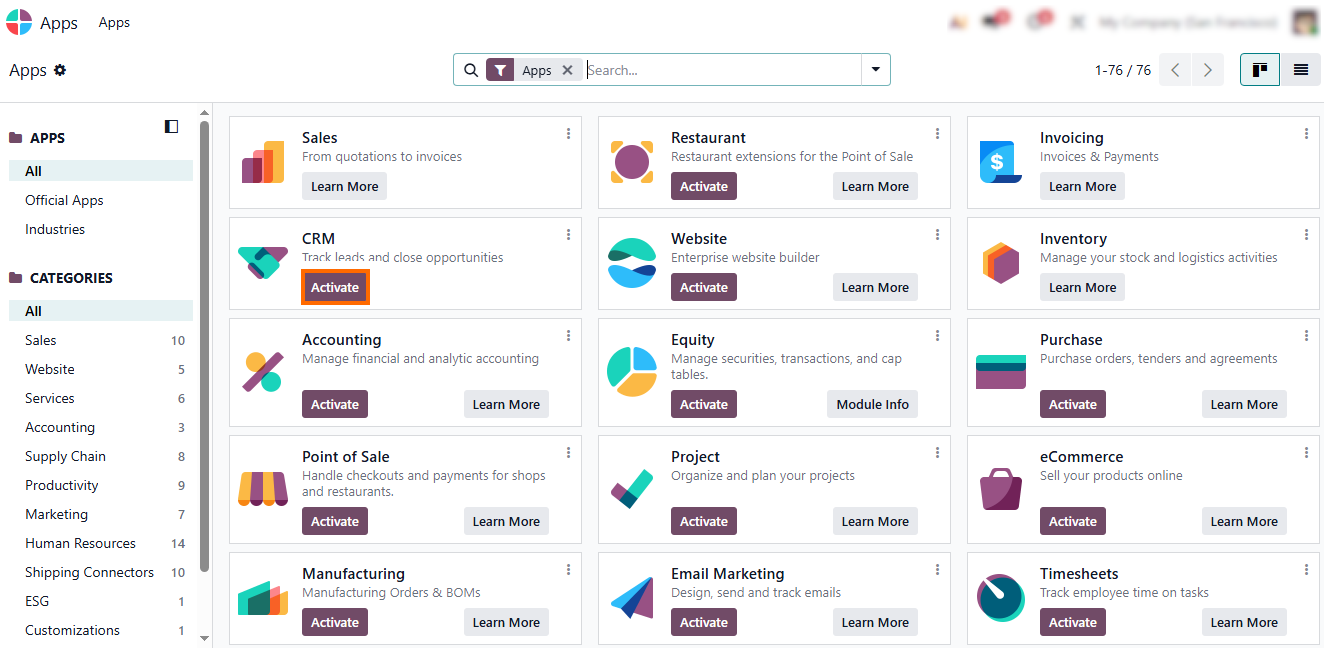
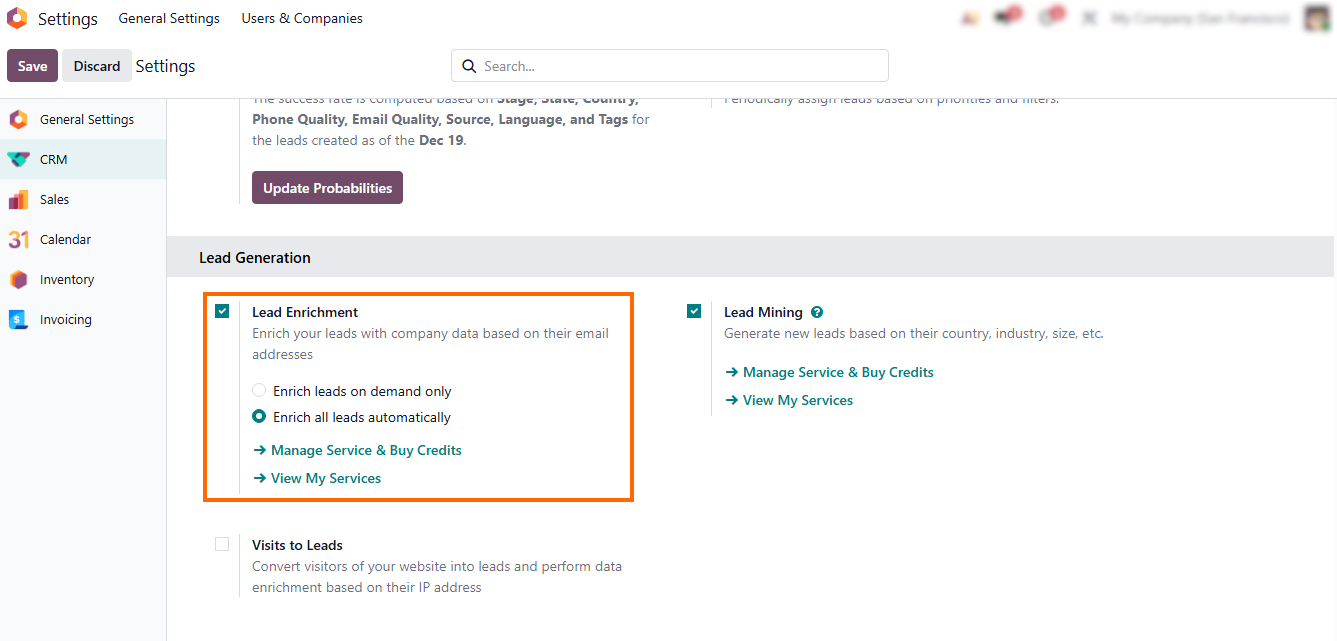
- First, activate the CRM module in Odoo 19. Then, go to CRM settings and choose the enrichment mode: on-demand or automatic for all leads.
- The “Enrich leads on demand only” option lets teams enrich individual Odoo leads manually when needed, while enrich all leads automatically applies enrichment to every new lead by default.
-
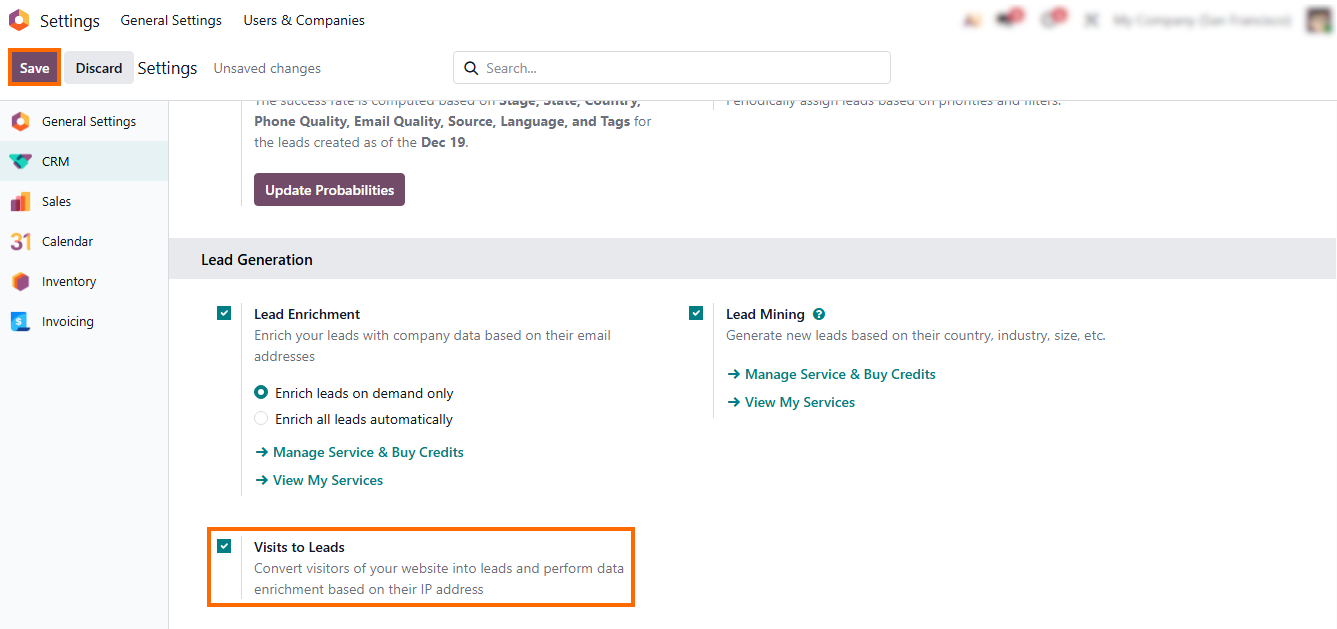
Also enable the “Visits
to Leads” feature to convert website visitor activity into Odoo leads automatically, starting enrichment
earlier and improving visibility into lead sources.
Practical
Use Cases of Odoo Lead Enrichment in
B2B Sales Pipelines
Practical use of lead enrichment Odoo becomes essential once Odoo CRM software is actively used for Odoo lead generation across multiple channels. While modern Odoo CRM solutions automate lead capture inside the CRM module Odoo, the real value of Odoo lead enrichment depends on how enriched Odoo leads are applied within structured Odoo lead management workflows. In B2B sales pipelines, Odoo lead enrichment strengthens Odoo lead scoring, improves prioritization of leads Odoo teams manage, and supports informed decisions to generate opportunities Odoo can realistically convert. When aligned with scoring rules and pipeline logic, enriched Odoo CRM leads help sales teams work with consistent lead Odoo data without unnecessary automation risks.
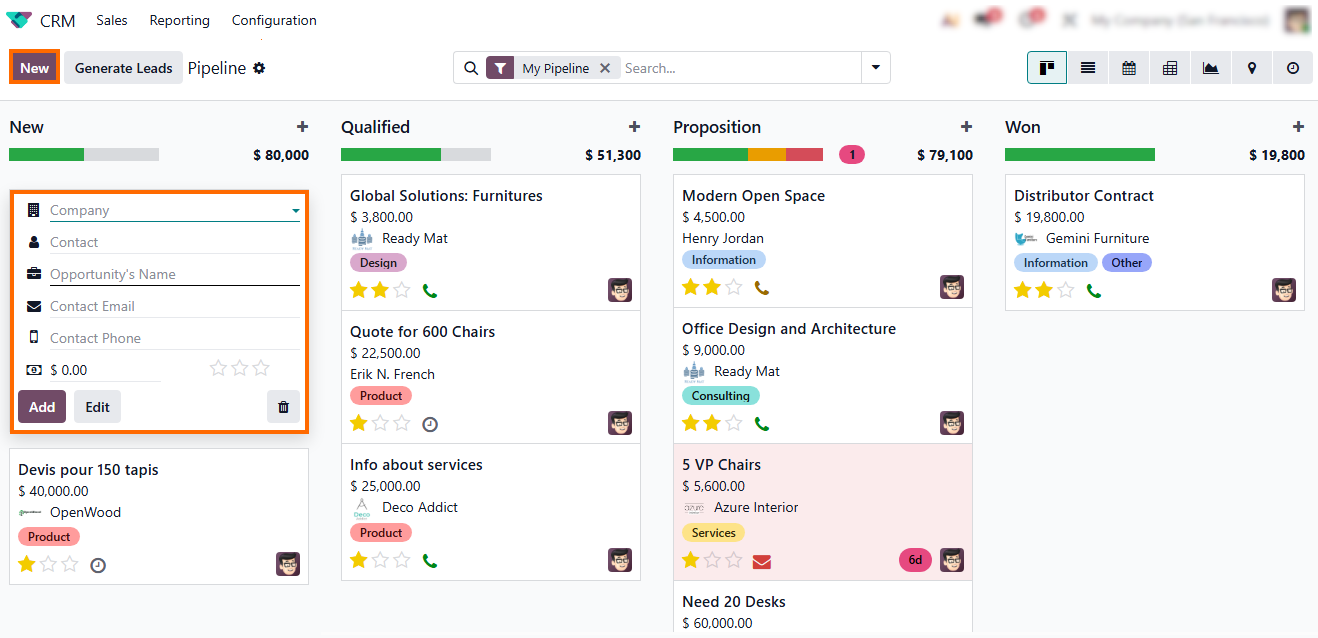
- Next, go to the CRM module and either
create a new lead or open an
existing one, as shown in the screenshot below.
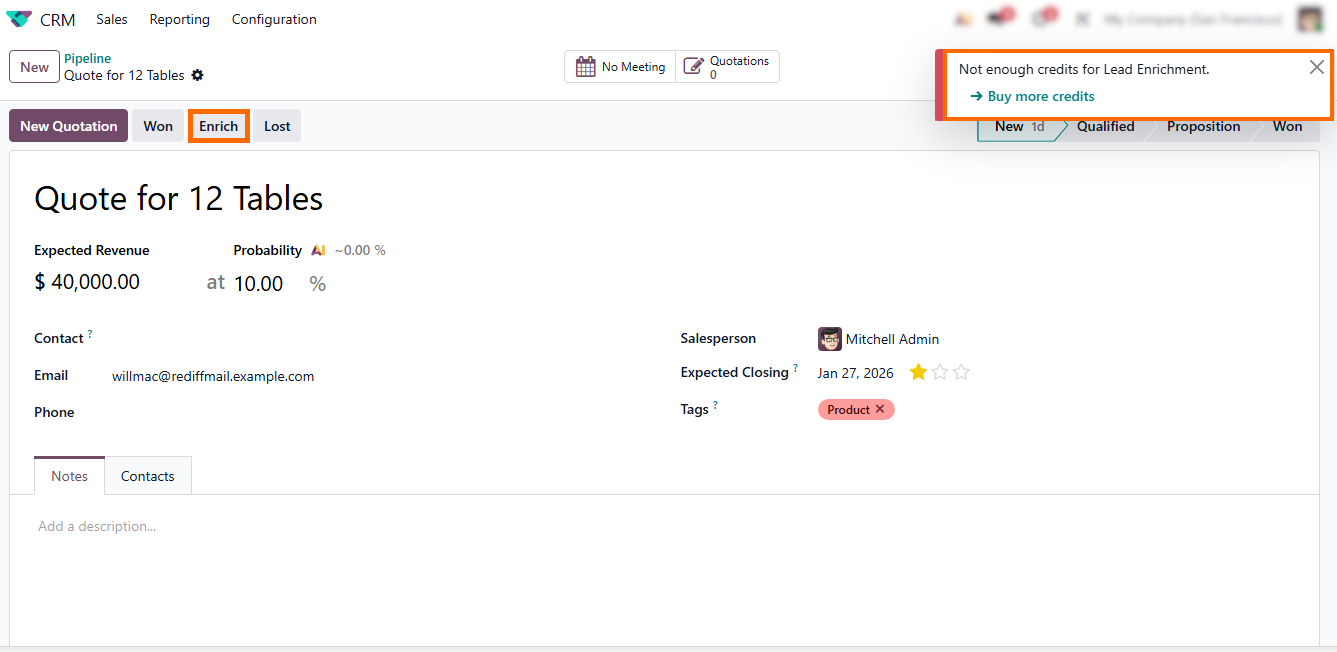
- Then, click the “Enrich” button. If no enrichment credits are available, the system will display the message “Not enough credits for Lead Enrichment”.
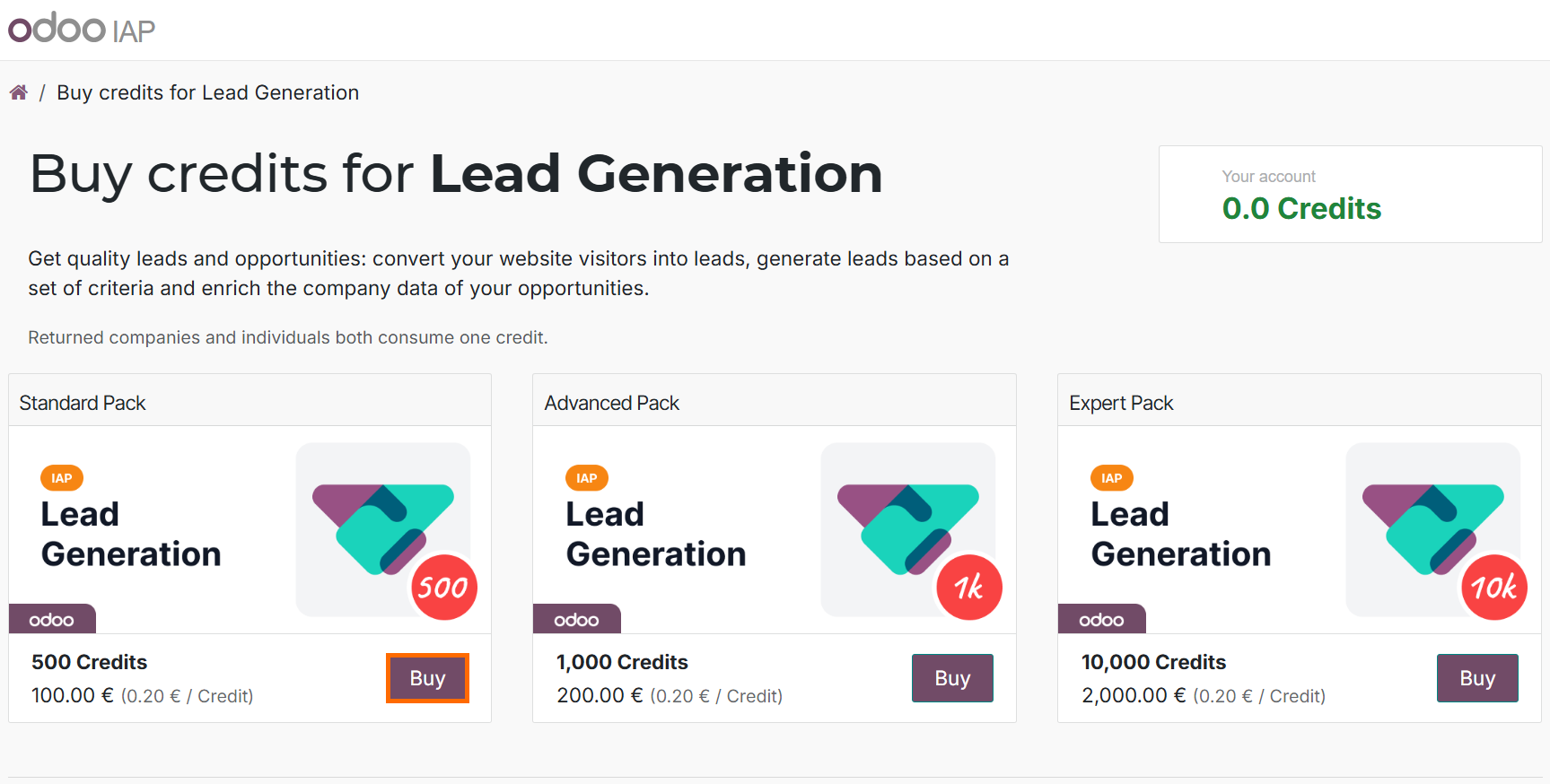
- Click “Buy more credits”
to purchase enrichment credits and enable lead enrichment for the selected Odoo lead, allowing the system to apply
additional
company and contact data.
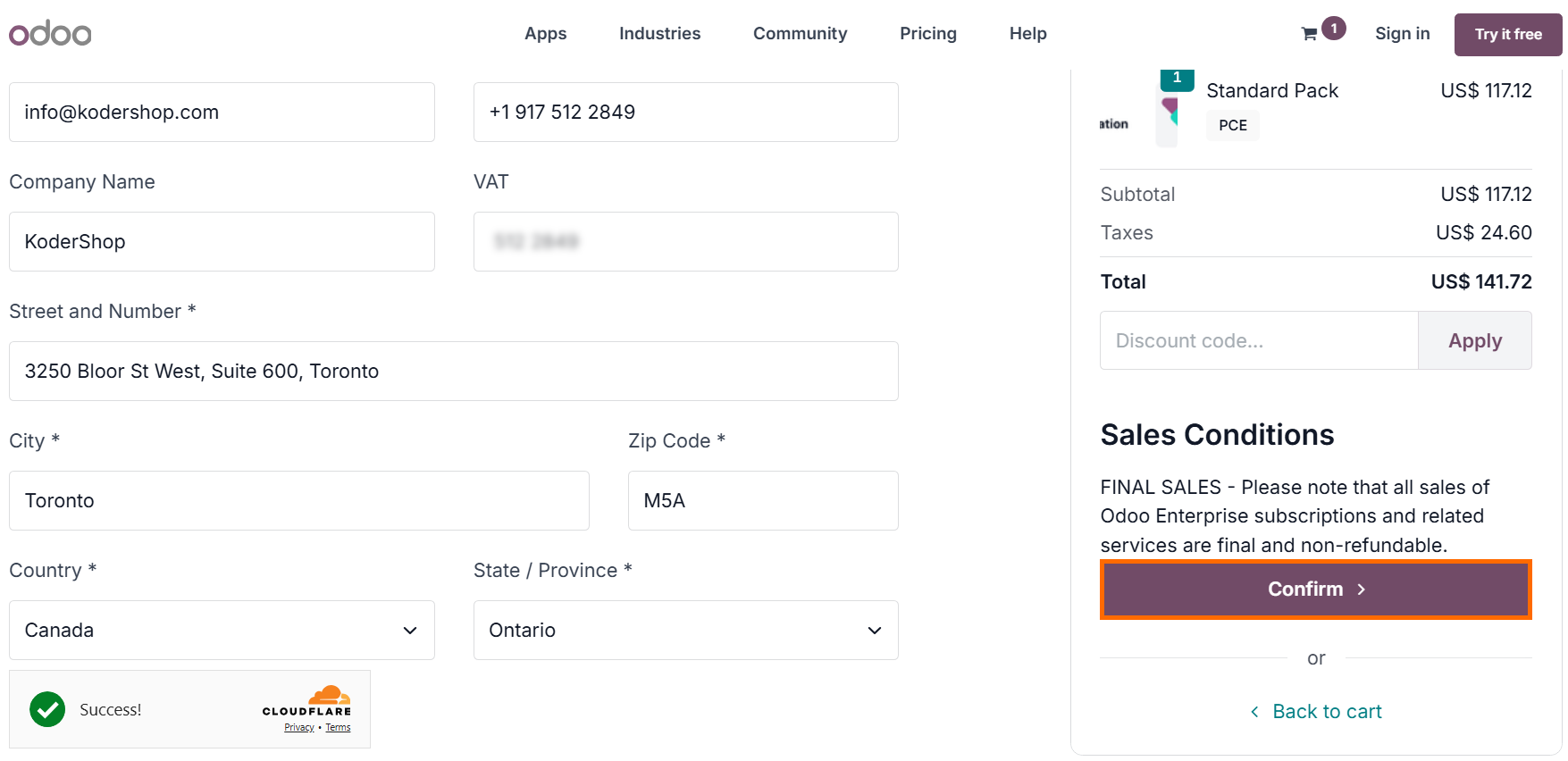
- After reviewing the populated data, such as the company name and contact details, click “Confirm” to apply the enriched information to the Odoo lead and update the record within the CRM pipeline.
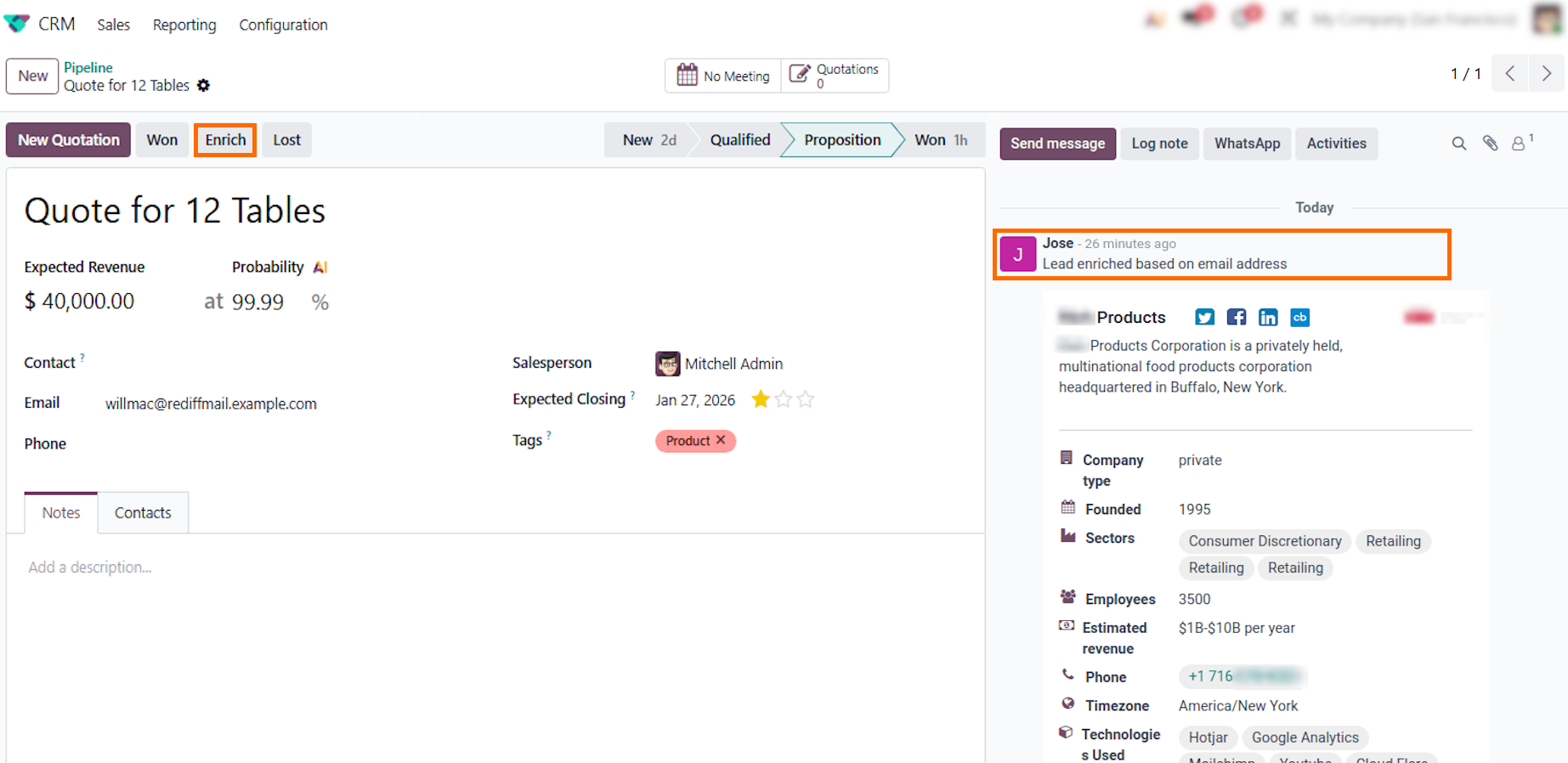
- By clicking “Enrich”, Odoo 19 automatically pulls all available data linked to the lead’s email domain. This paid IAP service costs 1 credit per successful enrichment and is refunded if no data is found.
Lead Enrichment Odoo: Bulk Data Enrichment
Odoo CRM also allows users to enrich multiple leads at once directly from the list view, making bulk data enhancement both controlled and efficient. This capability is especially useful when working with leads imported from structured sources, website forms, or external campaigns that often lack complete company and contact details. By switching to the list view, users can select multiple leads, open the Actions menu, and trigger lead enrichment in bulk. This approach ensures enrichment is applied only where it adds value, keeping full control over credit usage and data quality. Within Odoo CRM software, this bulk enrichment workflow fits naturally into Odoo lead management by improving data consistency for Odoo leads used in lead scoring, segmentation, and opportunity creation.
- First, switch to the List view by clicking the corresponding view icon, as shown in the screenshot below. The list view makes it easier to review lead records in a structured format and select multiple Odoo leads at once for further actions.
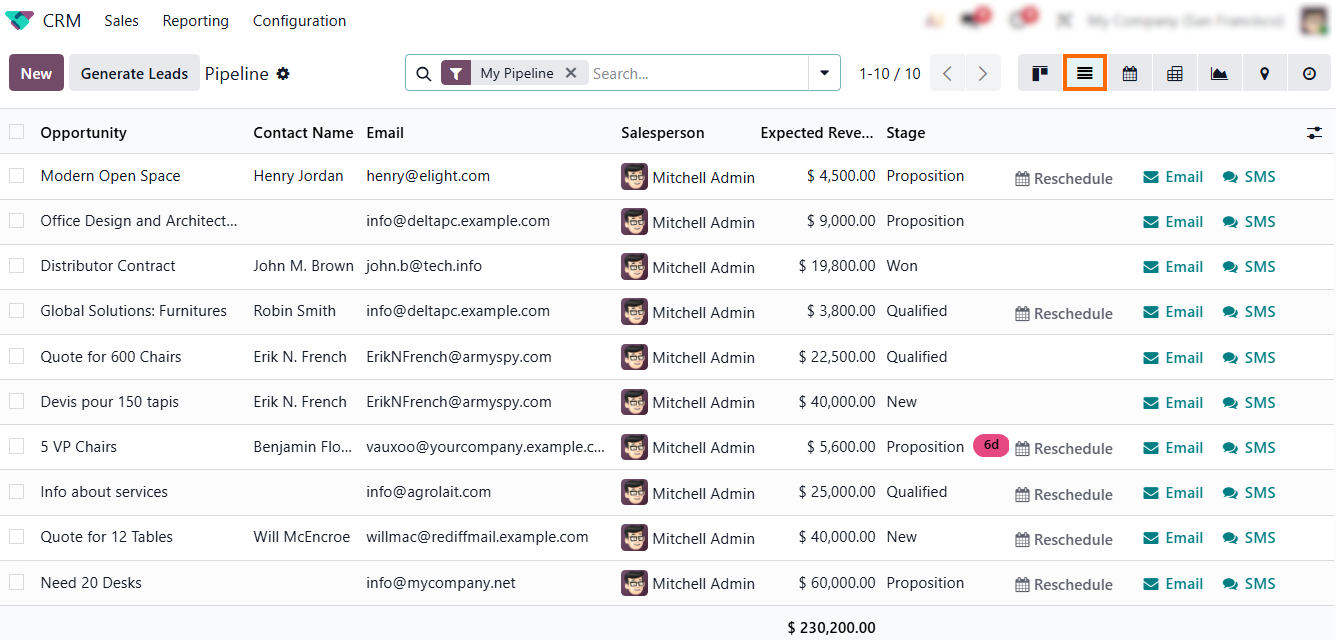
- Next, select the required leads using the checkboxes, open the Actions menu, and choose Enrich. Odoo CRM enriches only the selected records, helping teams control credit usage while maintaining high data quality across the CRM pipeline.

- Once enrichment is complete, the updated lead data becomes immediately available across Odoo CRM, supporting more accurate lead scoring, qualification, and conversion into opportunities.
Measuring
the Impact of Odoo Lead Enrichment:
Analytics and Data-Driven Insights
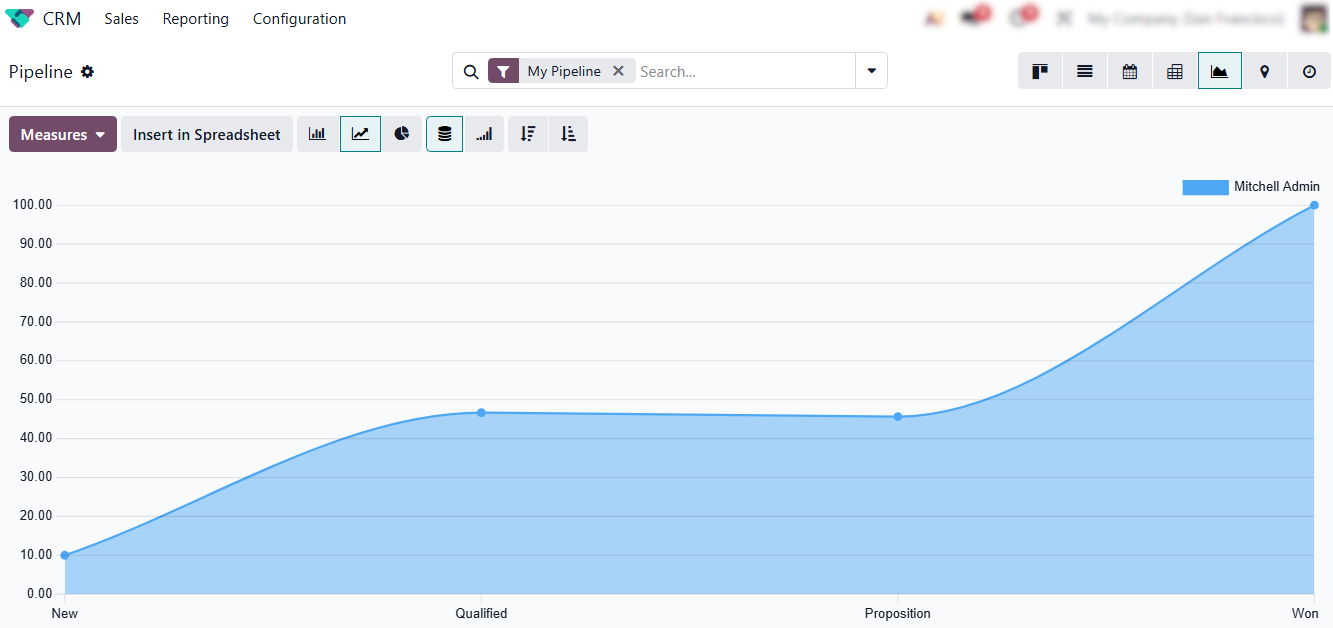
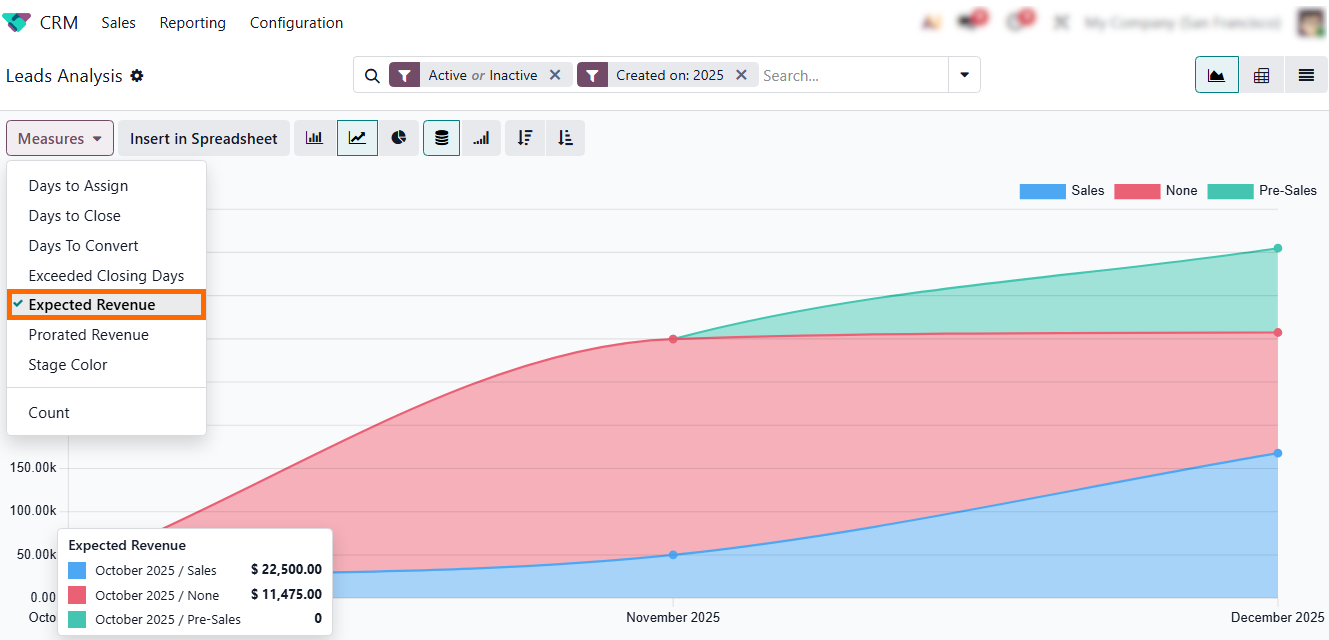
While lead enrichment in Odoo CRM significantly improves daily lead management and qualification, its true value shines in analytics and reporting. Enriched Odoo leads populated with critical details such as company size, industry, estimated revenue, sectors, and technologies used provide a richer dataset for Odoo CRM dashboards and reports. This provides insights into lead quality, pipeline performance, conversion trends, and overall ROI from lead generation efforts. By leveraging these enriched fields in Odoo CRM software, teams can segment data more precisely, identify high-performing sources during Odoo lead generation, refine Odoo lead scoring models, and accurately measure how enrichment contributes to won opportunities. The result is smarter decision-making: optimizing sales strategies, justifying IAP credit spend, and forecasting revenue with greater confidence in modern Odoo CRM solutions.
- To analyze the impact of lead enrichment, open the CRM app and go to “Reporting” → “Leads”. This opens the default “Leads Analysis” view, giving a comprehensive overview of all leads in your Odoo CRM pipeline.
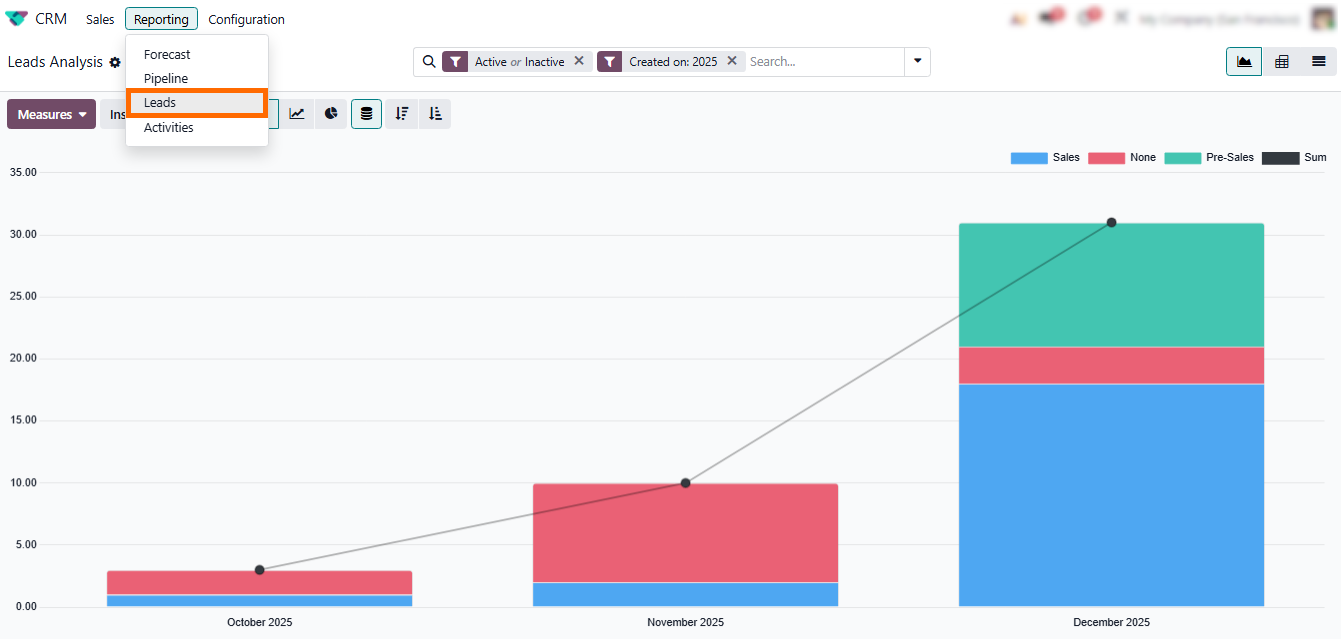
Switch between List, Pivot, Graph, and Cohort views to explore different perspectives: Pivot is ideal for comparing metrics across industries or company sizes, while Graph helps visualize trends over time.
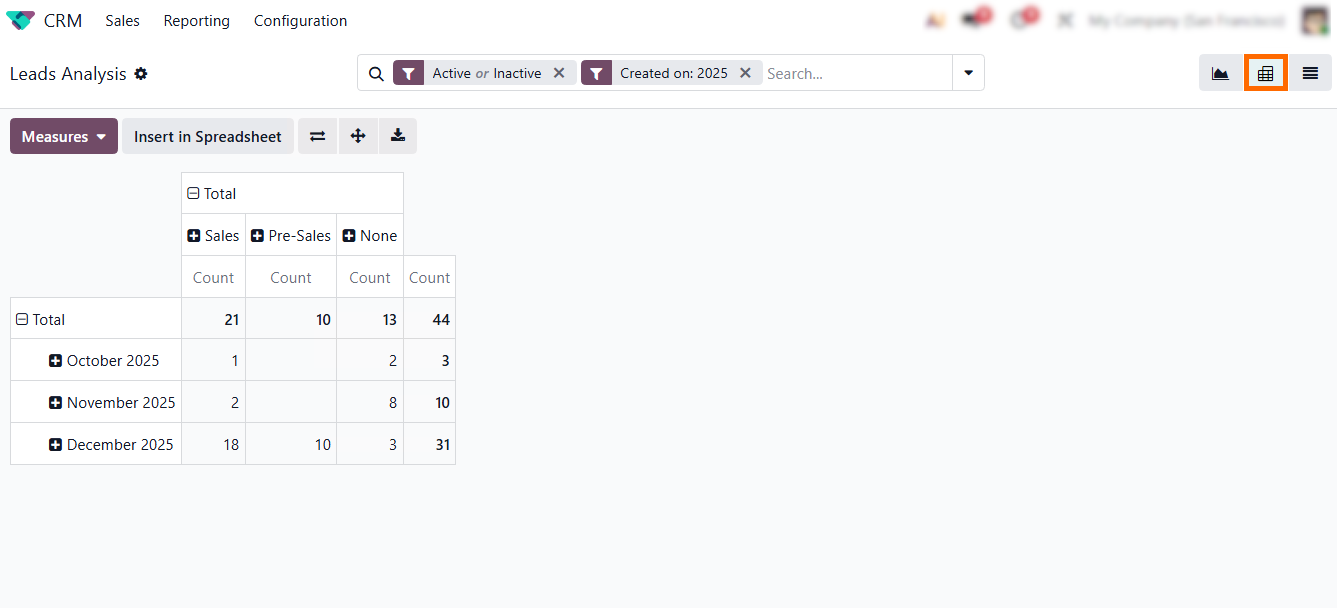
- Use measurement
options like Industry, Country, Company Size, Source, or Sales Team to quickly
uncover patterns, such as which industries convert faster or which
sources deliver higher-quality leads.
Best Practices and
Limitations of Odoo Lead Enrichment
While lead enrichment Odoo plays a critical role in improving CRM data quality, its real value depends on how it is implemented within Odoo CRM software and aligned with broader Odoo lead management processes. Treating Odoo lead enrichment as a fully automated solution without control can introduce data noise, inflate enrichment costs, and negatively impact Odoo lead scoring accuracy. To achieve consistent results, companies must apply best practices that balance automation, data reliability, and sales workflow requirements across the CRM module Odoo. For example, a B2B SaaS company enriching inbound demo requests can prioritize leads with complete company and contact data, ensuring sales reps focus only on high-potential prospects.
When Automatic Lead Enrichment Makes Sense
Automatic lead enrichment Odoo is most effective when incoming Odoo leads already meet basic qualification criteria, such as having a valid business email domain or originating from structured Odoo lead generation channels. In these scenarios, enrichment enhances Odoo CRM leads early in the pipeline, enabling sales teams to evaluate company context, prioritize leads Odoo teams manage, and generate opportunities faster. For lower-quality or experimental lead sources, on-demand enrichment provides better control and prevents unnecessary enrichment of weak lead Odoo records.
Avoiding Data Noise in Odoo Lead Management
One of the most common mistakes in Odoo lead management is enriching every Odoo lead without considering conversion potential. Over-enrichment can clutter pipelines inside Odoo CRM software, making it harder to focus on qualified prospects. Best practice is to define enrichment rules based on lead source, pipeline stage, or minimum data completeness. This ensures that Odoo leads remain structured and relevant, while enriched data actively supports decision-making rather than overwhelming sales teams.
Managing IAP Credits in Odoo CRM Software
Because Odoo lead enrichment relies on paid IAP credits, cost control is a key consideration in any Odoo CRM implementation. Organizations should limit automatic enrichment to high-priority pipelines and apply manual enrichment for selective leads Odoo sales teams review individually. Regular monitoring of enrichment usage within the CRM Odoo module helps ensure credits are spent on Odoo CRM leads with real business potential, rather than on duplicate or low-quality lead Odoo records.
Data Accuracy and Lead Scoring Reliability
While enrichment significantly improves Odoo lead scoring, enriched fields should be treated as supporting signals rather than absolute truth. Company size, industry classification, and revenue estimates added through lead enrichment Odoo are derived from external sources and may vary in accuracy. Sales teams using Odoo CRM solutions should combine enriched data with human validation to ensure Odoo lead scoring reflects real engagement and buying intent, not just enriched metadata.
Aligning Lead Enrichment with CRM Workflows
The most effective Odoo CRM software setups integrate Odoo lead enrichment directly into existing sales workflows rather than using it as a standalone feature. Enriched fields should feed into scoring rules, segmentation filters, reporting views, and pipeline logic already defined in the overview of Odoo CRM. When enrichment is aligned with how teams generate opportunities in Odoo 19 and manage Odoo CRM leads, it strengthens sales execution without introducing unnecessary automation risks.
Conclusion
Lead enrichment in Odoo 19 is a core capability for companies that rely on Odoo CRM software to scale structured, data-driven sales processes. As Odoo lead generation expands across multiple channels, the quality of incoming Odoo leads directly impacts qualification, Odoo lead scoring, and the ability to generate opportunities in Odoo efficiently. Without enrichment, even well-configured pipelines struggle to deliver consistent outcomes.
By embedding lead enrichment Odoo into the CRM module Odoo, businesses convert raw lead Odoo records into structured Odoo CRM leads enriched with essential company and contact context. This strengthens Odoo lead management by ensuring that leads Odoo teams work with are complete, comparable, and ready for prioritization, while reducing manual data correction.
When applied selectively and aligned with Odoo lead generation strategies, Odoo lead enrichment improves scoring accuracy, supports opportunity creation, and enhances reporting across Odoo CRM software. For organizations moving from legacy OpenERP CRM to modern Odoo CRM solutions, enrichment provides a controlled path toward smarter automation and scalable lead management.
To get the most value, activate lead enrichment in your Odoo CRM software and integrate it into your lead workflows – turning every new lead into actionable, high-quality data for smarter sales decisions.