Spreadsheets are not well suited for procurement workflows because they rely on static data that cannot enforce business rules or ensure real-time accuracy. In manual environments, fragmented data creates visibility gaps and operational risks. Odoo eliminates these issues through automated validation and cross-app integration. As a result, procurement decisions are often based on incomplete or outdated data, increasing operational and financial risk. This is especially critical in spreadsheet-based procurement workflows, where purchasing, supplier data, and financial records are split across multiple files and versions.
- Odoo connects Purchase, Inventory, and Accounting modules into a single system to enforce a consistent and automated purchase-to-payment flow, eliminating gaps between ordering, receipt, and billing.
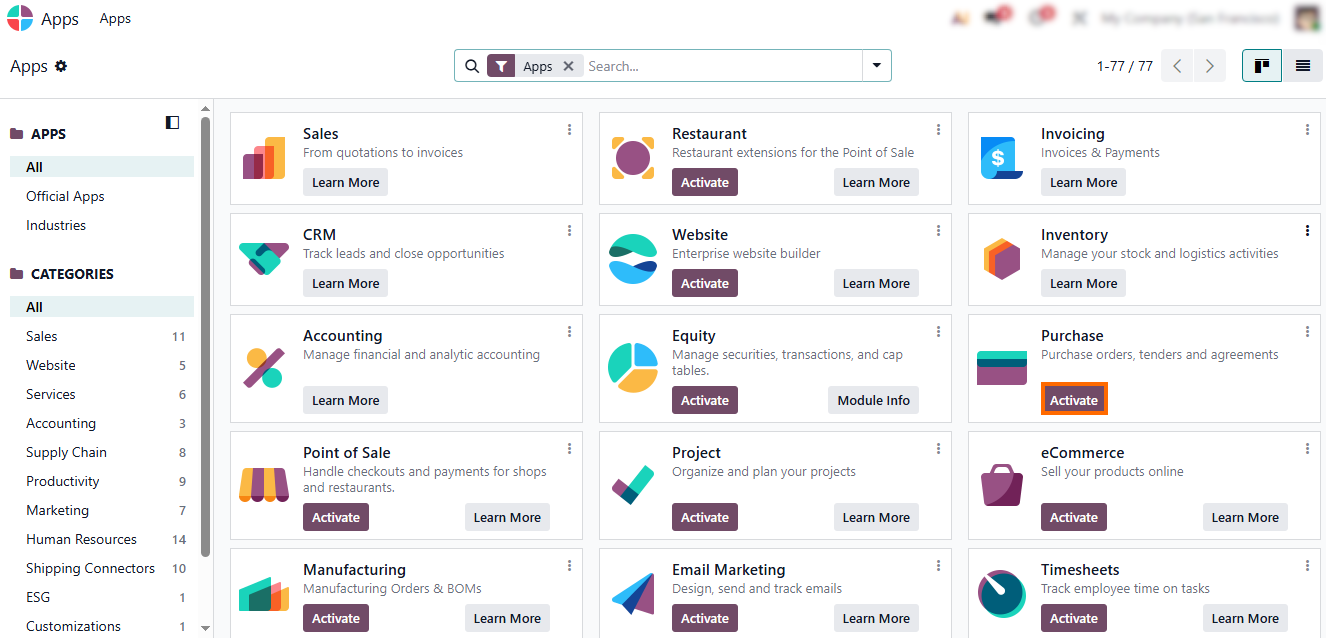
With Three-Way Matching enabled, Odoo blocks invoice payment until goods receipt is confirmed, reducing approval delays and timing errors across procurement workflows.
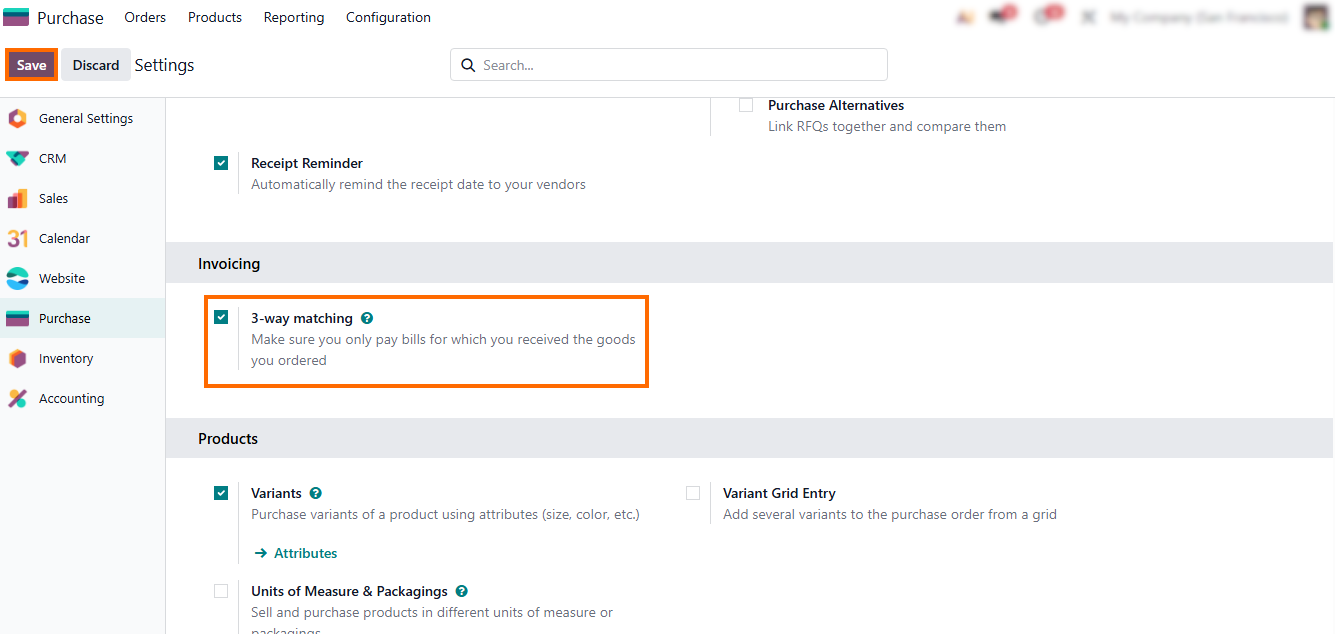
In spreadsheets, prices and part numbers are free text and prone to errors, while Odoo uses structured master data to ensure accuracy, keeping all transactions
aligned with validated records.
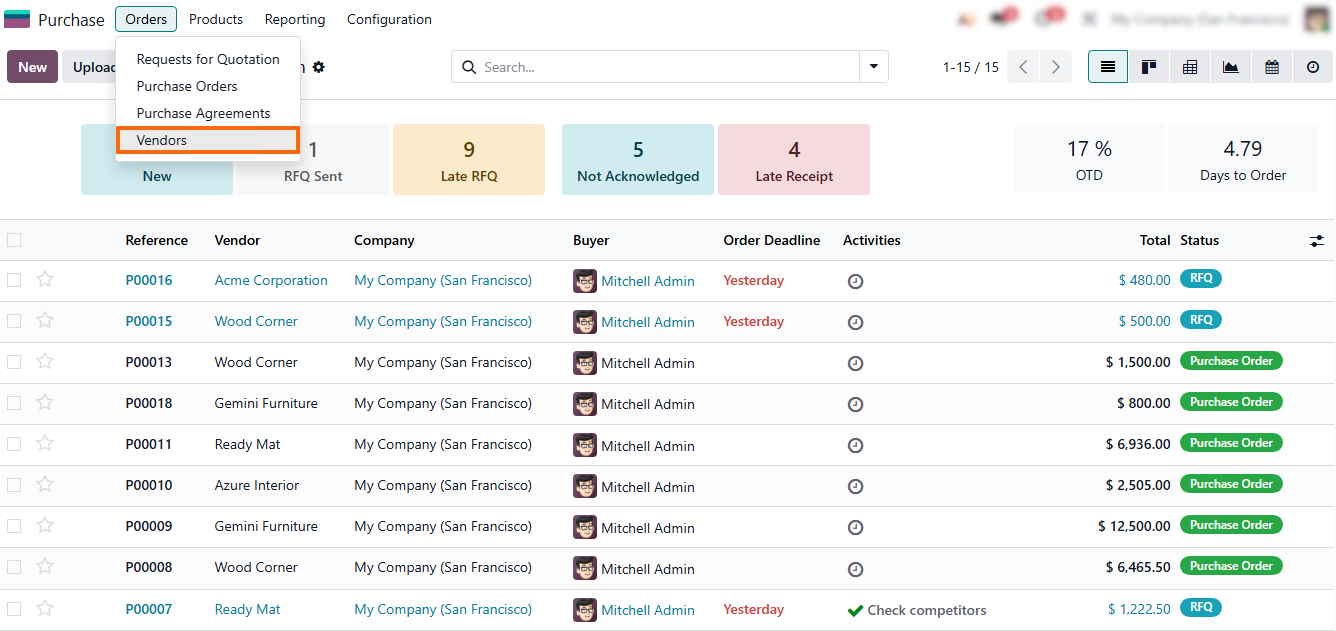
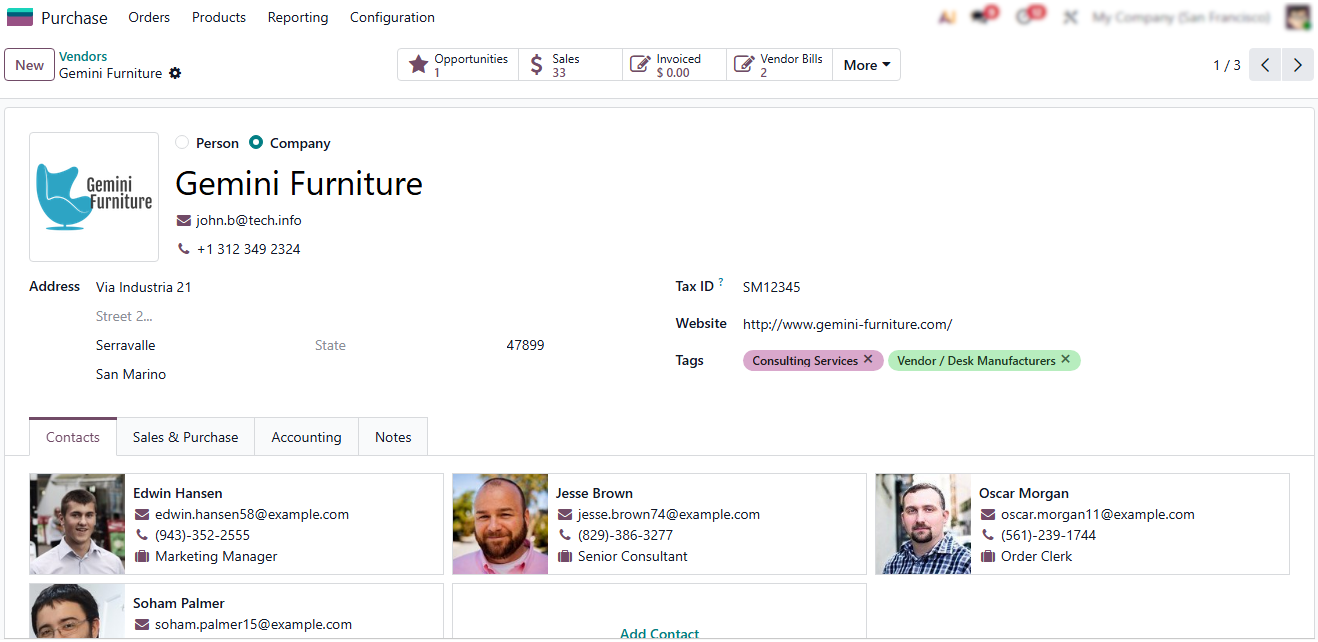
- Instead of fragmented rows, Odoo provides structured vendor cards with unified purchasing, accounting, and contact information, giving a complete operational view per supplier.
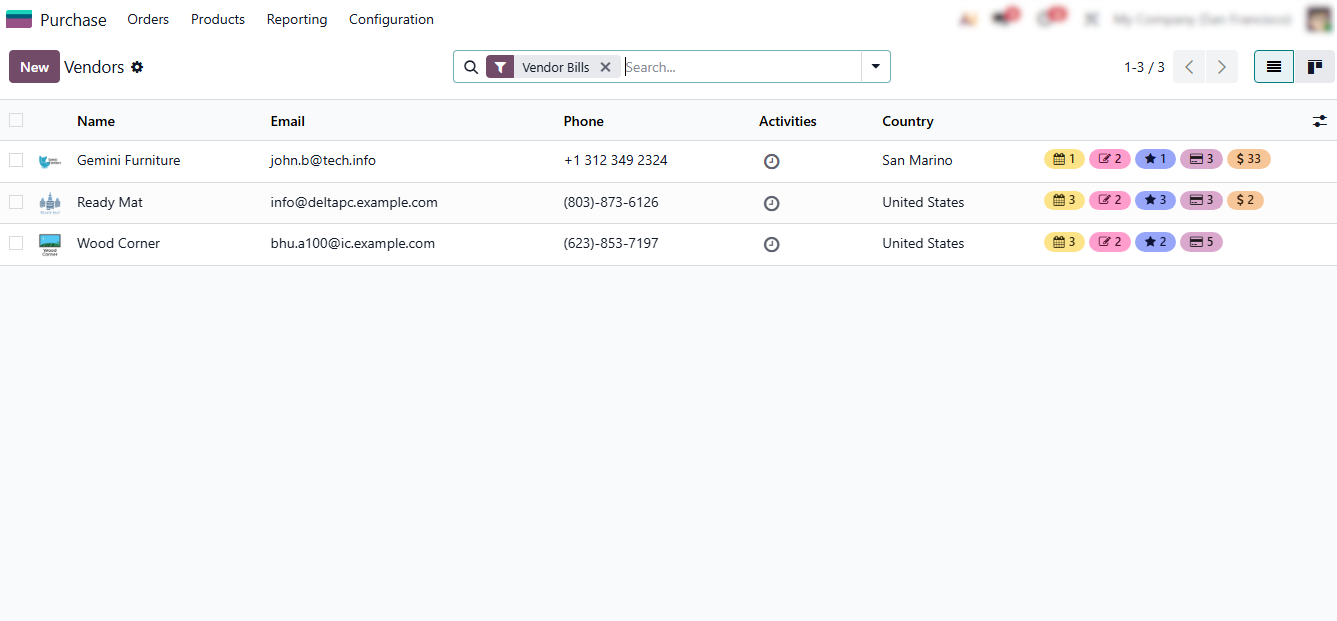
Without structured validation, spreadsheets cannot reliably support the purchase-to-payment flow, while Odoo unifies purchasing, vendor management, inventory, and accounting into a single controlled system.
How
Odoo Improves Vendor Management,
Pricing Control, and Purchase Tracking
Beyond operational purchase tracking, Odoo provides a structured approach to vendor management by turning supplier data into a controlled and analyzable system. This enables companies to move from simple record-keeping to performance-driven supplier evaluation. Unlike spreadsheets, where vendor history is scattered across files and manual notes, Odoo consolidates all supplier activity into a single record, including purchasing behavior, pricing consistency, fulfillment reliability, and overall vendor performance. This enables more informed vendor decisions that improve long-term procurement performance.
- Each vendor profile in Odoo centralizes communication, purchase history, and financial data, with full change history visible directly in the record, making it easier to track supplier evolution and long-term performance.
Directly from the vendor card, users can access opportunities, sales orders, invoices, vendor bills, and related documents without switching modules, keeping all interactions in one workflow context.
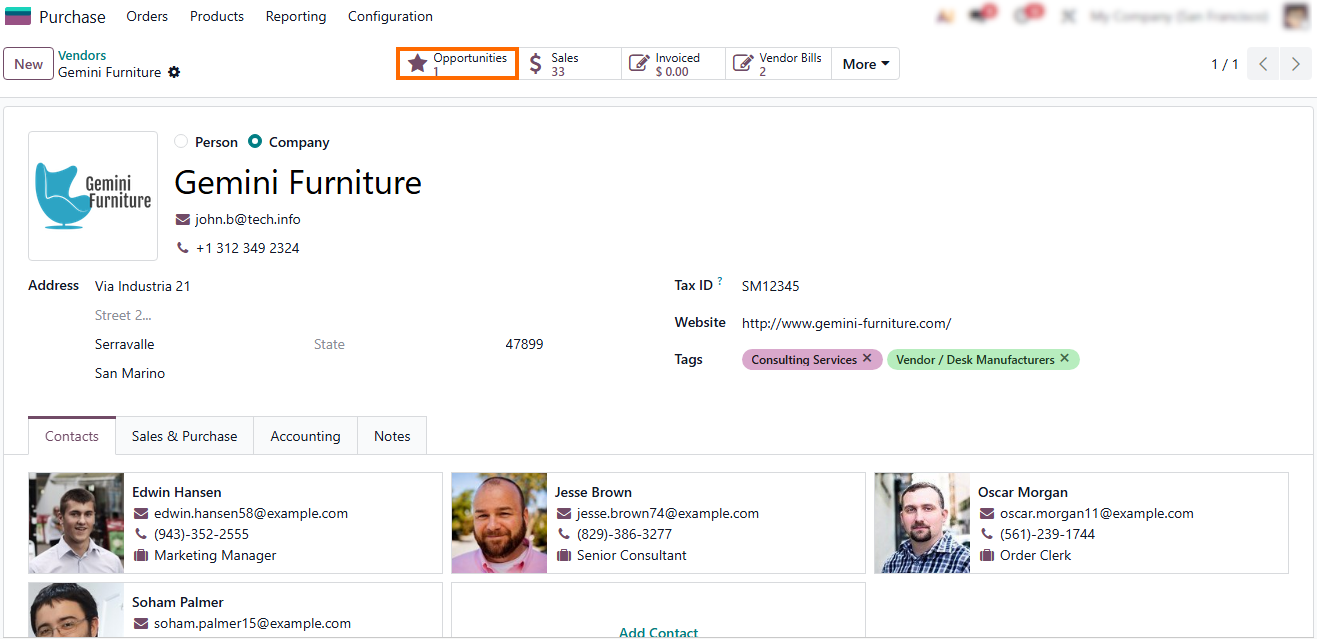
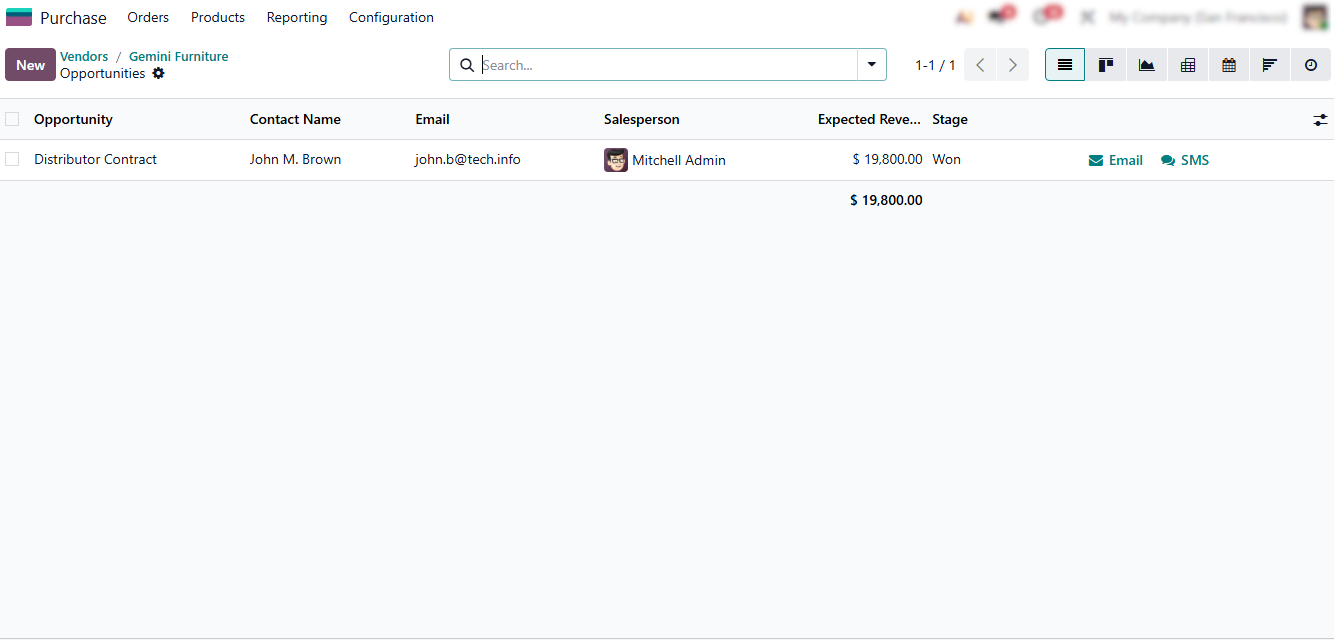
- Whether a new opportunity needs to be created or an existing workflow must be continued, Odoo allows users to open the relevant view directly from the vendor profile and create new records in context.
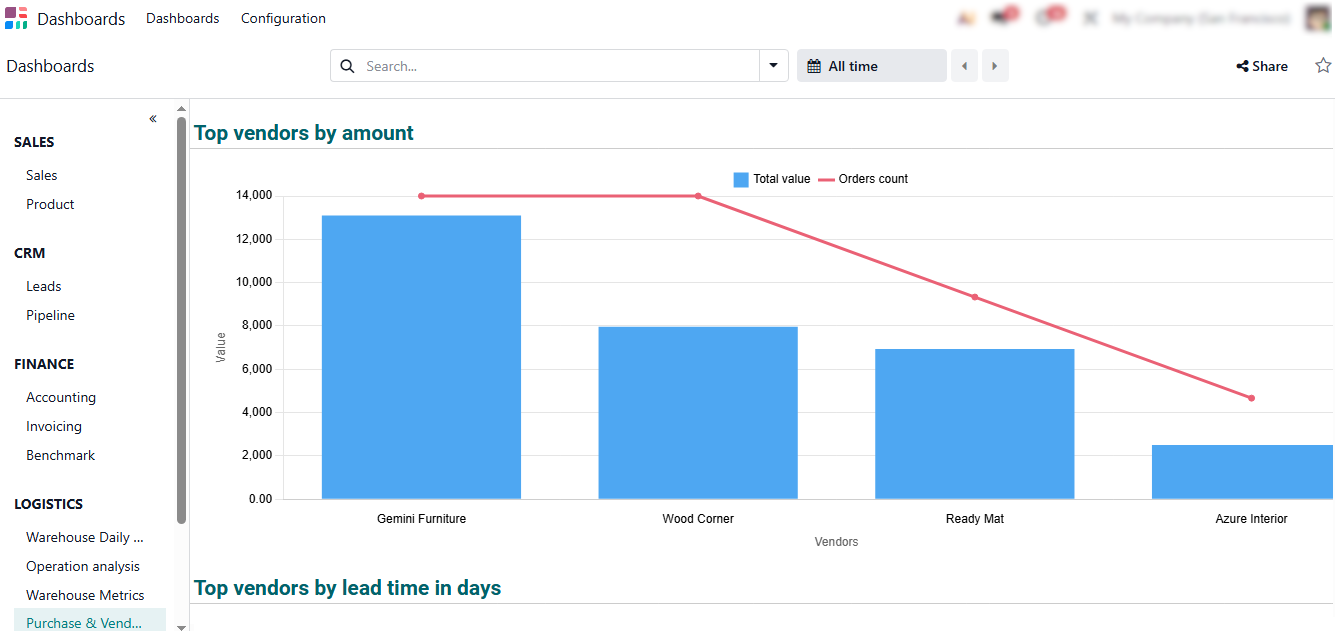
- Odoo also enables vendor performance analysis through purchase spend metrics, highlighting top vendors by purchase amount to help businesses understand supplier impact and optimize long-term procurement decisions.
Vendor Pricing Control in Odoo for Purchase Tracking and Vendor Management
Spreadsheets fail to control purchase pricing because vendor prices are treated as informal references rather than enforced rules. In such workflows, prices are often manually entered or copied from outdated files, leading to inconsistencies that surface only after vendor bills are received. Odoo replaces this approach with structured vendor price lists linked directly to supplier records, automatically applying predefined prices when a vendor is selected on a purchase order. By embedding pricing logic into the purchasing process, Odoo ensures consistent price control while preserving flexibility, strengthening both purchase tracking and vendor management without manual intervention.
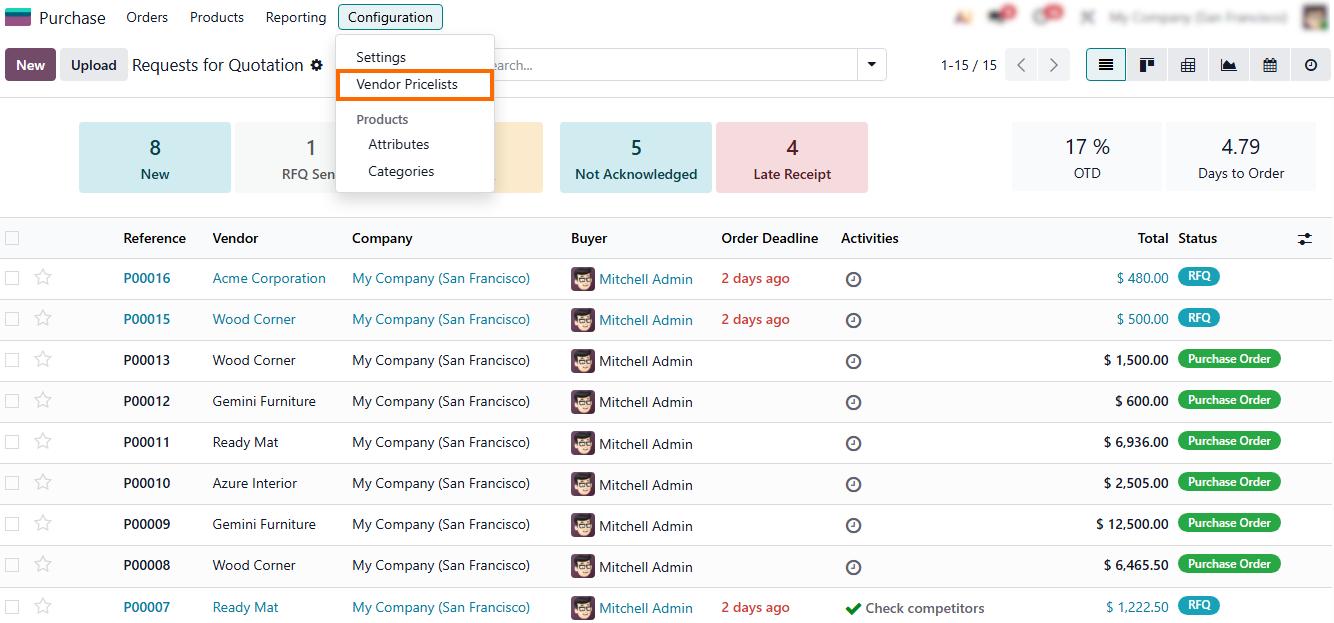
- Controlled purchase prices in Odoo are managed through “Vendor Pricelists”, where all vendor-specific pricing rules are defined centrally, ensuring consistent application across procurement operations.
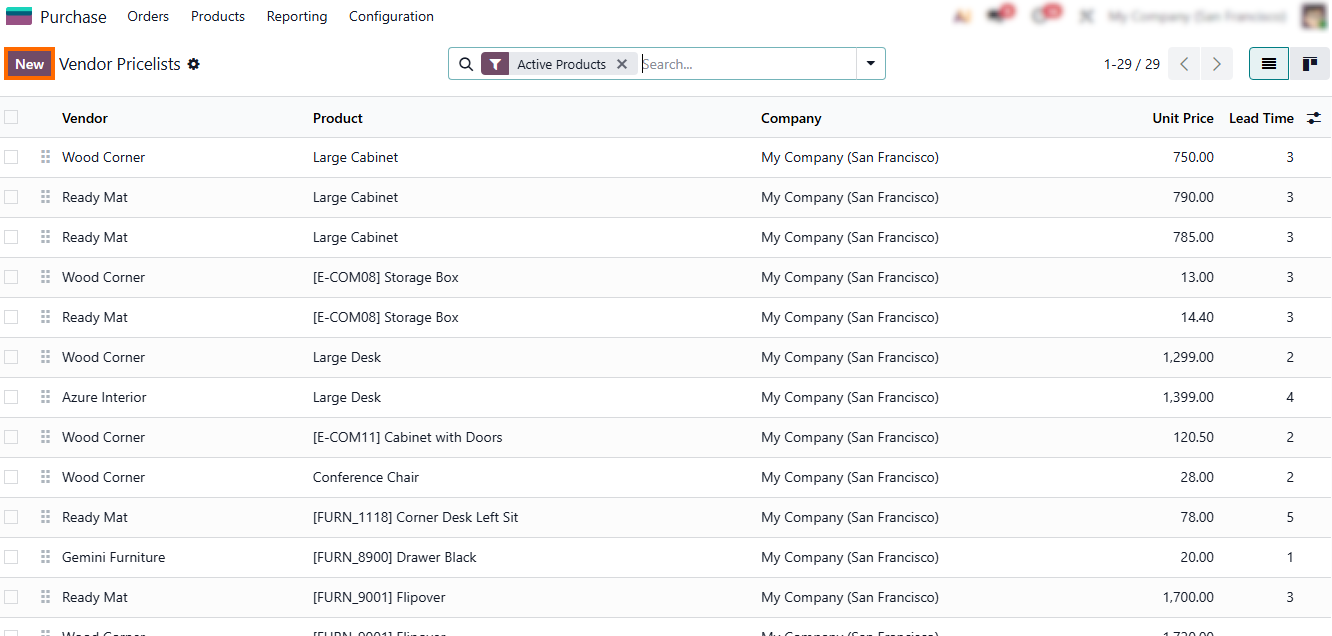
When creating a new vendor pricelist, Odoo uses a structured form to define core parameters such as the vendor, products, quantities, and pricing conditions, allowing precise control over purchasing rules.
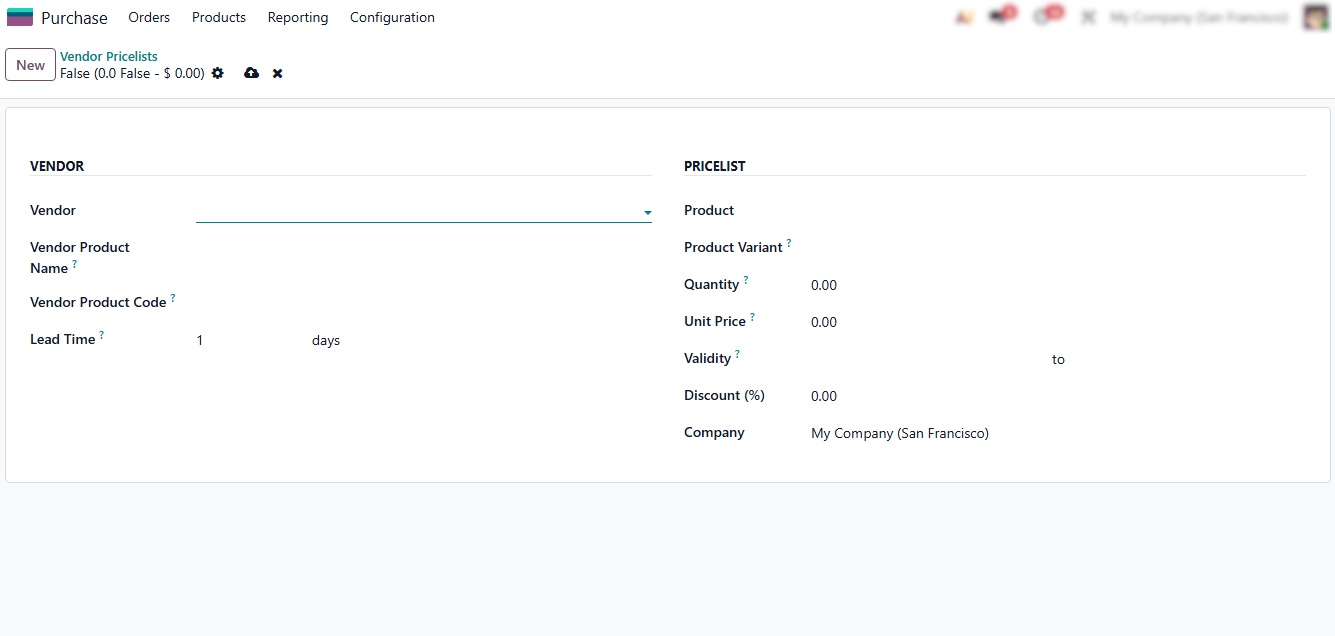
- Each vendor pricelist is explicitly linked to a supplier, ensuring that prices apply only in the correct purchasing context and cannot be accidentally reused across vendors.
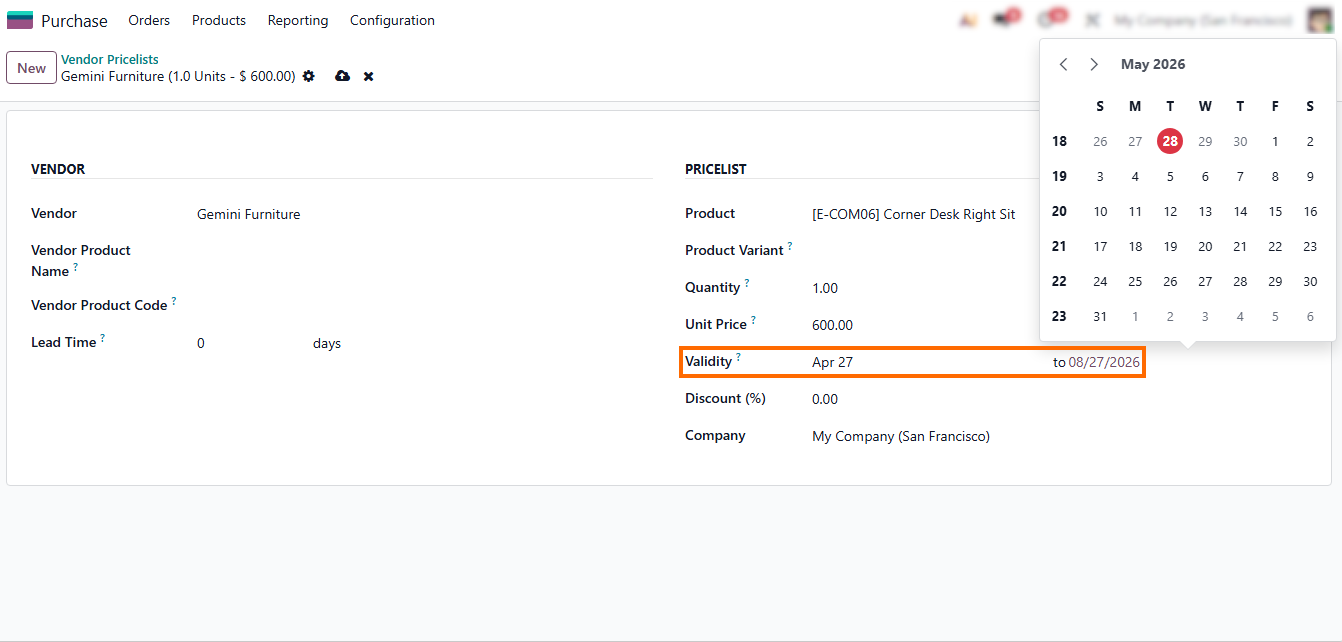
Vendor prices in Odoo can be defined with validity periods (Valid From / To), preventing the use of outdated pricing after contract or market changes and supporting accurate long-term price control
How
Odoo Replaces Spreadsheets for Purchase
Tracking and Vendor Management
Using spreadsheets for procurement creates fragmented data and manual bottlenecks, often limiting visibility across purchasing and vendor management workflows. Moving to Odoo replaces disconnected spreadsheets with a synchronized system where purchasing, inventory movements, and financial records remain fully connected and up to date. This centralization improves control and traceability while making procurement processes more consistent and scalable across the organization.
- Once
all modules are activated, the Purchase Orders interface becomes available,
providing a centralized view of all orders and their statuses. To demonstrate Odoo
purchase tracking, create a new purchase order.
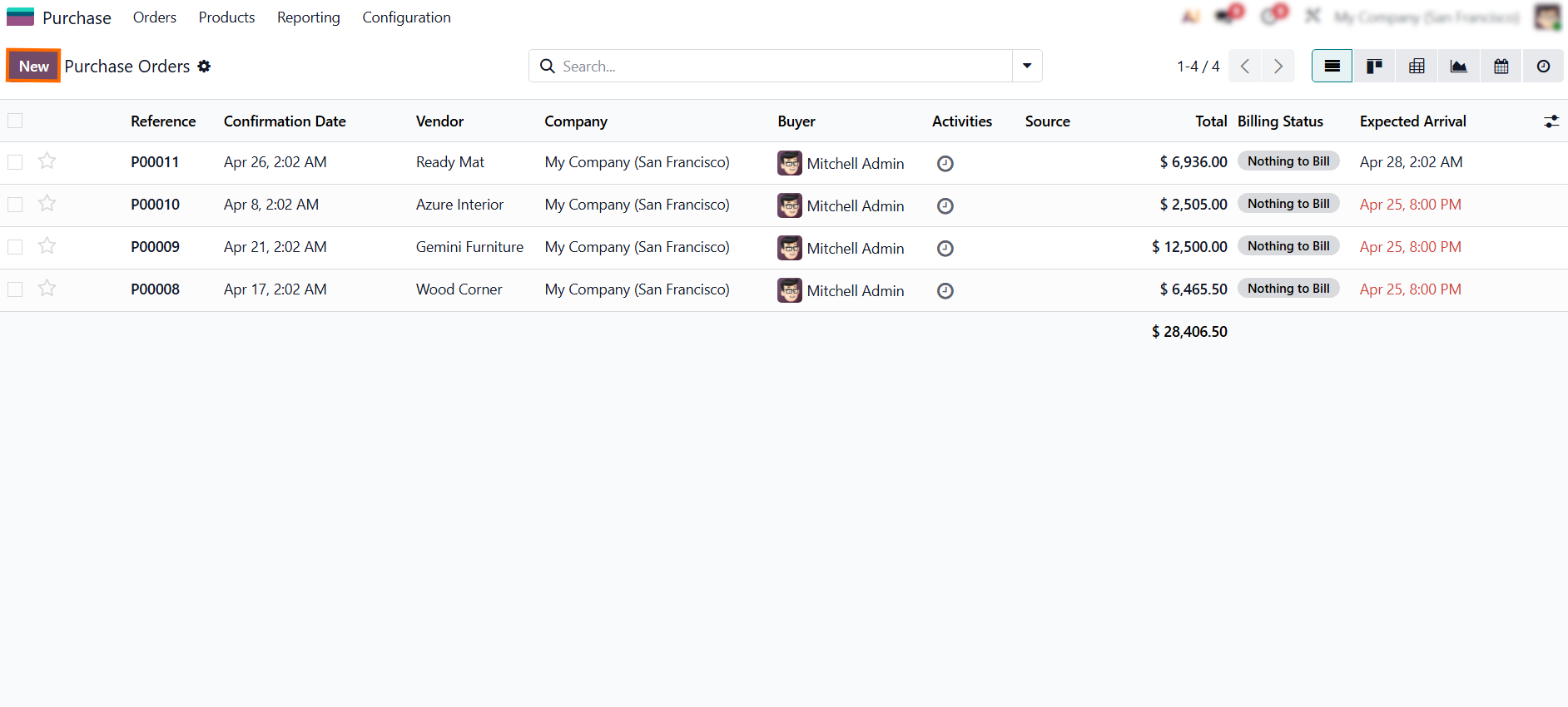
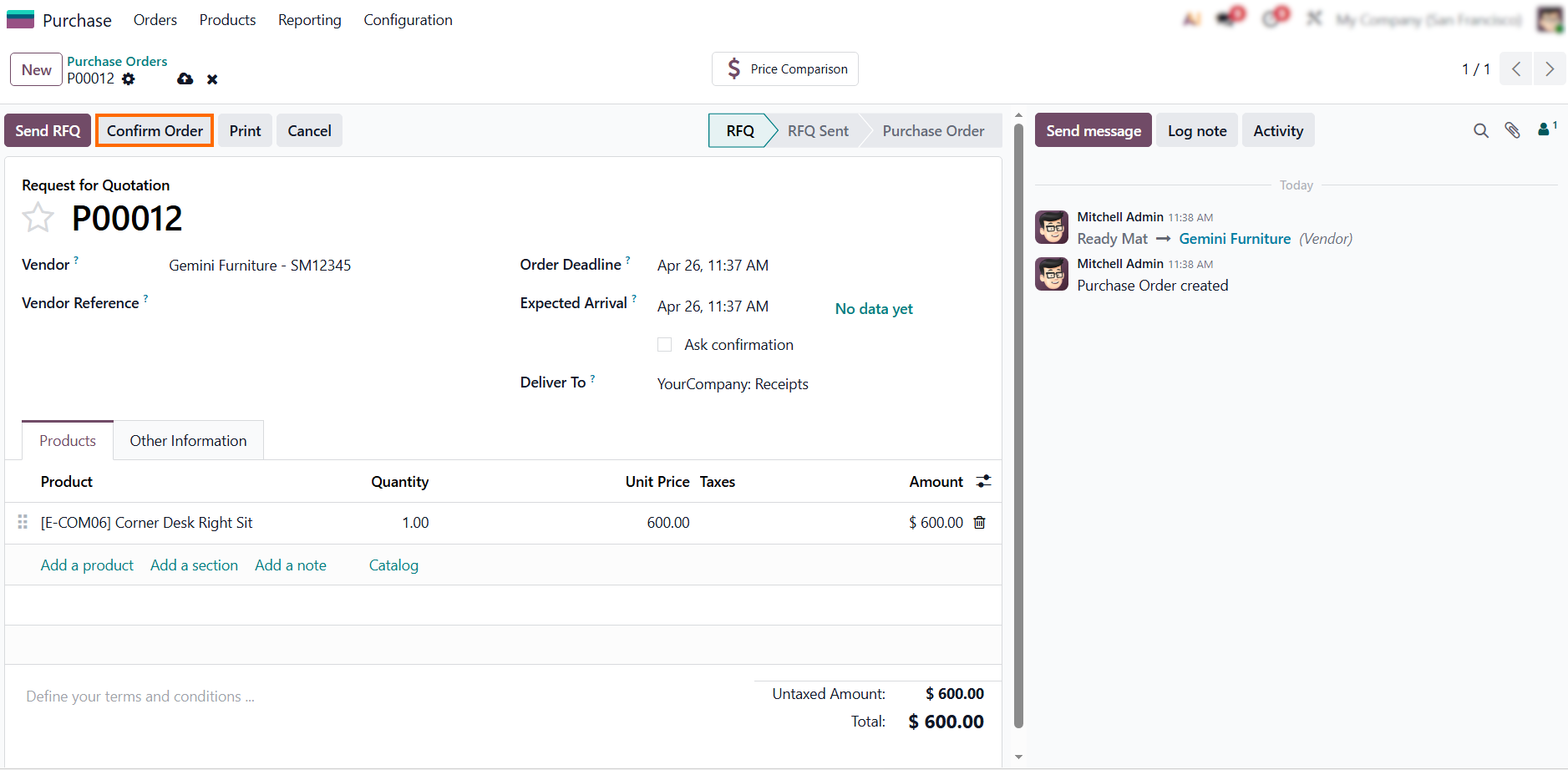
- Fill in the required details: select the vendor, add products, define quantities, and set relevant delivery deadlines. After reviewing the information, click “Confirm Order” to validate the purchase.
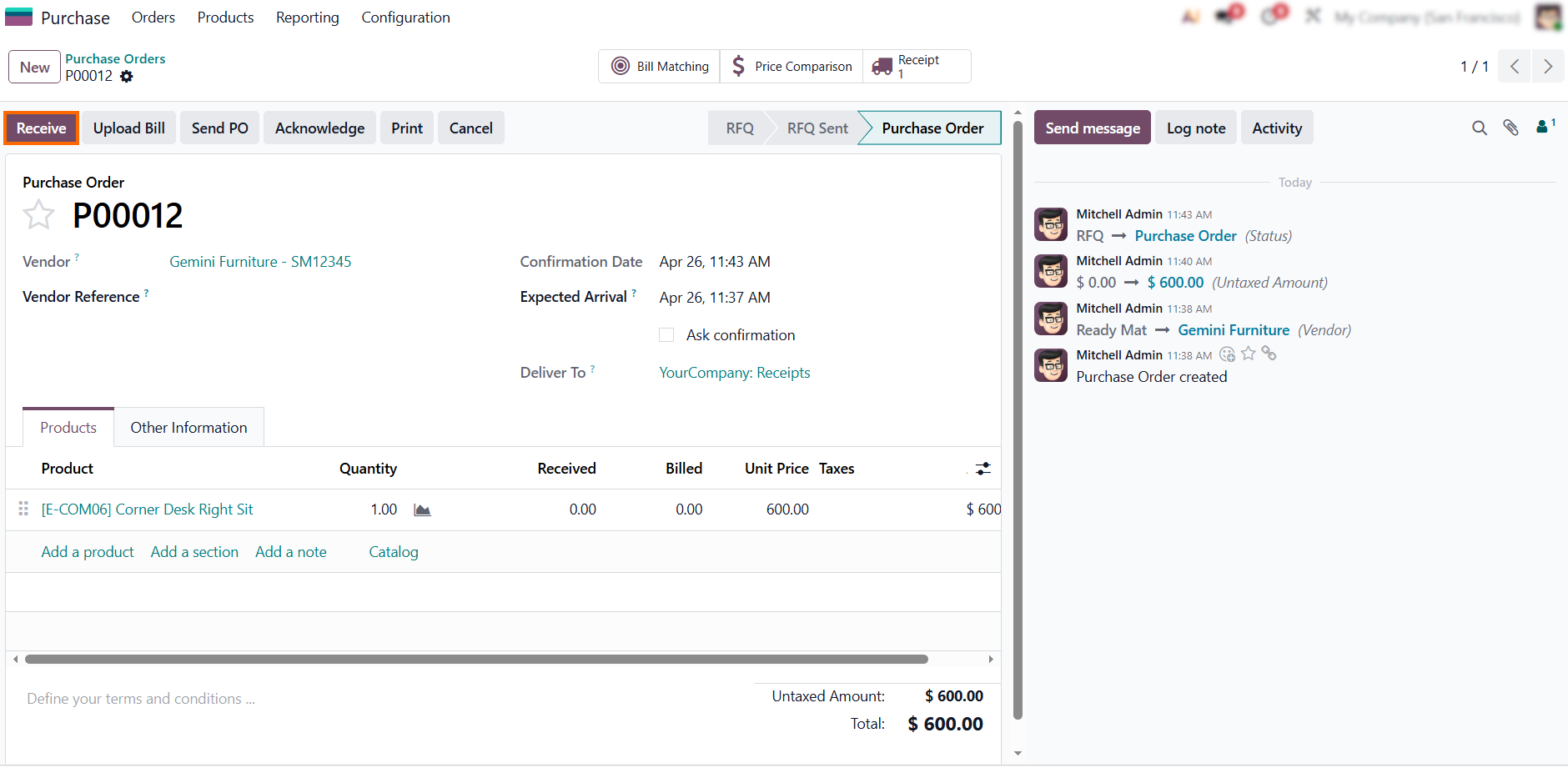
After confirmation, proceed with delivery by selecting “Receive Products”, which registers incoming goods in inventory and links them directly to the purchase order, ensuring accurate stock and procurement synchronization.
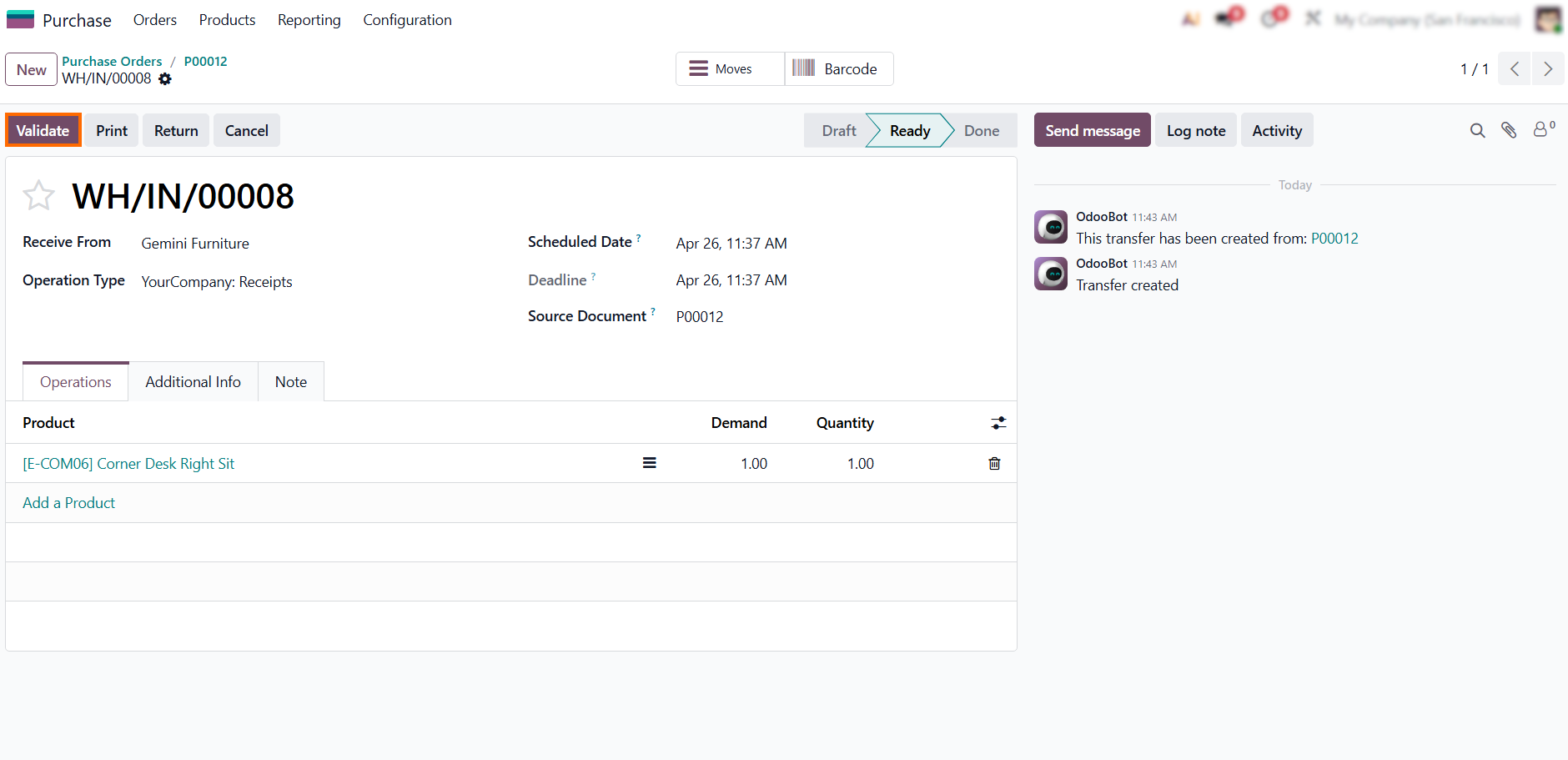
- Click “Validate” to confirm receipt. At this stage, Odoo automatically records a full audit trail of the transaction, ensuring complete traceability across procurement, inventory, and accounting within a single system.
From Vendor Bills to Payment Tracking and Completion in Odoo 19
Once the products have been received and validated, the procurement process moves into its financial stage. Odoo automatically connects purchasing with accounting, replacing fragmented spreadsheets used for purchase tracking and vendor management with a single, controlled system where invoices, payments, and order status remain fully synchronized. This eliminates manual reconciliation between procurement and finance while preserving flexibility in approval and posting processes.
- Once the goods are received, return to the Purchase Order and create or register a vendor bill based on the delivered quantities to proceed with invoicing, ensuring the bill is directly linked to the original purchase data.
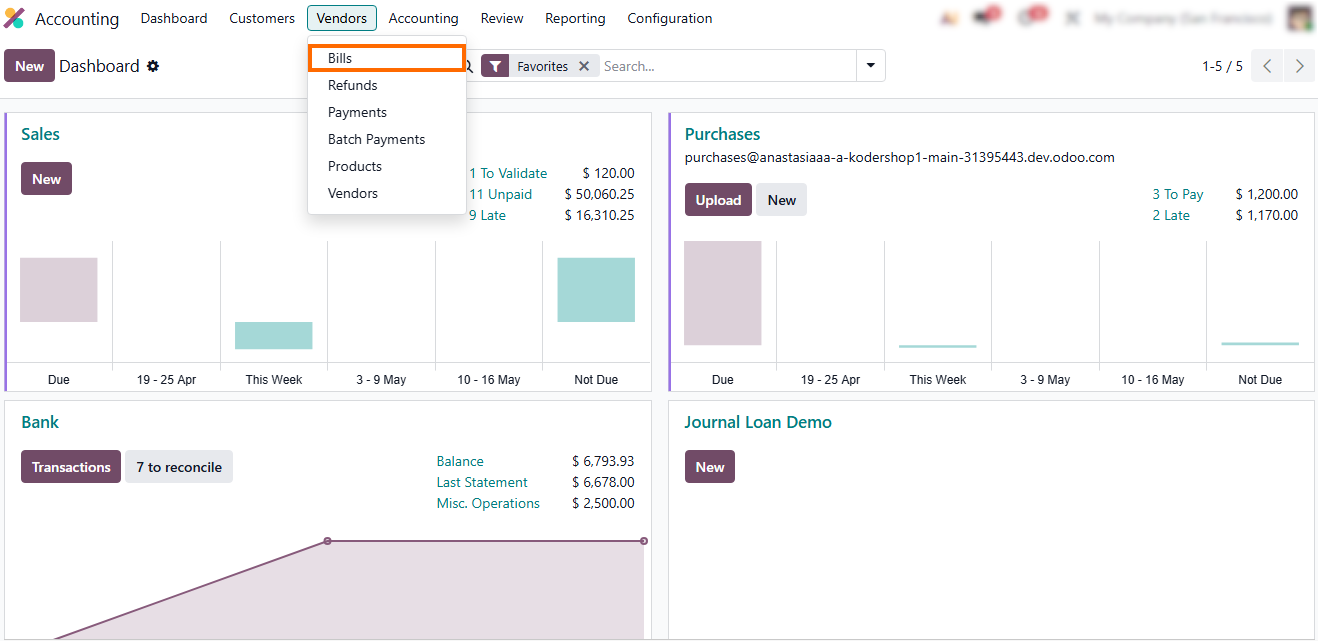
- Validate
and post the vendor bill to finalize the accounting entry and complete this
step of Odoo purchase tracking,
making the transaction officially recorded in financial records.
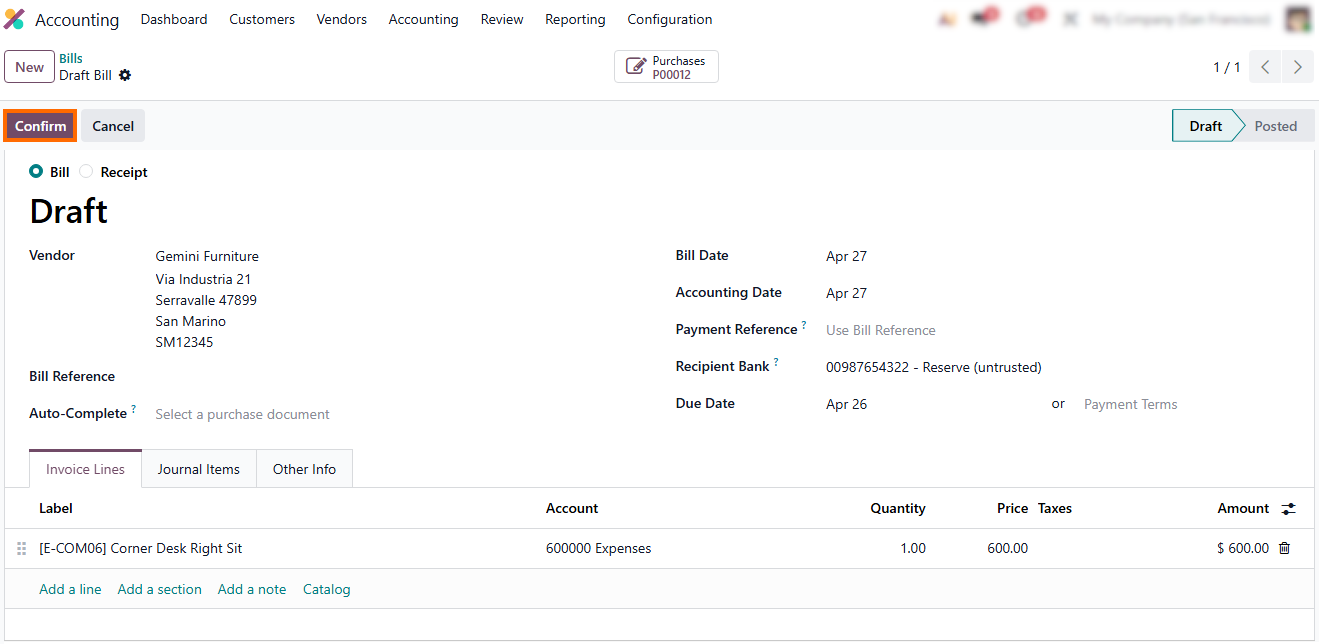
- Back in the Purchase Orders list, the status updates to “Fully Billed”, confirming that purchasing and accounting data are aligned. In Odoo, billing status updates automatically without manual adjustments or reconciliation gaps.
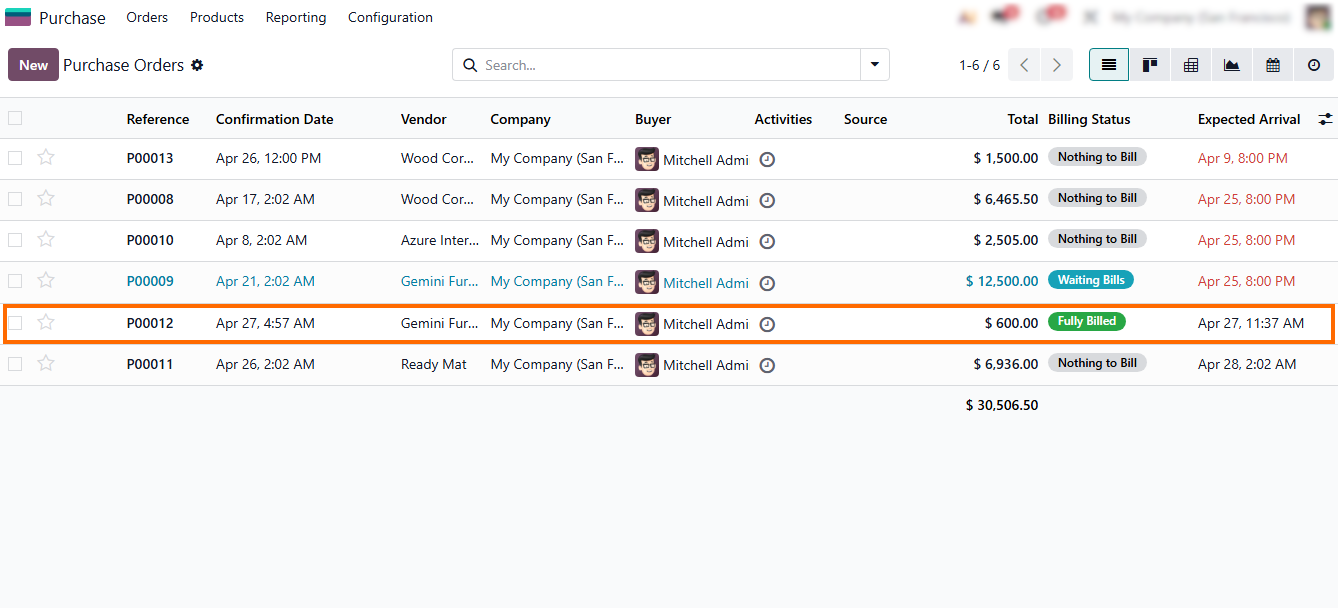
- Odoo replaces
fragmented spreadsheet tracking with an integrated invoicing workflow, where
purchases are consistently reflected in accounting records for
better control and visibility.
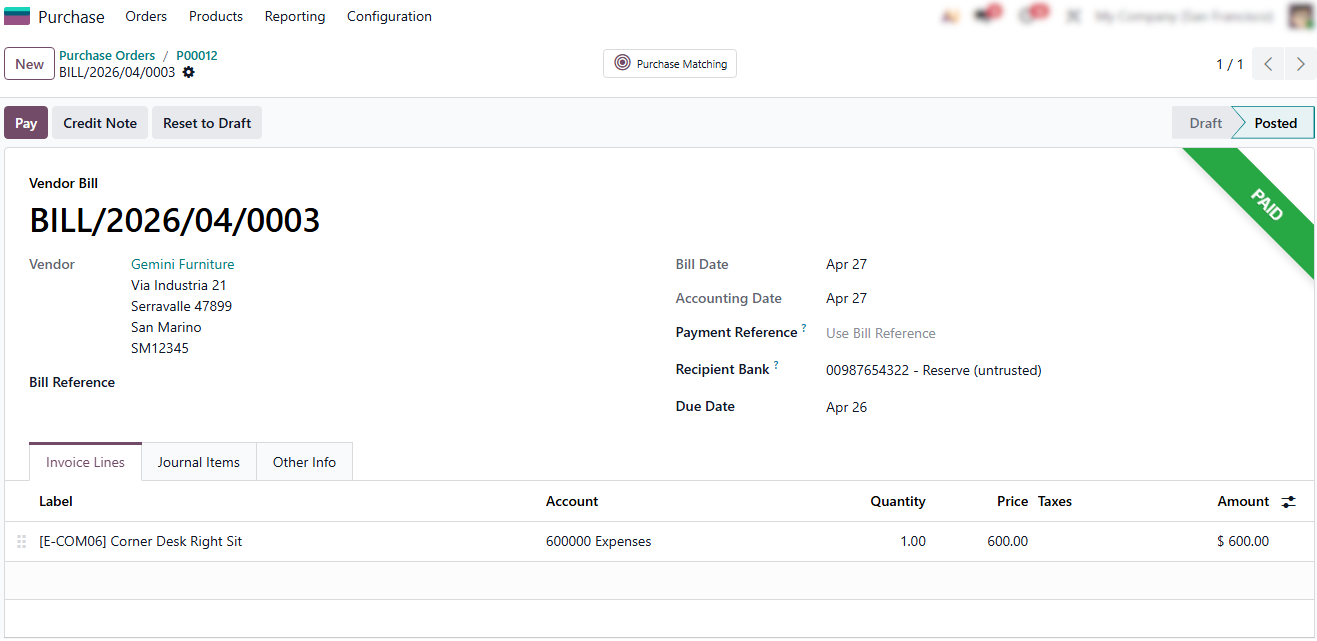
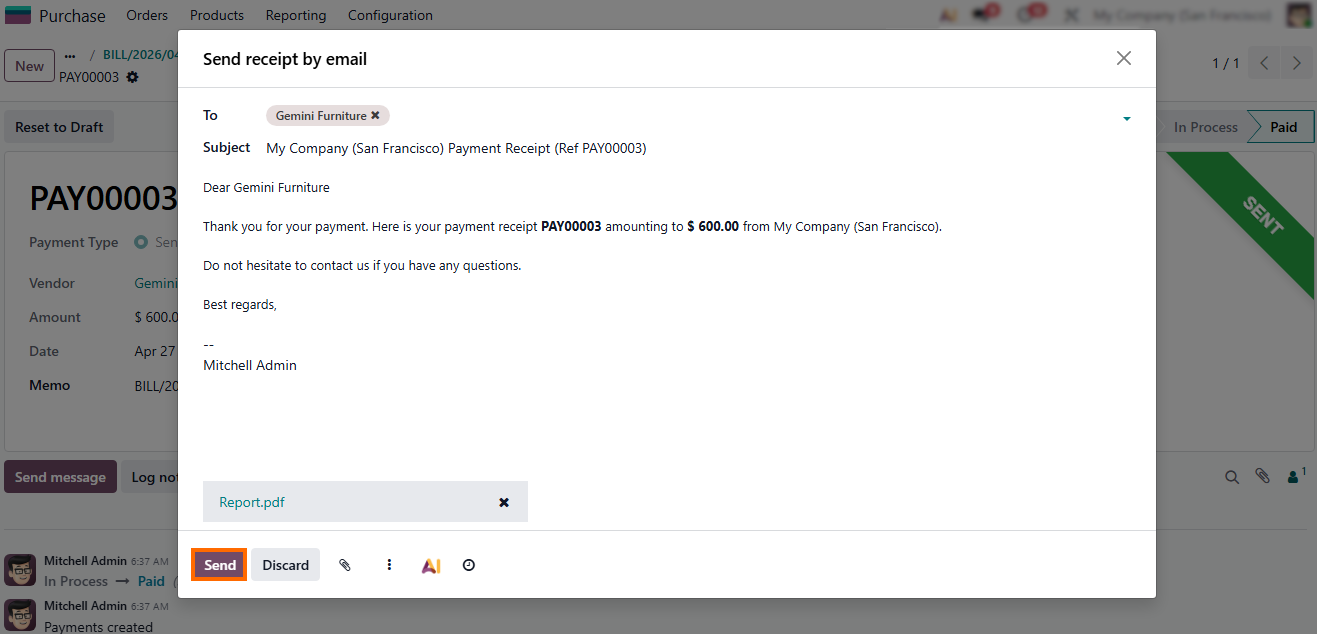
- After payment is recorded, invoices or payment receipts can be sent directly from the system, ensuring clear communication with vendors and completing the full purchase-to-payment cycle in one place.
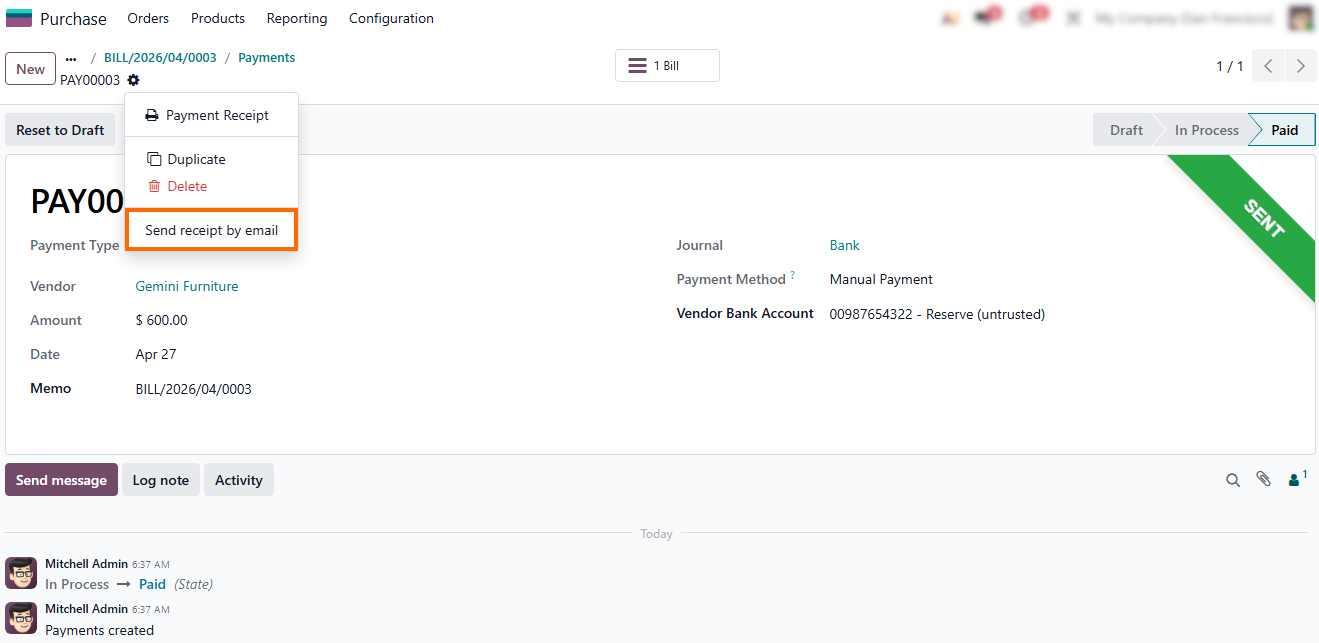
- Compared to
spreadsheets, documents can be shared instantly, with the option to edit the
message or use a predefined template, reducing manual follow-ups and
communication delays.
Conclusion
Odoo replaces fragmented spreadsheet-based procurement with a unified system that improves control, accuracy, and visibility across the purchasing cycle. By centralizing procurement data and automating key workflows, it strengthens Odoo vendor management, ensuring consistent tracking of supplier performance, communication, and purchasing history within a single environment.
Tracking purchases in Odoo becomes a structured and reliable process, reducing dependency on manual updates and eliminating inconsistencies caused by disconnected files. This provides real-time visibility into procurement activity and enables decisions based on accurate operational data rather than outdated spreadsheet versions.
Managing vendors with Odoo shifts organizations from reactive spreadsheet workflows to a fully integrated procurement model, where purchasing, vendor data, inventory, and accounting operate as one connected system, creating a more predictable and scalable foundation for operations.