Manufacturing performance issues rarely originate from poor planning logic. Efficiency often declines because manual execution obscures how production flows across work centers and operations. When execution data is delayed or fragmented, bottlenecks remain invisible and issues are addressed locally rather than system-wide. Operations are often blocked by missing materials or execution delays that only become visible once production slows. By eliminating manual execution and capturing production activity in real time, manufacturers gain early visibility into flow constraints and optimize performance based on actual shop floor behavior rather than assumptions.
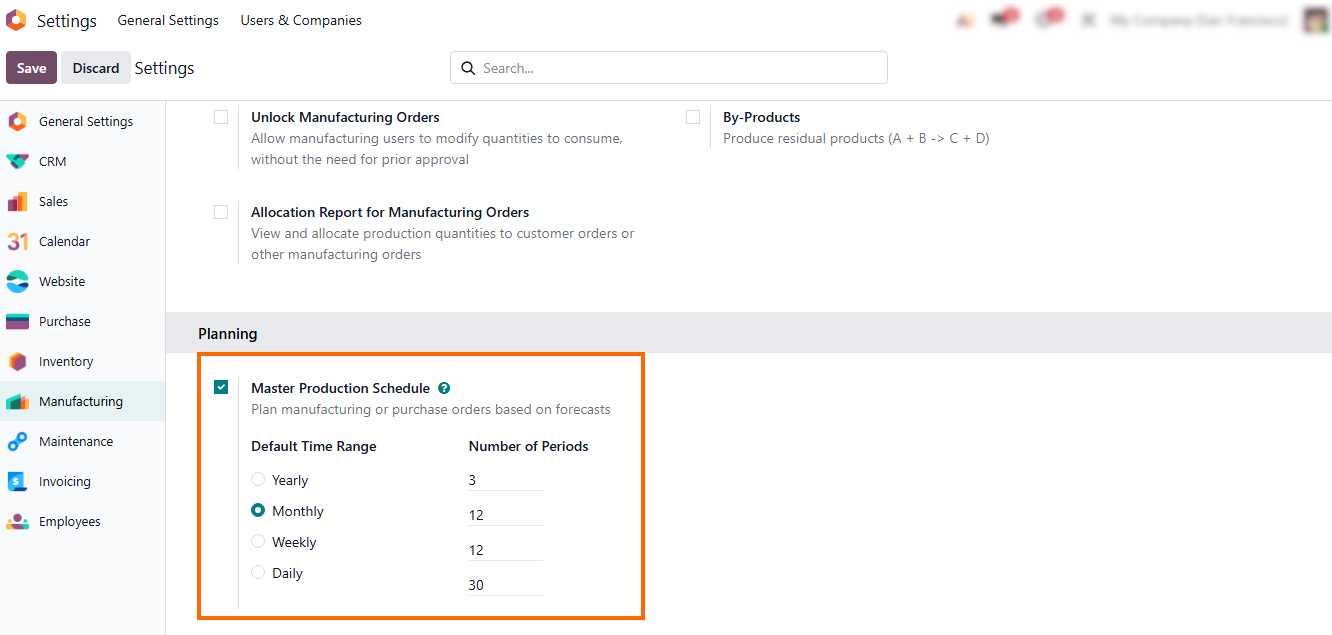
- Production predictability is established through Bills of Materials (BoMs), routings, and work centers, allowing MRP and MPS to align demand with actual capacity.
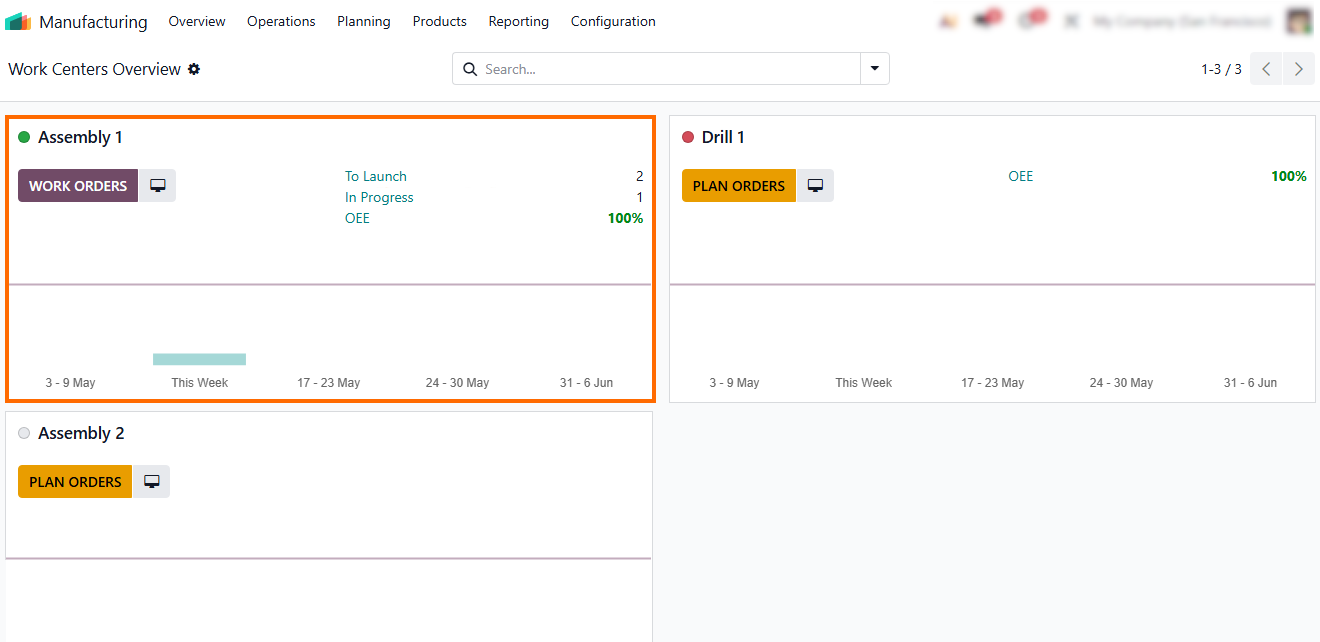
Odoo replaces manual tracking with real-time execution across manufacturing orders, routings, and work centers. Operators work directly in the Shop Floor interface, where each station shows live activity.
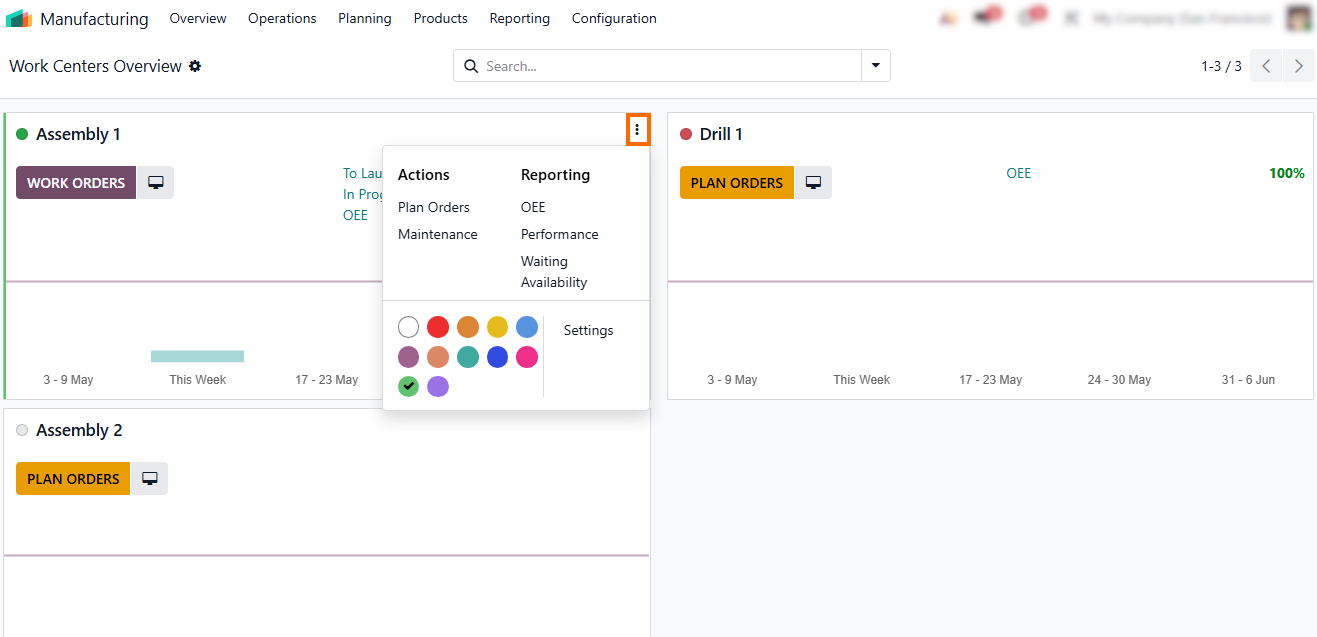
- Quick actions via the three-dot menu in the Shop Floor interface provide instant access to reporting, planning, and maintenance requests, enabling faster responses within the execution context.
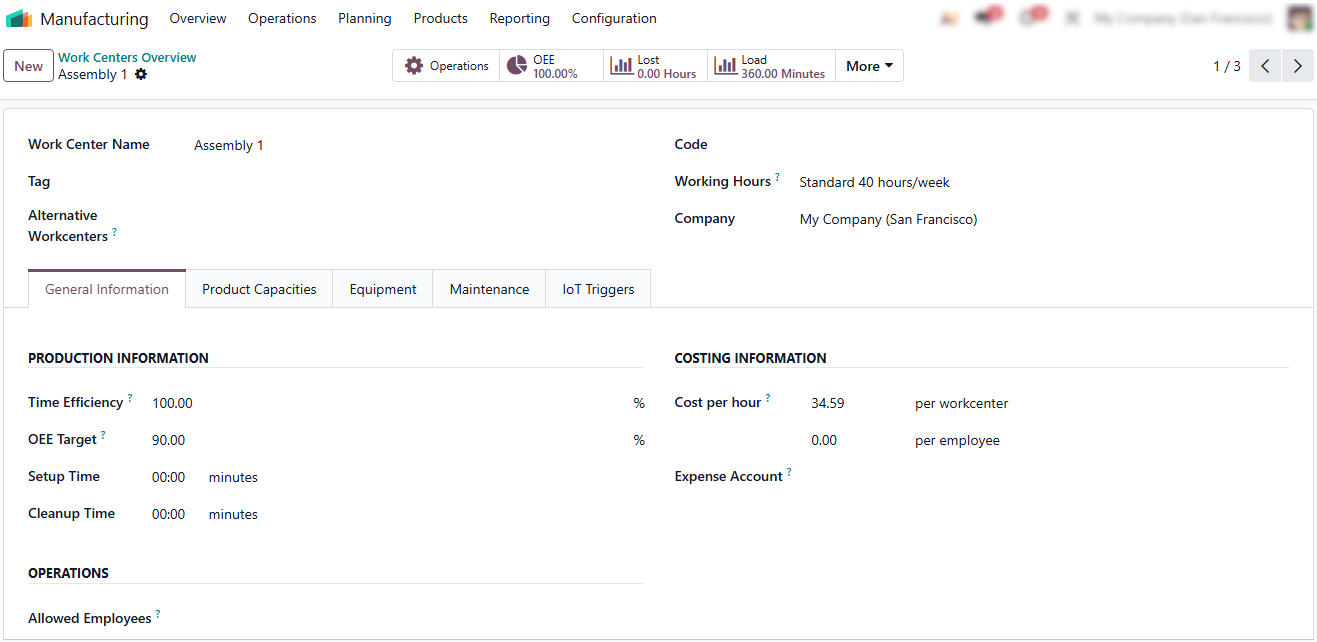
- This continuous data capture automatically updates work center profiles, creating a closed feedback loop between shop floor execution and operational configuration without retrospective reporting or manual reconciliation.
Eliminating
Manual Execution Through the Odoo Shop Floor
Interface
Manual execution does not fail because operators perform tasks incorrectly, but because it fragments production data across paper logs and spreadsheets. As a result, production behavior is often reconstructed after the fact rather than observed in real time. Without real-time digitization, bottlenecks remain invisible because the system lacks a continuous view of workflow across operations. In Odoo Manufacturing, eliminating manual execution is a structural requirement for production visibility. By digitizing execution at the shop floor level, Odoo turns production activity into a continuous data stream that reveals workflow and emerging constraints.
- Paper logs and spreadsheets are replaced with touch-optimized shop floor terminals, converting physical actions into structured, traceable digital records.
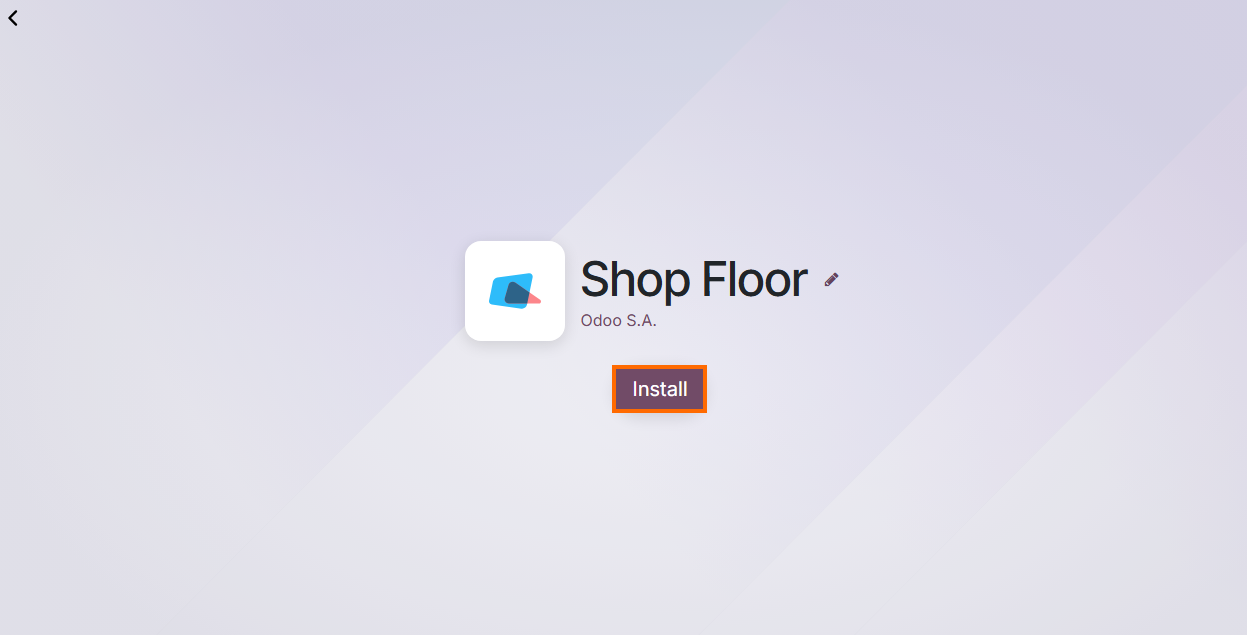
- From shop floor tablets or terminals, operators access work centers and active operations, with the ability to report delays, interruptions, or execution exceptions directly in the system.
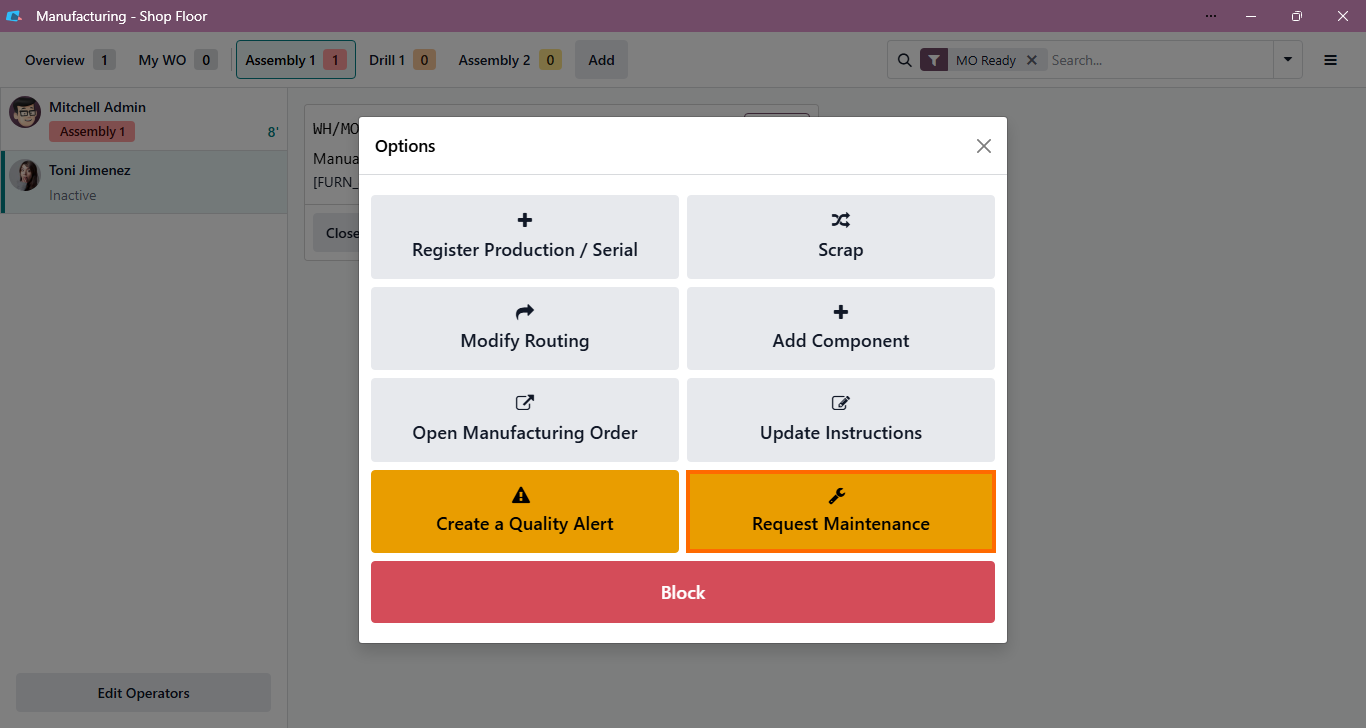
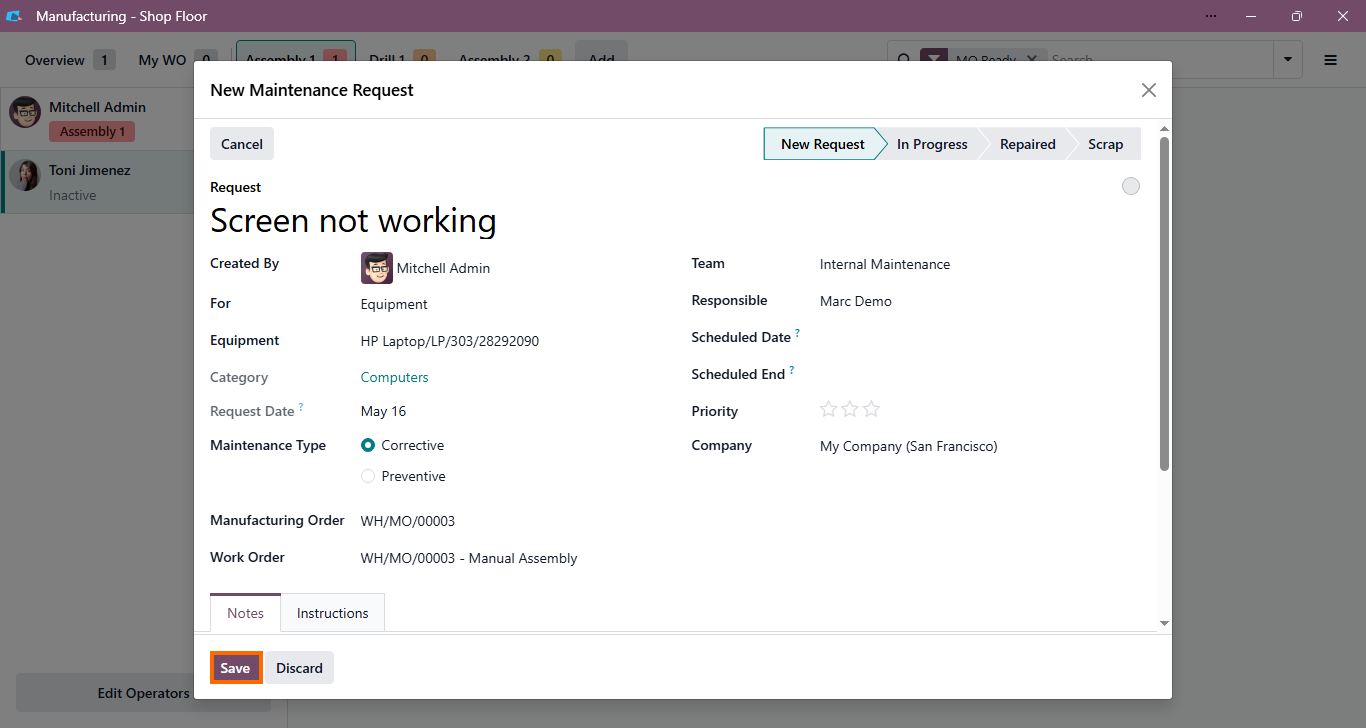
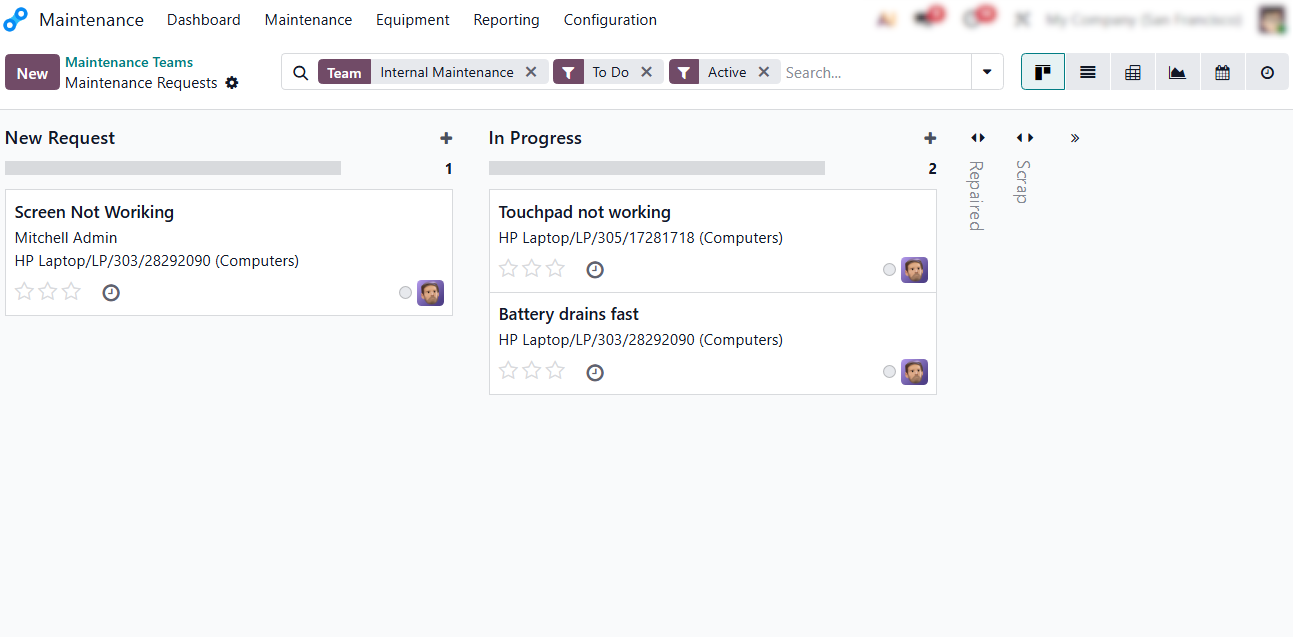
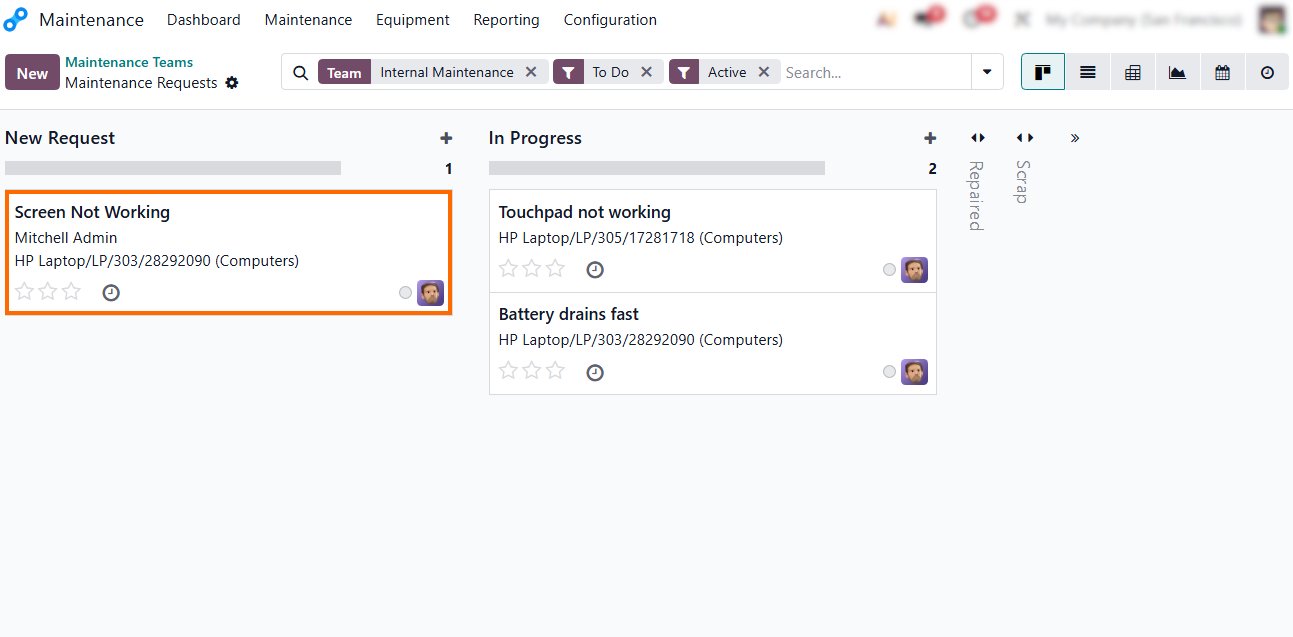
- When an operation is blocked, operators can create a maintenance request directly from the shop floor screen, specifying the affected equipment and issue details at the source.
- Submitted requests are automatically routed to the Maintenance module and appear in the maintenance team’s task list as “To Do”, ensuring immediate visibility without manual escalation.
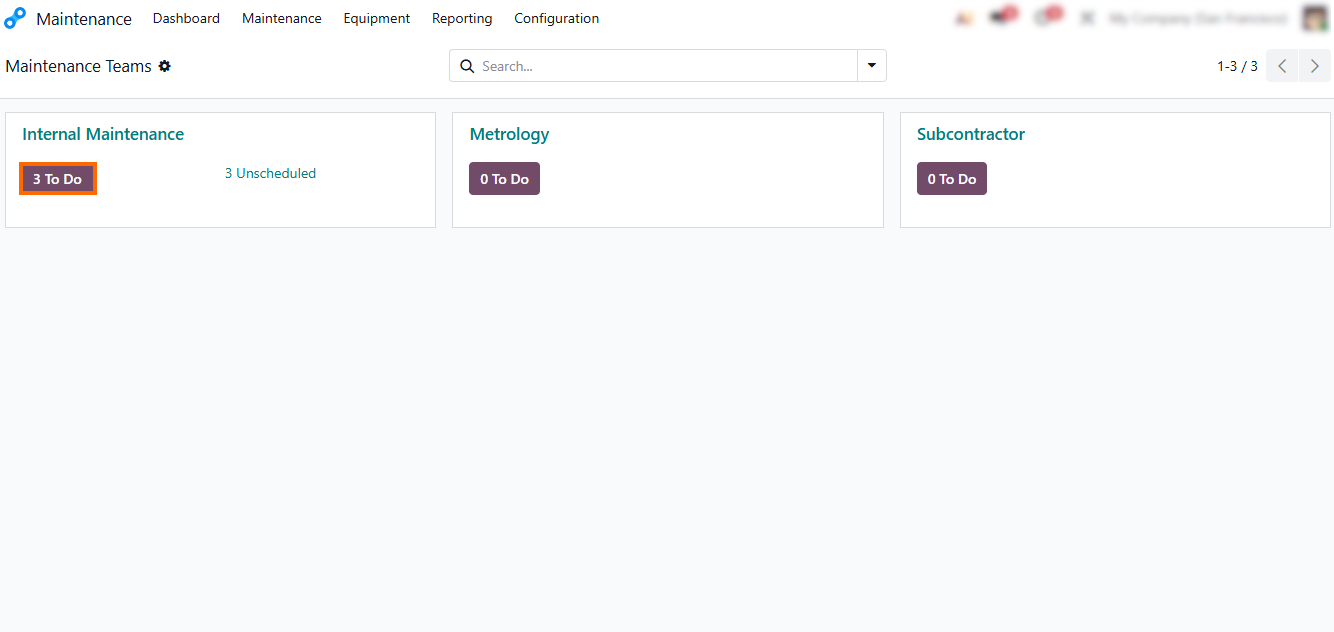
- Maintenance teams receive requests in real time and can prioritize and process them directly from the maintenance dashboard, reducing downtime and keeping production flow transparent.
Turning
Manufacturing Orders into a Real-Time
Production Control Layer in Odoo
Manufacturing
Once execution is digitized at the shop floor level, Manufacturing Orders in Odoo become live production control objects instead of static planning documents. Instead of reflecting assumptions made during scheduling, manufacturing orders continuously reflect execution signals from work centers and operations. This allows production coordination within the Manufacturing module itself, based on actual shop floor activity rather than expected outcomes. This shifts production control from static planning assumptions to a continuously updated system state driven by real execution behavior.
- Work center execution states such as “In Progress” or “To Do” are reflected in real time, making flow disruptions visible the moment they occur rather than after completion.
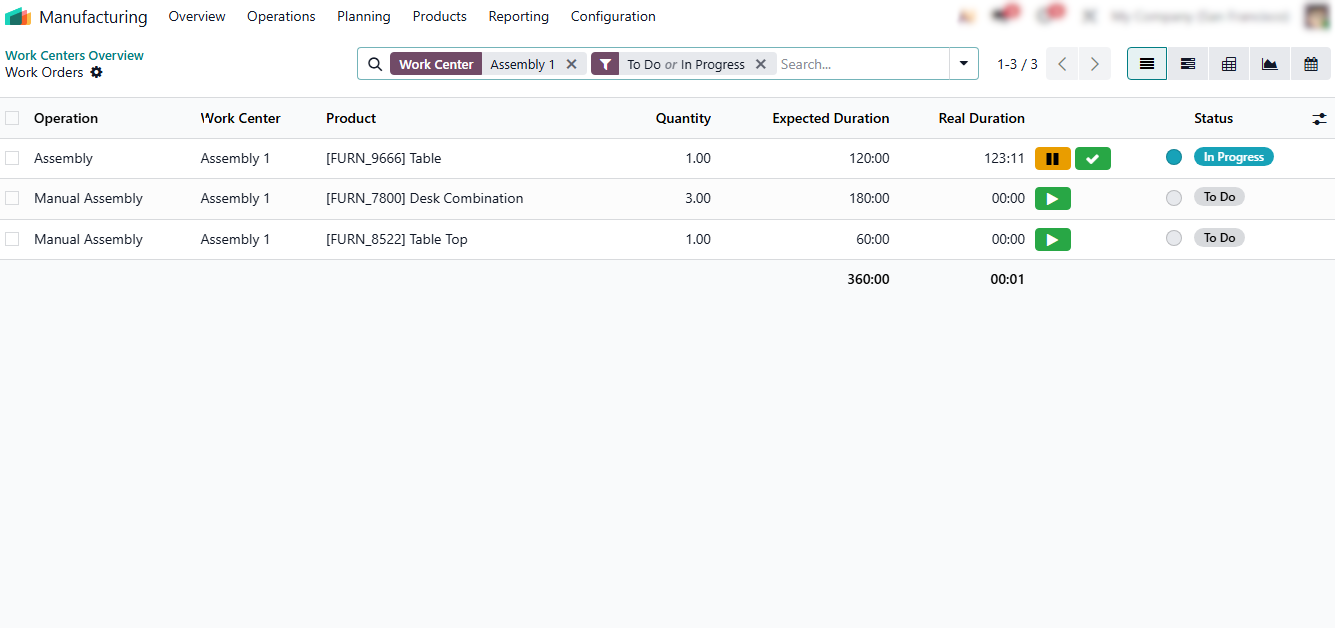
- When an operation is delayed or blocked, its impact propagates to the Manufacturing Order level, exposing systemic bottlenecks instead of isolated execution issues.
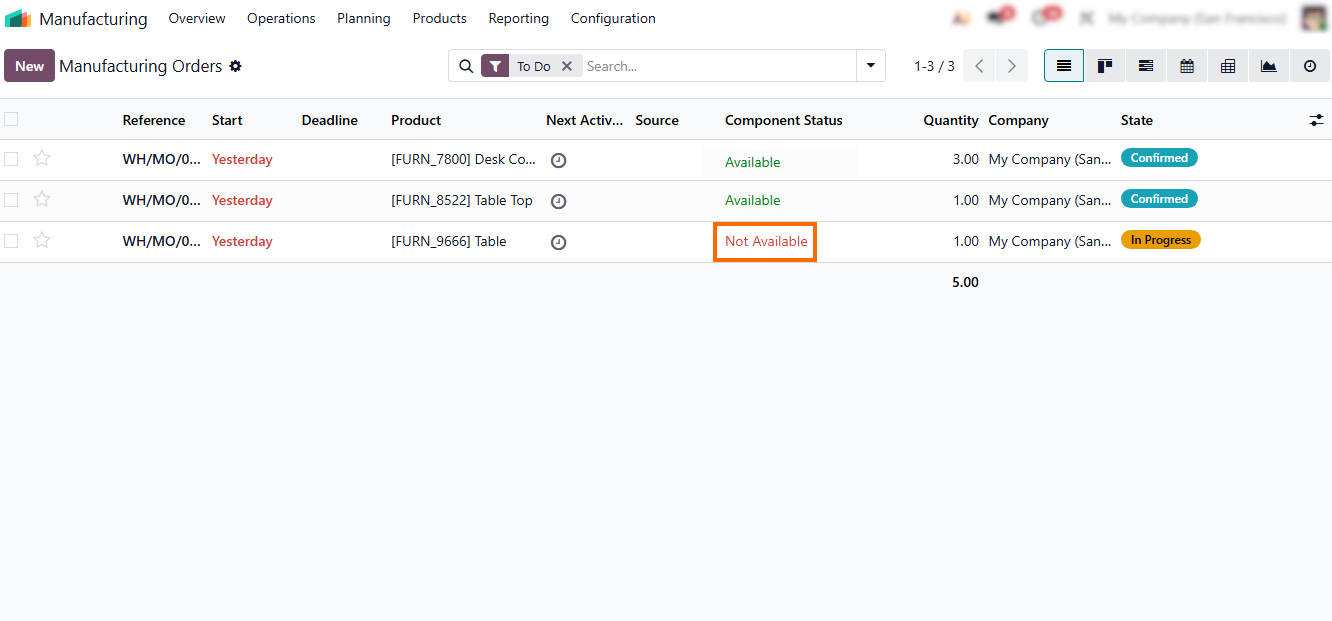
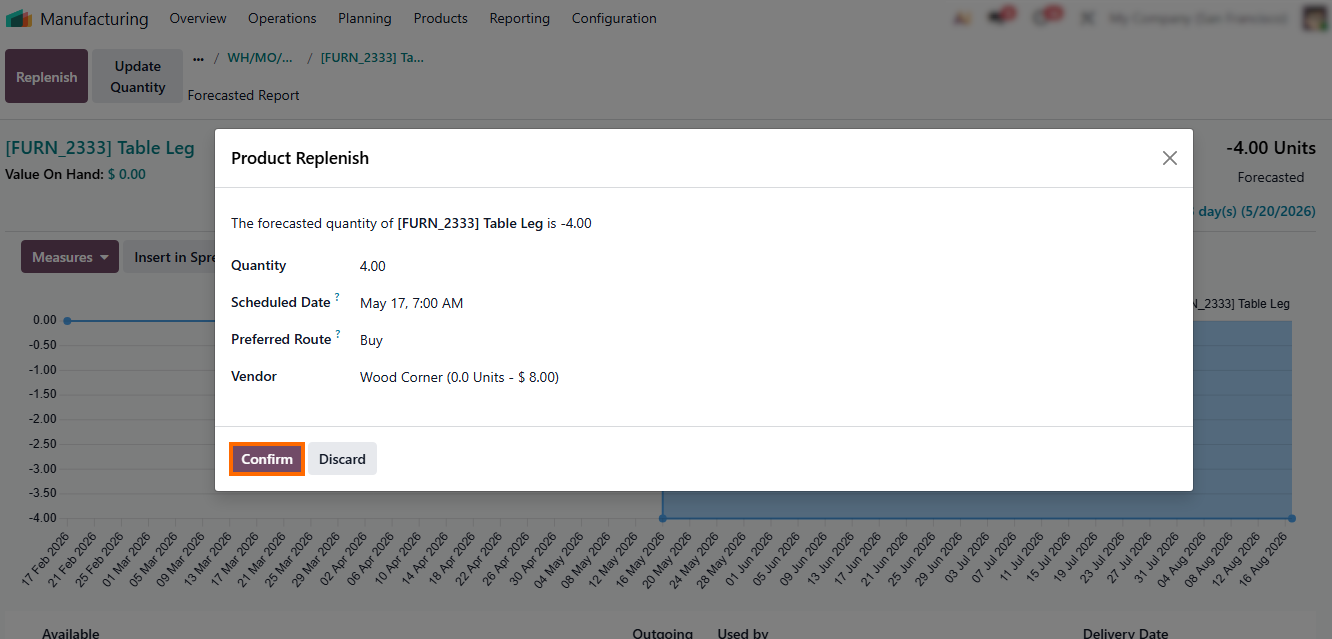
- To resolve material-driven bottlenecks from the control layer, users can initiate instant replenishment actions for missing components directly from the Manufacturing Order.
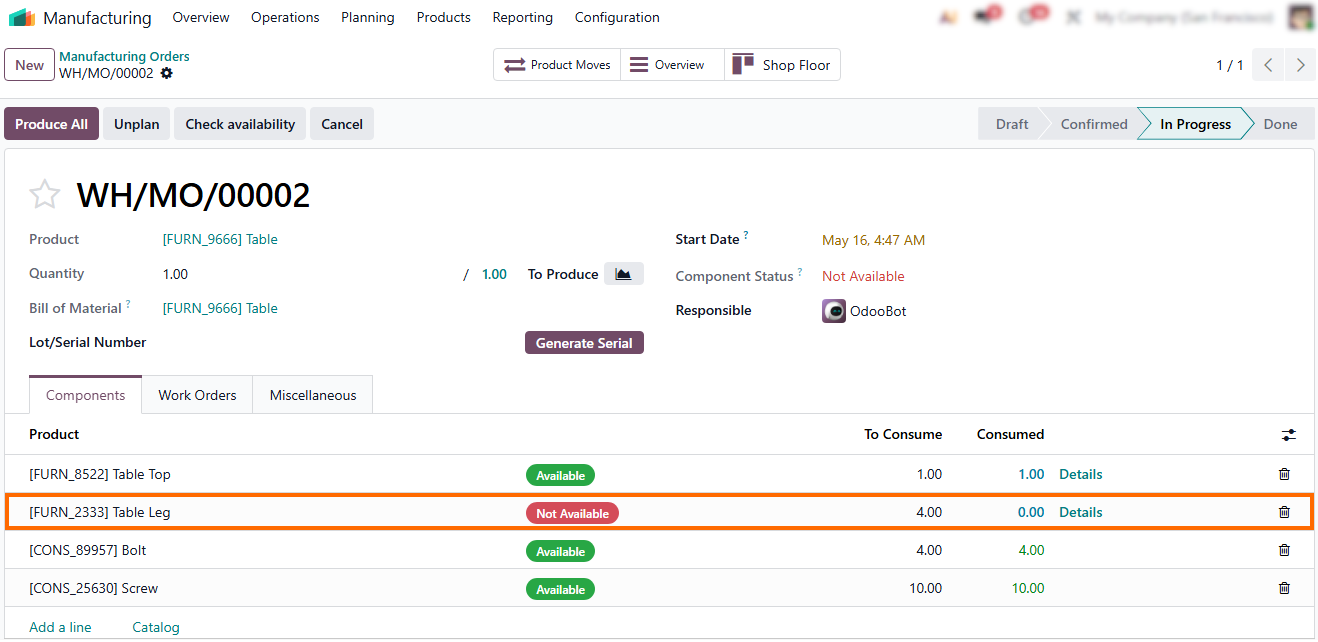
- To verify if a shortage is order-specific or a systemic supply chain constraint, navigating to the product level provides real-time inventory context, including network-wide on-hand availability indicators.
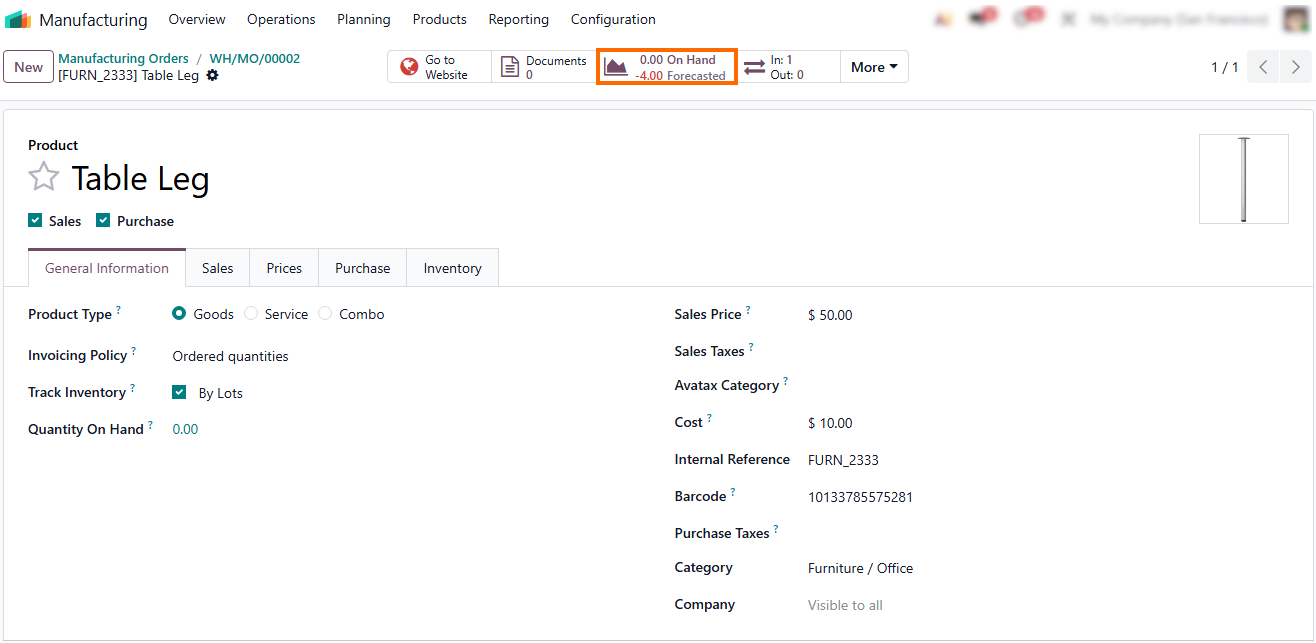
- Once replenishment is confirmed, the system dynamically injects a procurement or production request into the supply flow, restoring material visibility and clearing the constraint across all affected operations.
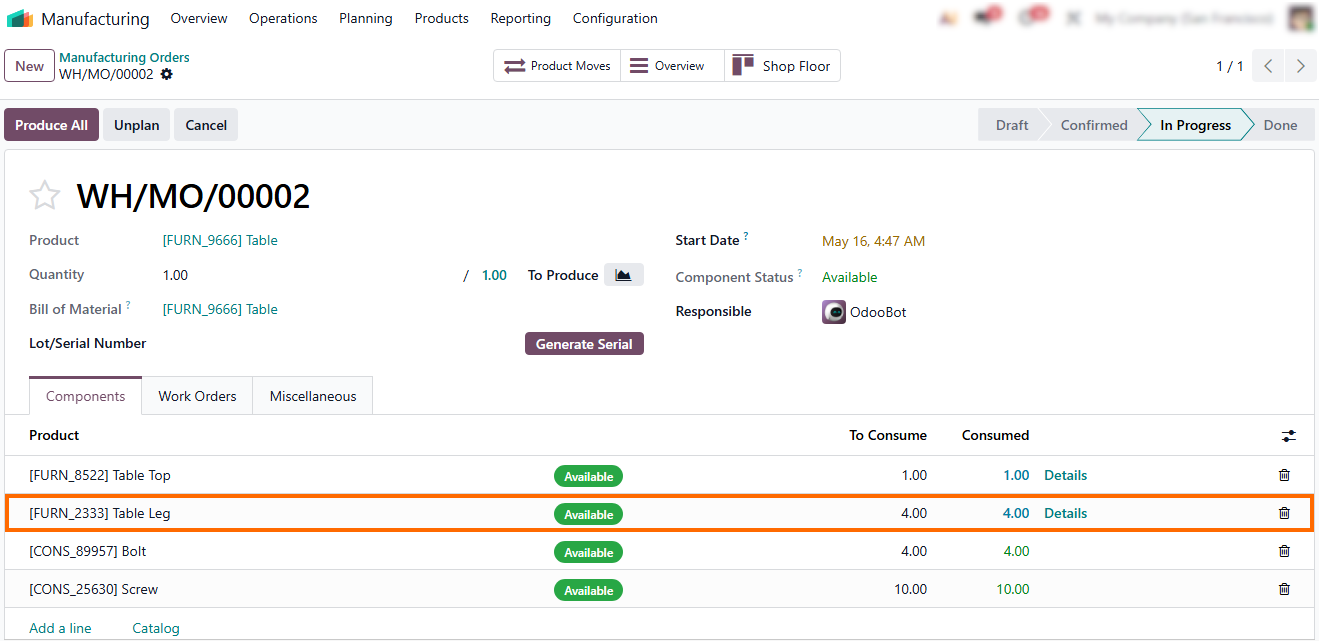
- The moment the missing component becomes available, the Manufacturing Order updates to “Available”, removing the bottleneck and allowing execution to resume without manual reconciliation.
Why
Planning Alone Cannot Expose Real Production
Bottlenecks in Odoo Manufacturing
Production planning in Odoo Manufacturing relies on structured parameters such as Bills of Materials, routings, work centers, and expected lead times, which define how production should behave under ideal conditions. This planning layer relies on static assumptions about capacity and execution stability, making it unable to reflect real-time production variability. Planning models assume stable throughput and predictable operation sequences, but real manufacturing environments are affected by disruptions such as downtime, material shortages, and execution delays.
- Real-time execution data is continuously aggregated into operational metrics at the work center and Manufacturing Order level, enabling faster detection of production slowdowns without relying on delayed reports.
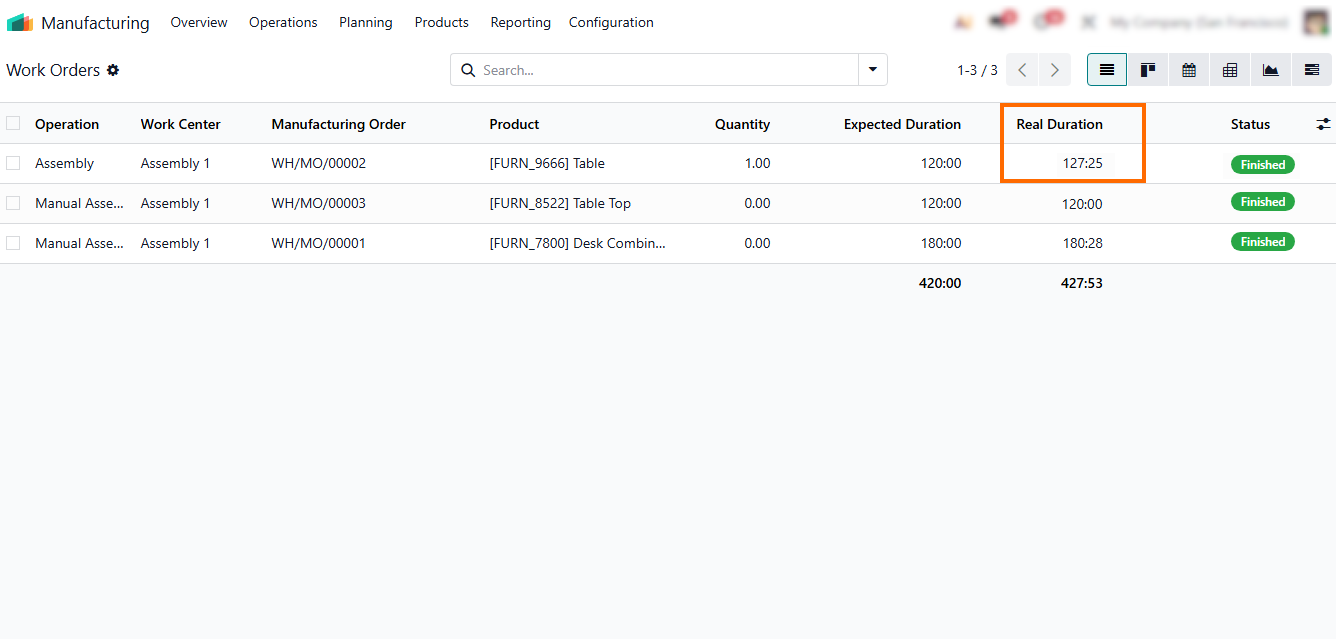
- The OEE dashboard provides a real-time overview of equipment effectiveness, combining availability, performance, and quality metrics. It helps quickly identify inefficiencies from downtime, reduced throughput, or specific work center losses.
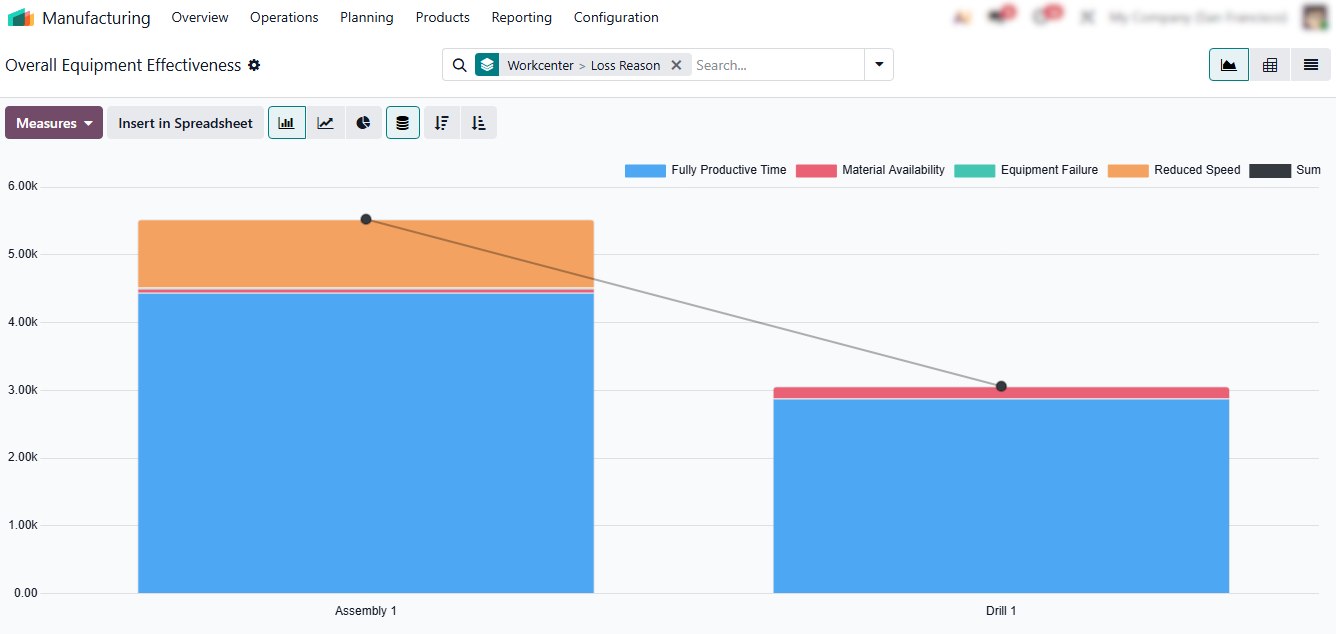
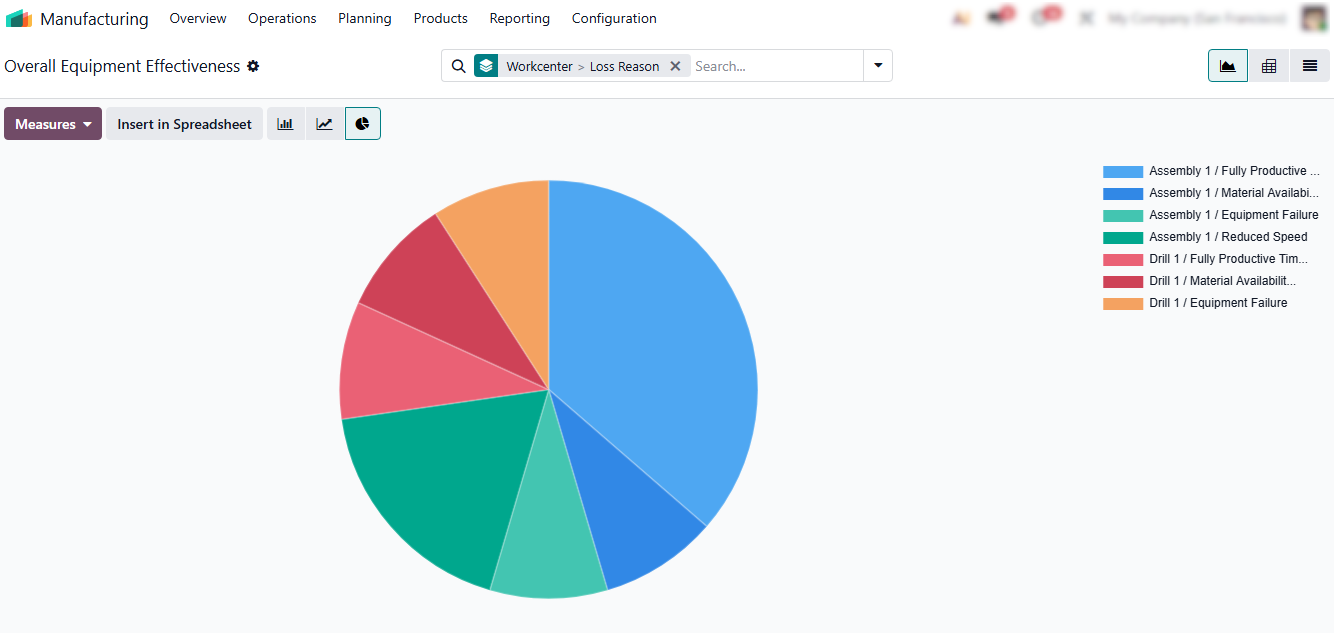
- Visual performance representations such as pie charts or distribution graphs can be used to quickly compare efficiency across work centers or production lines, making it easier to highlight imbalance patterns that are not visible in raw operational data.
- Execution data can be reformatted into different analytical views and exported into spreadsheet-based dashboards, enabling deeper analysis of production trends and segmentation across time periods, products, or work centers.
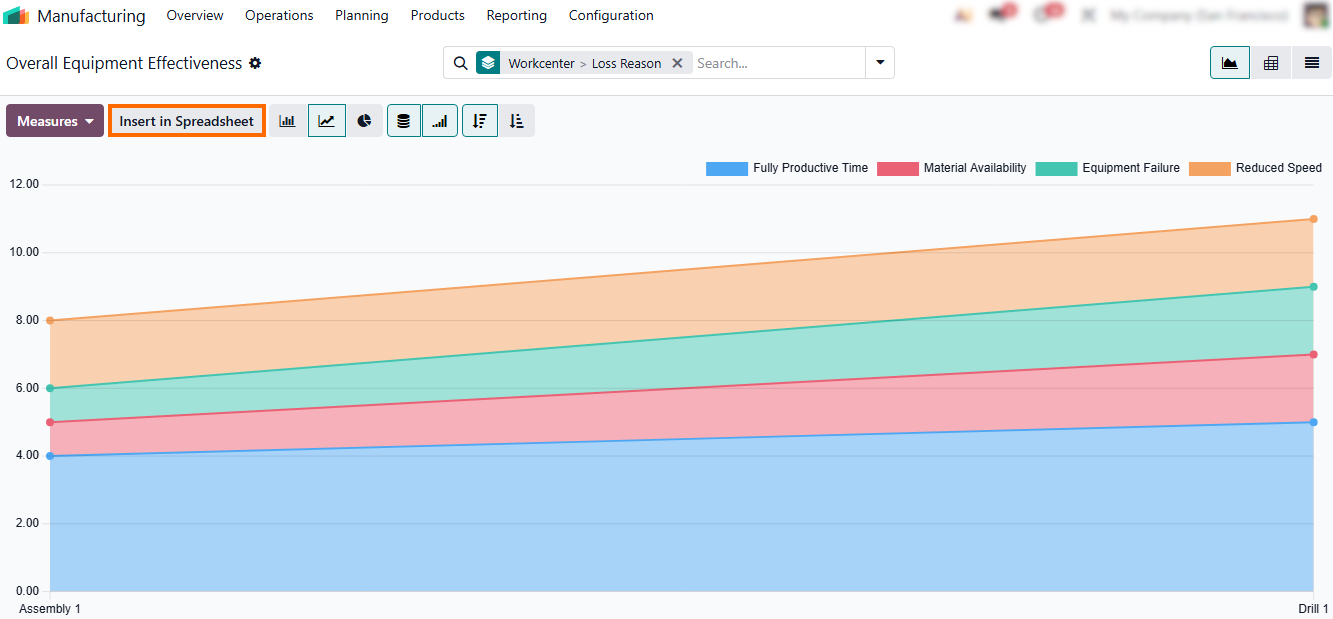
Once configured, reports can be structured into reusable dashboard templates, allowing manufacturers to standardize how production performance is monitored
and ensuring consistent interpretation of bottleneck signals across teams.
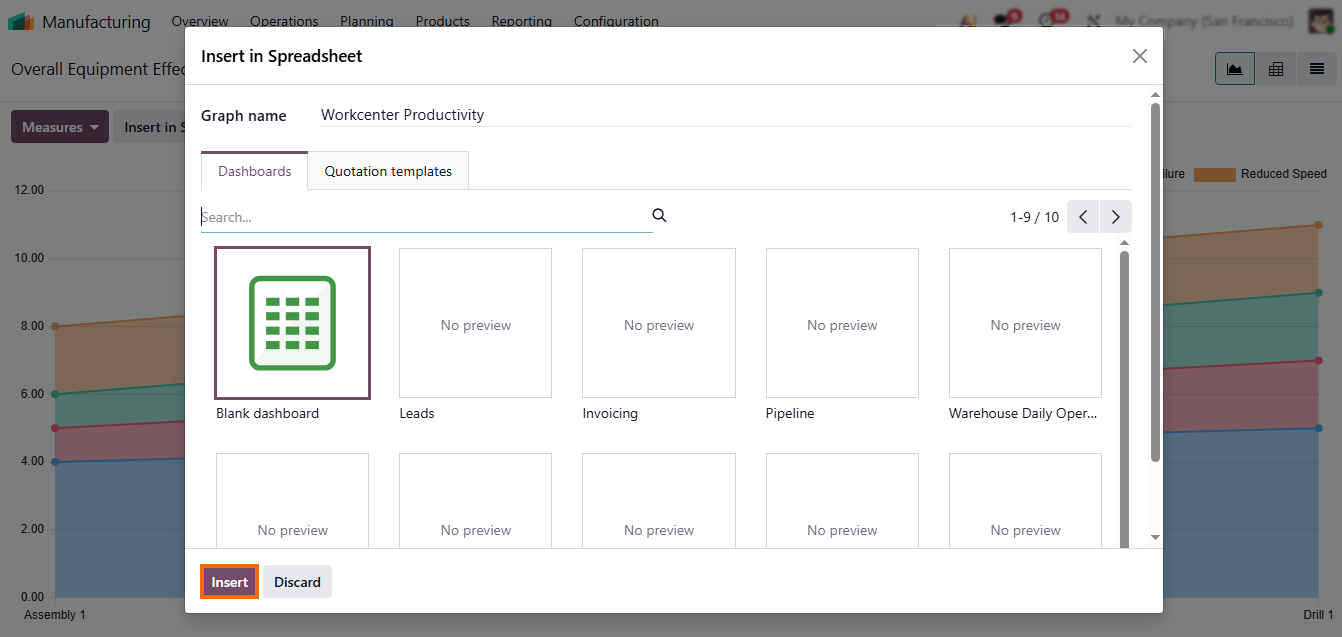
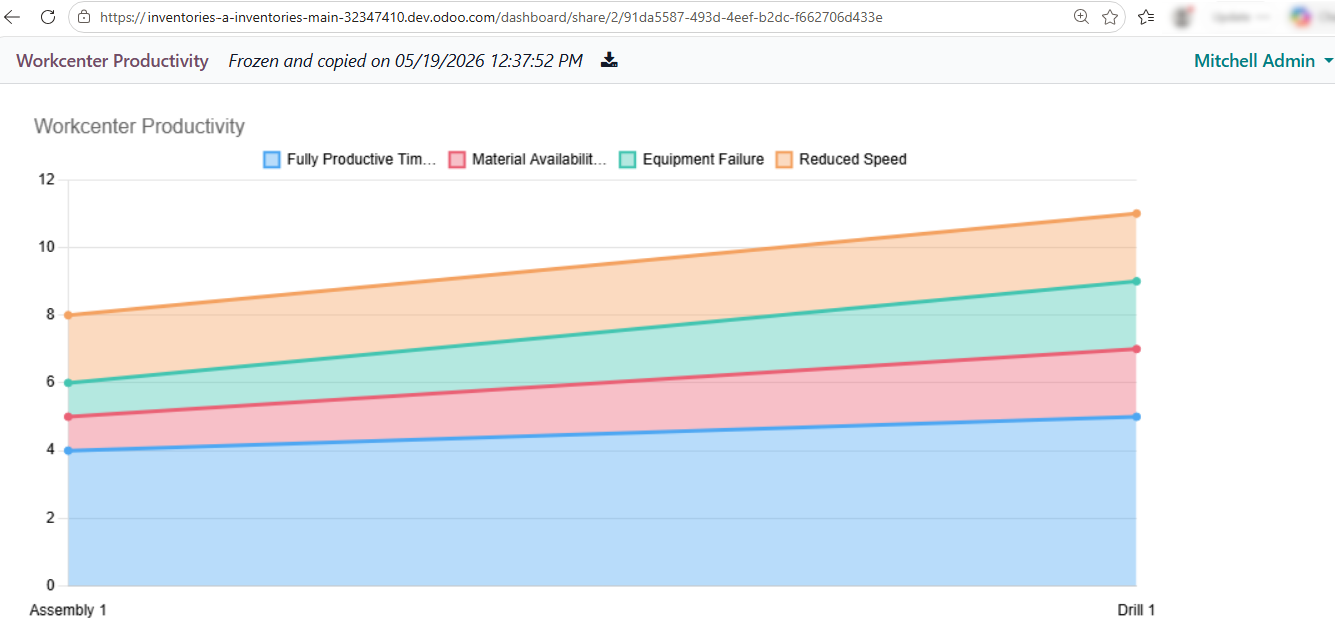
- The generated report becomes available through the Odoo Dashboards module, creating a centralized environment where execution data, performance metrics, and historical trends are consolidated for continuous monitoring and decision-making.
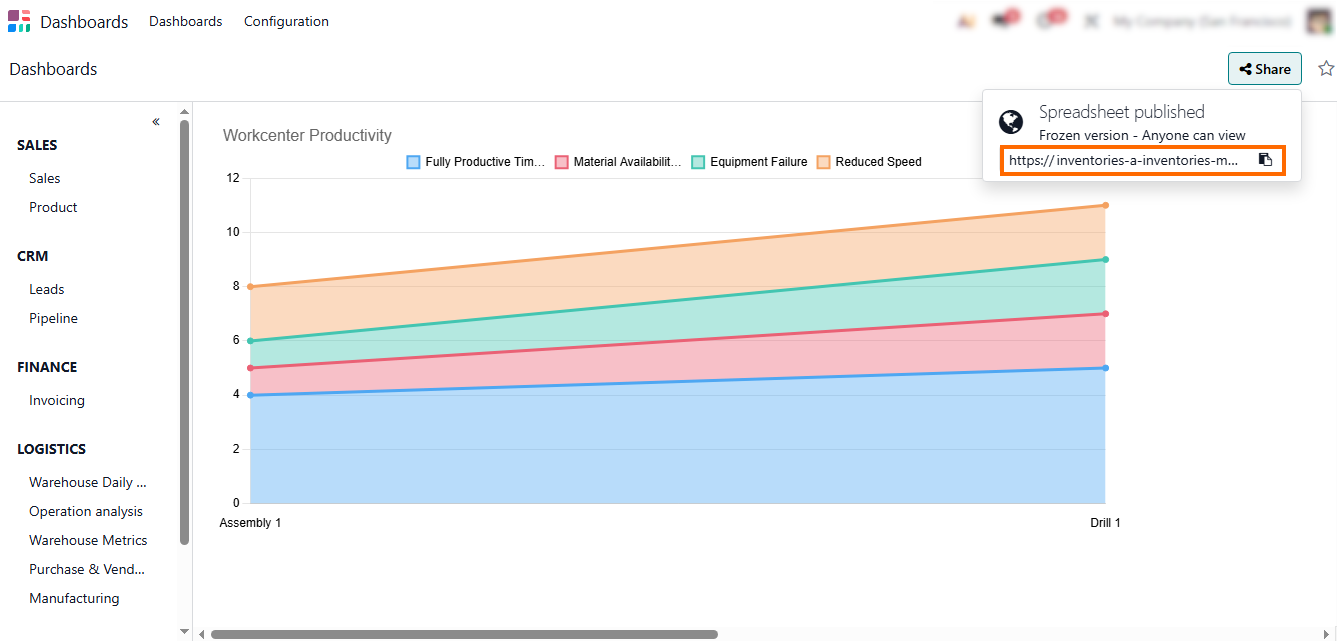
Dashboards can also be shared via secure links, enabling stakeholders to review production performance from any device without system access, improving cross-functional alignment.
Closing the Feedback Loop with Embedded Maintenance in Odoo Manufacturing
Real-time execution and production analytics in Odoo Manufacturing reveal where inefficiencies occur, but without embedded maintenance execution these insights remain reactive rather than actionable. The Maintenance module closes this gap by turning shop floor disruptions into immediate maintenance workflows, ensuring that equipment-related bottlenecks are resolved at the source. When issues are detected during execution, they can be converted directly into maintenance requests and routed to the appropriate team without manual escalation, reducing downtime and restoring production flow faster. This creates a direct operational link between execution and corrective action.
- Shop floor disruptions can be converted directly into maintenance requests at the point of detection, eliminating manual escalation delays and ensuring that issues are captured at the source of execution.
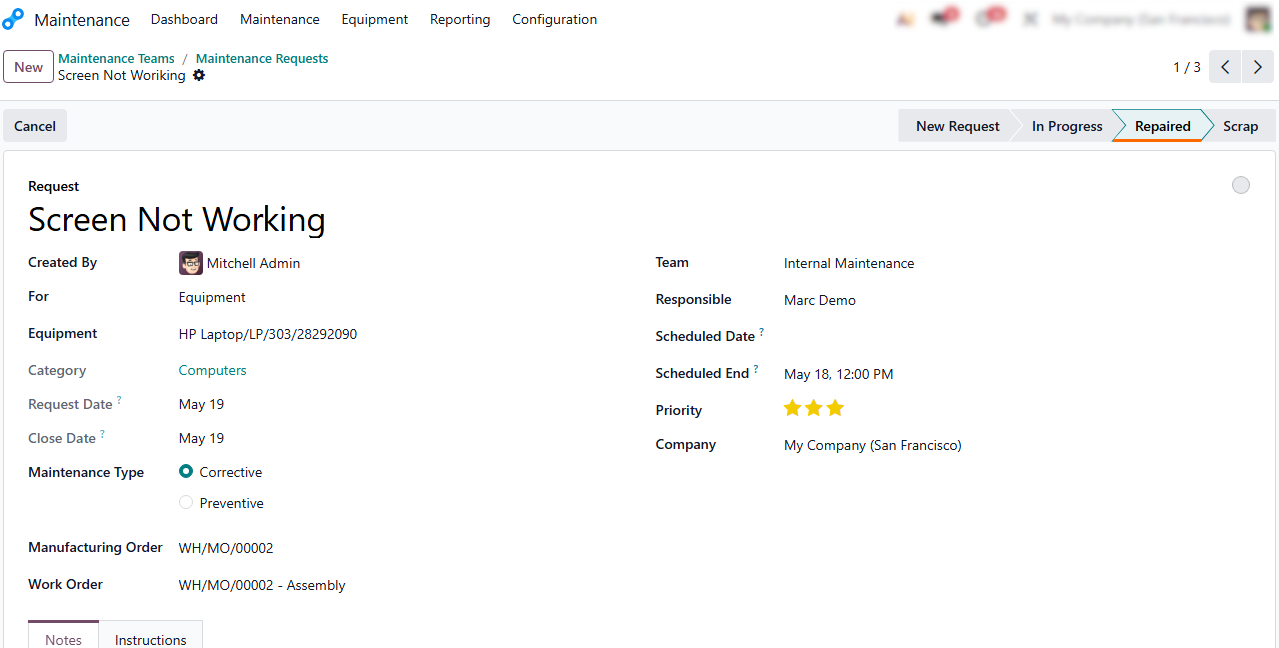
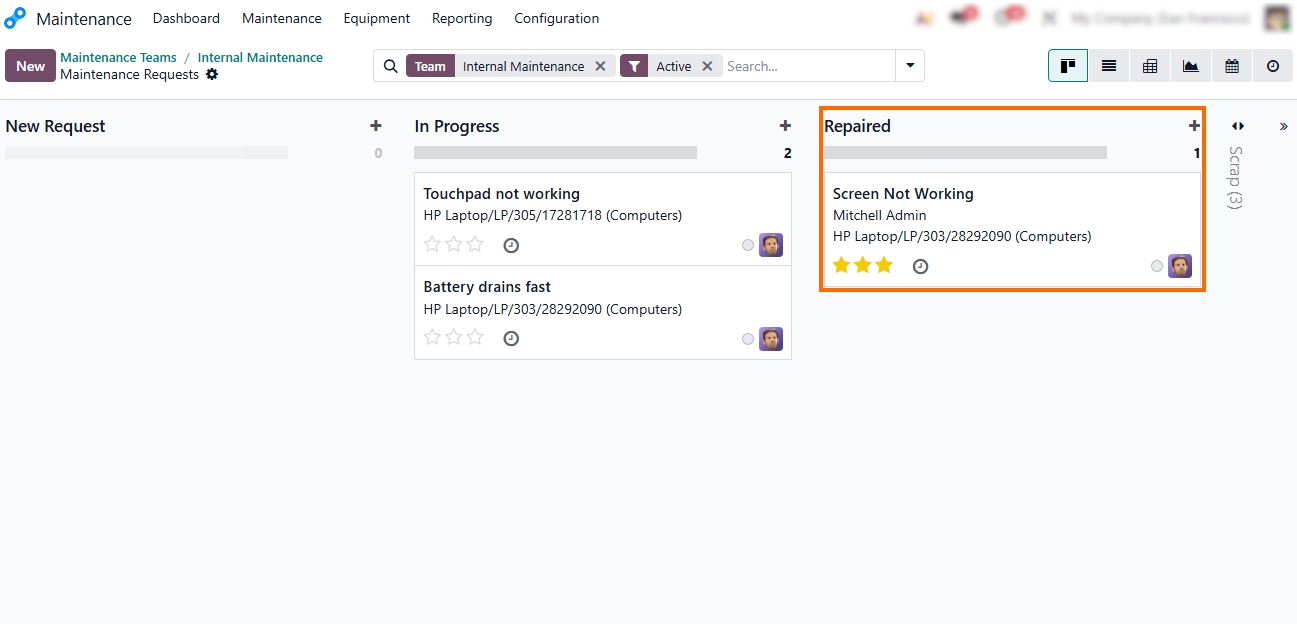
Once marked as Repaired, the status is updated in the equipment record, ensuring traceability of maintenance actions and confirming operational readiness, while maintaining a clear audit trail of interventions.
- Repaired requests are also grouped
in the main Maintenance overview under the Repaired category, providing a
centralized view of completed maintenance actions
and improving visibility across all resolved maintenance activities.
Conclusion: Eliminating Manual Gaps to Accelerate Manufacturing Flow
Eliminating manual processes in manufacturing restores visibility and control over execution. In Odoo Manufacturing, real-time shop floor data turns fragmented activities into a continuous operational signal, making bottlenecks visible as they emerge rather than after performance has already declined. Manufacturing Orders become a live execution layer driven by actual shop floor behavior, enabling faster detection of disruptions and improved material coordination.
When maintenance execution is embedded directly into shop floor workflows, detection and correction happen within the same system flow without delay. Equipment issues move from insight to action at the source, helping maintain production continuity and reduce downtime. This results in a more stable and responsive manufacturing environment, where execution gaps are minimized and performance becomes easier to sustain.