With a team that works mostly remotely, it’s easy to stay productive. However, it can be harder to build deep alignment, rapport, and personal connections that come from working through complexity together.
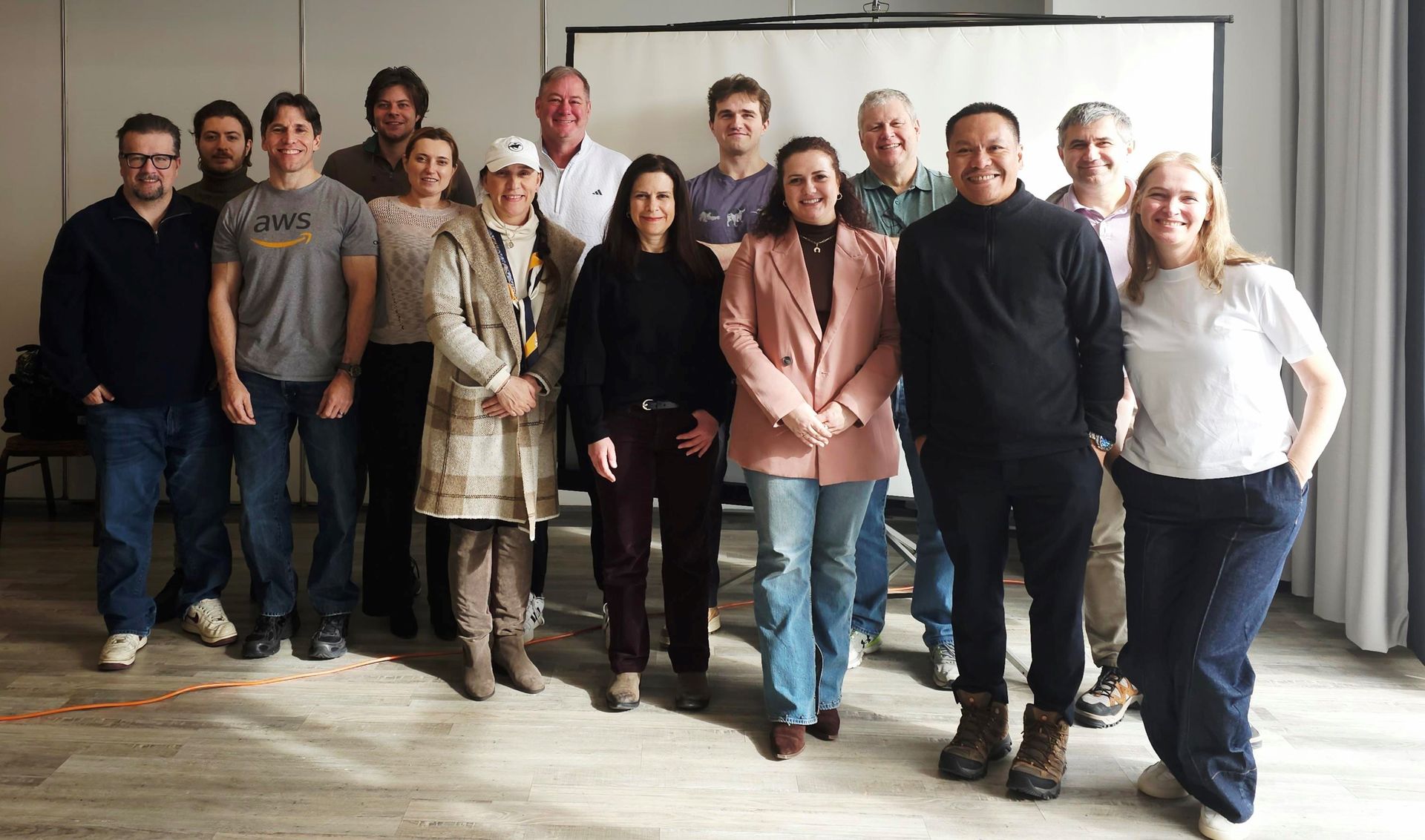
Over the past two weeks, our Business Unit and Development Team set aside time to focus on exactly that.
We ran a cross-functional product simulation designed to mirror real-world delivery pressures:
- competing priorities
- compliance constraints
- revenue goals
- technical trade-offs.
The objective went beyond producing deliverables. It focused on strengthening how we think and build together.
What We Did
Using a fictitious product as our sandbox, we went from raw interviews to a clear, prioritized 12-week release plan.
Along the way, we:
- Turned insights into structured requirements
- Grouped them into meaningful Capabilities
- Broke those into sprint-sized, “Done”-defined Features
- Clarified ownership with RACI
- Prioritized based on impact and risk
Because Product, Engineering, Finance, and Support were involved from day one, every decision reflected more than one perspective. What started out as abstract and messy became clear and actionable solutions.
Key Takeaway 1: Alignment Is Built, Not Assumed
Remote teams operate efficiently. But efficiency doesn’t automatically equal alignment and good cooperation.
Working together through real-time problem-solving and negotiations accelerated shared understanding. Product ambition was pressure-tested by engineering feasibility. Revenue goals were balanced with privacy and compliance considerations.
By the end, prioritization felt deliberate and grounded. Decisions were driven by impact, risk, dependencies, and real business value.
There was a clear rationale behind what came first, what could wait, and why. That shared logic made the roadmap stronger and gave everyone confidence in the direction.
Key Takeaway 2: Structure Reduces Friction
When requirements are clearly categorized and ownership is defined, conversations shift.
Instead of:
- “Who owns this?”
- “Was this agreed?”
- “Is this in scope?”
We had:
- Clear Capabilities
- Defined Feature-level completion criteria
- One accountable owner per major outcome
- Clarity upfront prevents friction later.
That structure changed the tone of the discussion. We had less ambiguity, fewer assumptions, and more forward movement. The clarity created confidence, and that confidence kept delivery moving.
Key Takeaway 3: The Real Outcome Was Stronger Collaboration
Yes, we came out of it with a clear roadmap, a 12-week release plan, and defined ownership across teams. Our teams delivered practical outputs we could actually use instead of PowerPoint slides that disappear into a shared drive.
But the real win was intangible.
We built shared context and stronger decision-making discipline, giving us a clearer foundation for how we move forward. Just as importantly, we strengthened trust across functions and built more personal connections, which makes collaboration easier and more natural in a mostly remote team. We got to really know the face behind the Teams icon.
Sometimes the most valuable deliverable isn’t the roadmap; it’s the alignment behind it. For a remote-first team, that foundation matters more than any single backlog.
Two weeks. One simulated product. A genuinely stronger way of working.