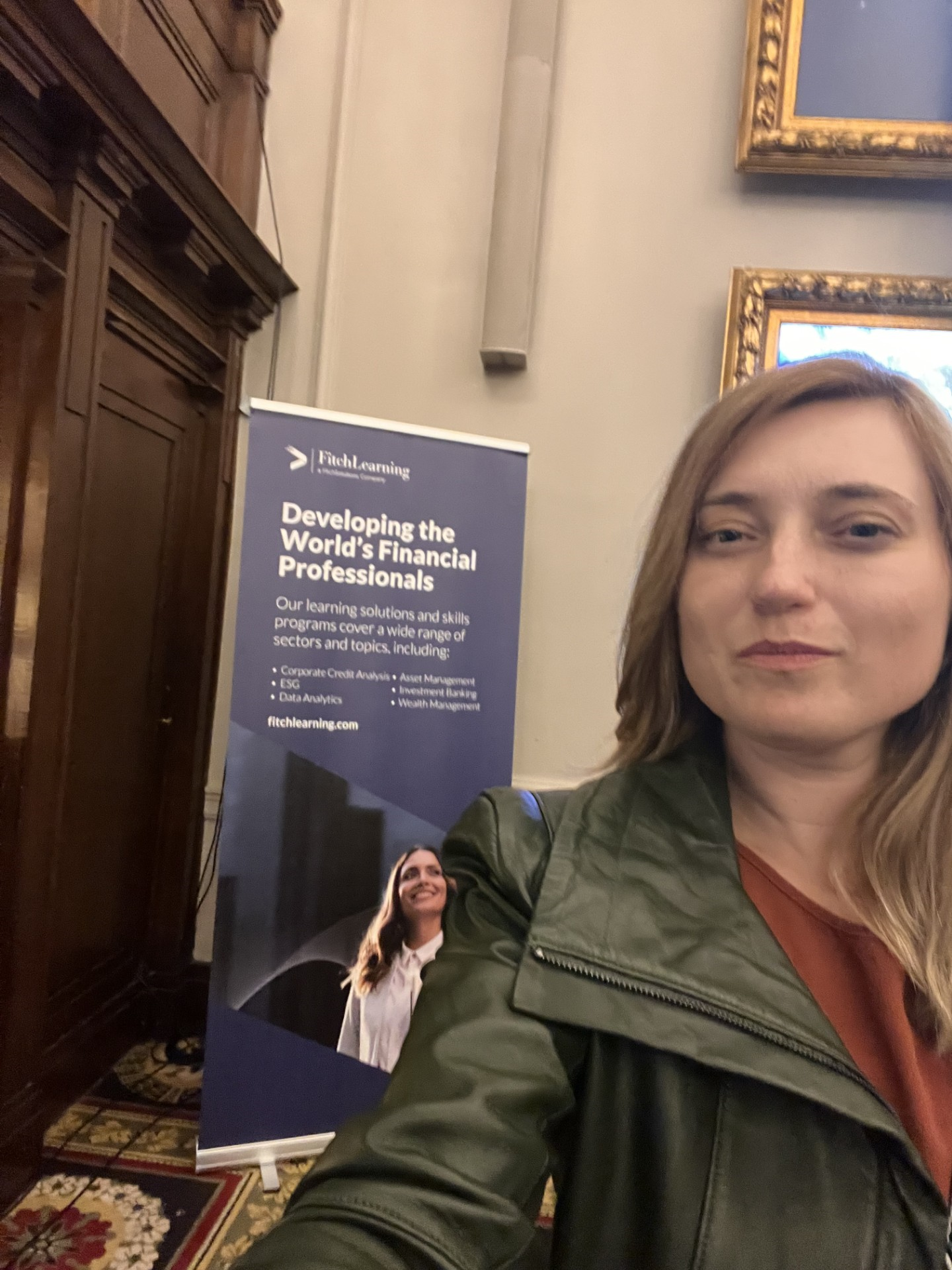
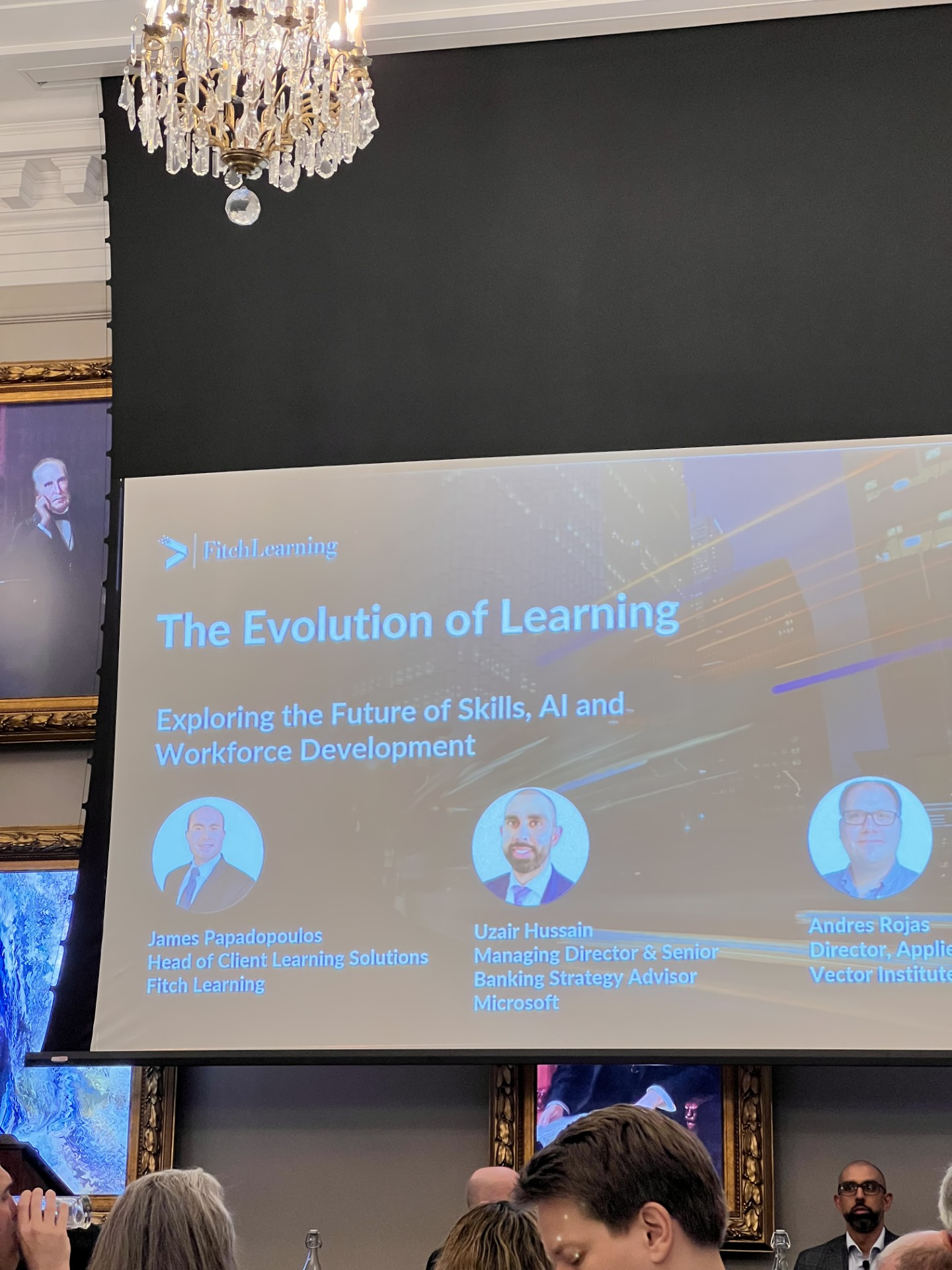
I recently had the chance to attend the “Exploring the Future of Skills, AI and Workforce Development” event at the National Club on April 22nd, and it genuinely left me thinking differently about where work (and learning) is heading.
The discussions reinforced a powerful message: the future of work belongs to those who continuously adapt, upskill, and embrace AI-enabled learning.
It was a great pleasure to get in touch with fellow CQF (Certificate in Quantitative Finance) alumni community, which is growing internationally.
There’s a lot of noise around AI right now. And the clarity surrounding the discussion really made the event a standout. The kind of clarity that makes you reassess how you’re building your own skills, not just what tools you’re using.
Many of the themes echoed what Fitch Learning has been exploring in their work on how learning is evolving. The big idea? Learning is no longer something you “complete.” It’s something you continuously adapt to.
It’s Not About Roles Anymore, It’s About Skills
One of the strongest takeaways for me was how quickly we’re moving away from role-based thinking.
It used to be simple: you trained for a job, you did the job, and maybe you upskilled every few years. That model is fading. Now, it’s much more fluid. The focus is shifting to what you can do rather than what your title says.
That sounds obvious, but it changes everything. It means your value isn’t static; it evolves with the skills you build.
And more importantly, it puts responsibility back on us as individuals. No one is going to “future-proof” your career for you.
The CQF Is Evolving
One moment I really appreciated was
hearing how the Certificate in Quantitative
Finance (CQF) program is evolving.
Traditionally, it’s been known for its deep focus on mathematical finance: pricing models, derivatives, all the heavy quantitative theory. But now, it’s integrating machine learning techniques like K-Nearest Neighbours, Decision Trees, and Support Vector Machines directly into financial modelling.
That shift feels significant.
It reflects what’s actually happening in the industry: being “quantitative” today isn’t just about theory; it’s about applying that theory using modern tools. You need both the math and the technical ability to work with data-driven, AI-powered methods.
For anyone in (or entering) finance, that’s a pretty clear signal of where things are going.
AI Isn’t Replacing You... It’s Changing You
There was a lot of discussion around AI, ML, and even agentic systems, and refreshingly; it wasn’t framed as a threat. If anything, the tone was the opposite: AI is a support system, not a substitute.
That doesn’t mean everything stays the same. It means the nature of work shifts.
AI can accelerate how we learn, personalize what we focus on, and help us make decisions faster. But it still needs direction, context, and critical thinking—things that don’t disappear.
The real risk isn’t that AI replaces people. It’s that some people don’t adapt to working alongside it.
Learning Is Personal
Another idea that stuck with me was how AI is reshaping the learning experience itself.
We’re moving toward AI-driven learning workflows, systems that adapt to how you learn, what you already know, and where your gaps are. Instead of one-size-fits-all training, it becomes much more targeted.
That’s a big shift from traditional corporate learning, which often feels static and disconnected from real work.
Now, learning can happen in real time, embedded into what you’re actually doing. It’s less about courses, more about continuous feedback and improvement.
Insights
from the Panel
The panel discussion brought everything down to earth.
Hearing from Uzair Hussain from Microsoft and Andres Rojas from the Vector Institute made it clear that this isn’t theoretical.
Organizations are already embedding AI into how they train people, how they identify skills gaps, and how they build teams.
It’s happening now, not in five years.
So, What Actually Matters Going Forward?
If I had to distill the event into a few grounded takeaways:
- You can’t rely on static knowledge anymore. What you know today has a shorter shelf life than ever.
- Skills > titles. Always.
- AI is a tool, but it rewards those who engage with it.
- Technical skills alone aren’t enough. Adaptability, communication, and judgment are becoming just as important.
There was also one bigger question we shouldn’t ignore:
Are universities and training programs updating fast enough? Are they integrating AI meaningfully, or just talking about it?
It’s a fair question. Because if the industry is moving this quickly, education has to move with it.
Final Thought
Walking away from the event, I could feel how the mindset around AI was shifting. AI isn’t a disruption to fear anymore; it’s a capability to understand and work with.
The future of work is already here. What sets people apart isn’t what they know; it’s how quickly they can learn, adapt, and move forward.
That’s where the real opportunity lies.
Written By: Lesya Berbeka, AI/Quantitative Research and Analytics Lead